

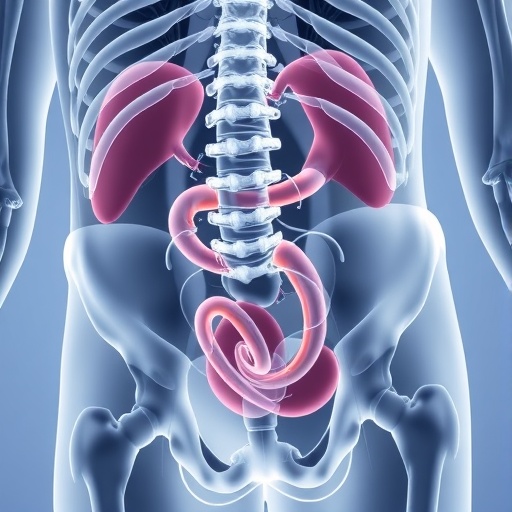
In the field of healthcare, the management of parastomal hernias presents a significant challenge for both patients and healthcare providers. A novel qualitative study led by Che et al. sheds light on the barriers and facilitators that come into play in the prevention and management of parastomal hernias, emphasizing the vital role of enterostomal therapists in this complex landscape. The study offers critical insights into patients’ experiences and perceptions, which could inform future protocols and practices in stoma care.
Parastomal hernias occur when tissue protrudes through the abdominal wall around a stoma, a surgically created opening for the elimination of waste. For patients who have undergone stoma creation due to conditions such as colorectal cancer or inflammatory bowel disease, the implications of developing a hernia can be profound. Individuals often face physical discomfort, psychological stress, and a potential decrease in quality of life. Che et al.’s research aims to identify the psychosocial and practical challenges encountered by patients, alongside the role of healthcare professionals in supporting these individuals.
One focal point of the study is the diversity of barriers that hinder effective management of parastomal hernias. Through a series of interviews with patients and enterostomal therapists, researchers harvested rich qualitative data revealing key insights. Participants often identified a lack of communication as a significant obstacle. Many patients expressed feelings of being uninformed or ill-prepared to engage in self-care or seek help when complications arose. This underscores the need for effective communication strategies between healthcare providers and patients, aiming to empower patients in their own care journeys.
Furthermore, the physical aspects of managing parastomal hernias cannot be overlooked. Participants highlighted the challenges associated with wearing stoma appliances and the discomfort that may arise as a result of a hernia. Many felt discouraged by the limitations imposed on physical activity and daily functioning due to the hernia, resulting in a cycle of frustration and avoidance. Che et al. suggest that an integrative approach, combining education on body mechanics and lifestyle adjustments, could serve as a facilitator in mitigating these issues.
The role of enterostomal therapists surface prominently in this study as pivotal in bridging communication gaps. These specialized healthcare providers possess the expertise necessary to guide patients toward effective management of their stomas and associated complications. The study emphasizes that hiring dedicated enterostomal therapists could not only improve patient outcomes but also alleviate some of the burdens faced by general practitioners, who may lack specialized knowledge in stoma care.
Another notable finding of Che et al.’s research is the duality of emotions that patients experience when dealing with parastomal hernias. While many participants described feelings of shame and embarrassment, others expressed resilience and motivation to cope with their circumstances. This emotional spectrum highlights the importance of psychological support in managing parastomal hernias. Enterostomal therapy, entwined with psychological resilience training, could be a decisive factor in enhancing patients’ mental health and overall coping capabilities.
Moreover, the study investigates societal attitudes towards individuals with stomas, finding that stigma remains a challenging barrier. Participants articulated struggles with self-esteem and social interactions, often stemming from negative perceptions held by the public. This necessitates broader advocacy efforts to change societal narratives around stomas and hernias, fostering an environment of understanding and support. The authors stress the importance of awareness campaigns that could educate both healthcare workers and the public about the realities of living with a stoma.
Technical considerations, such as the design and materials of stoma appliances, were also brought to light during the study. Participants advocated for greater innovation in product development that could specifically address issues related to hernias. The findings suggest a clear demand for collaboration between manufacturers, healthcare providers, and patients to develop more effective products that enhance comfort and reduce the incidence of hernias.
Che et al. also spotlighted the implications for future research in this domain. They call for longitudinal studies that could explore the long-term impacts of various interventions on the development and management of parastomal hernias. Understanding how different factors influence patient experiences over time could unveil new strategies for holistic and effective care.
The research unfolds the necessity of integrated healthcare approaches that include patient education, emotional support, and advanced stoma care technology. Che et al. stress that a multi-faceted strategy is essential not only in preventing parastomal hernias but also in improving overall patient quality of life. The discourse around these issues must be framed within a patient-centered paradigm, where the voices of those who experience these challenges firsthand are prioritized.
As the healthcare community absorbs the implications of Che et al.’s findings, it becomes evident that collaboration among healthcare providers, patients, and product developers is key to enhancing care for those with stomas. The study illuminates the path toward comprehensive strategies that might empower patients and mitigate the multifaceted challenges associated with parastomal hernias. As we look towards the future, fostering such innovation and advocacy is not merely desirable but essential for advancing healthcare practices and ensuring patients’ well-being.
In conclusion, the barriers and facilitators identified by Che et al. paint a complex picture of the environment surrounding parastomal hernias. With an emphasis on communication, product innovation, patient support, and social advocacy, we can move closer to a healthcare framework that not only addresses the technicalities of stoma management but also honors the humanity of those who navigate these life changes. Embracing these insights could redefine how care is approached, ultimately enabling patients to thrive.
Subject of Research: Barriers and facilitators in preventing and managing parastomal hernias from the perspective of enterostomal therapists.
Article Title: Barriers and facilitators in preventing and managing parastomal hernias: a qualitative study from the perspective of enterostomal therapist.
Article References:
Che, X., Meng, Y., Pang, D. et al. Barriers and facilitators in preventing and managing parastomal hernias: a qualitative study from the perspective of enterostomal therapist.
BMC Nurs (2025). https://doi.org/10.1186/s12912-025-04230-2
Image Credits: AI Generated
DOI: 10.1186/s12912-025-04230-2
Keywords: Parastomal hernias, enterostomal therapy, qualitative study, patient care, healthcare communication, stigma, product innovation.


