

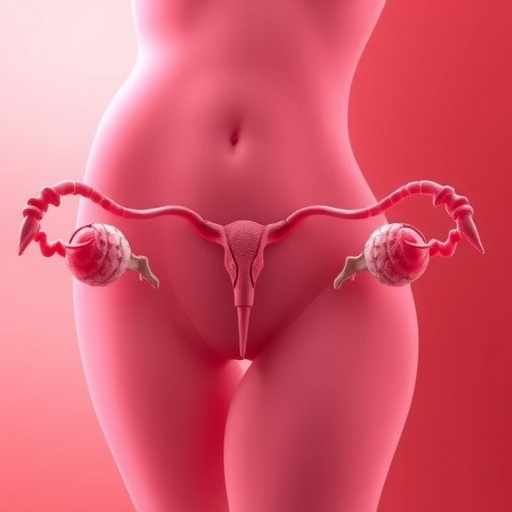
A groundbreaking study has emerged in the field of reproductive health, shedding light on a crucial yet overlooked aspect of female infertility: ovarian maldescent. Conducted by a team of dedicated researchers led by Jiang Z. and colleagues, this prospective cohort study aims to unravel the complex relationship between the anatomical positioning of the ovaries and the challenges many women face when trying to conceive. The findings promise to enhance our understanding of female fertility, offering new insights into a previously under-researched area.
The study’s focal point is ovarian maldescent, a condition where the ovaries fail to descend into their expected anatomical position within the pelvic cavity. This misplacement can potentially disrupt normal ovarian function, leading to hormonal imbalances and reproductive complications. Despite its significance, the prevalence of ovarian maldescent and its implications for infertility have not received sufficient attention in medical research, making this study pivotal in addressing a pressing issue.
The research was meticulously designed, involving a robust cohort of participants recruited from various fertility clinics. By utilizing a prospective methodology, the researchers were able to collect comprehensive data over time, ensuring that their findings reflect real-world conditions faced by individuals experiencing infertility. This approach not only enhances the credibility of the results but also provides a solid foundation for further research into ovarian health.
Throughout the study, the participants underwent a series of evaluations including ultrasounds and hormonal assessments to ascertain the position of their ovaries and the state of their reproductive health. The researchers meticulously documented their findings, noting the incidence of ovarian maldescent and its correlation with infertility rates among the cohort. This thorough data collection is essential, as it provides a clearer picture of how anatomical variations can impact reproductive outcomes.
Statistical analyses revealed striking correlations between ovarian positioning and fertility challenges faced by women in the study. Those with observed ovarian maldescent showed a significantly higher incidence of infertility compared to their counterparts with normally positioned ovaries. This finding underscores the need for greater awareness and consideration of anatomical factors in the evaluation of infertility, potentially altering the current diagnostic and therapeutic approaches.
Moreover, the implications of these findings extend beyond just anatomical observations. The study posits that ovarian maldescent could influence not only the mechanical aspects of ovulation but also hormonal regulation. This suggests that the treatment and management of infertility could benefit from a more nuanced understanding of ovarian anatomy and its effects on hormonal interactions within the female body.
The authors of the study advocate for increased consideration of ovarian maldescent in clinical practice. They encourage gynecologists and reproductive endocrinologists to include thorough imaging of the ovaries as part of routine fertility evaluations. By doing so, the medical community could better identify patients who may be adversely affected by this condition, leading to more tailored and potentially effective treatment plans.
Furthermore, the findings also open up new avenues of research aimed at investigating the underlying mechanisms linking ovarian positioning and fertility. Understanding how maldescent affects ovarian function at the biological level could lead to the development of innovative therapies, enhancing the support provided to individuals struggling with infertility due to anatomical issues.
As this study gains traction, it reflects a broader shift in medical research towards recognizing the importance of individual anatomical variations in reproductive health. The recognition of conditions like ovarian maldescent signifies an essential progression in understanding the multifaceted nature of fertility. This study highlights that infertility is not merely a function of age or general health; rather, it is intricately tied to the physical structure of the reproductive system.
In conclusion, Jiang et al.’s research on the association between ovarian maldescent and infertility represents a significant advancement in reproductive medicine. By spotlighting a previously overlooked anatomical issue, the study not only enhances our understanding of female infertility but also underscores the importance of personalized medical approaches. The findings have the potential to reshape fertility treatments and elevate awareness in both medical practices and among individuals navigating the challenging journey of conception.
As awareness of the role of ovarian maldescent spreads, it holds the promise of fostering improved diagnostic capabilities, ensuring that women receive the most effective care based on their unique anatomical and hormonal profiles. This study is a call to action for further exploration and understanding of ovarian health, paving the way for innovations that could ultimately benefit countless women and families seeking to overcome infertility challenges.
Subject of Research: Ovarian Maldescent and Infertility
Article Title: Association between ovarian maldescent and infertility: a prospective cohort study
Article References: Jiang, Z., Shi, W., Zhou, Z. et al. Association between ovarian maldescent and infertility: a prospective cohort study. J Ovarian Res 18, 264 (2025). https://doi.org/10.1186/s13048-025-01853-6
Image Credits: AI Generated
DOI: https://doi.org/10.1186/s13048-025-01853-6
Keywords: Ovarian maldescent, infertility, reproductive health, hormonal regulation, anatomical variations


