

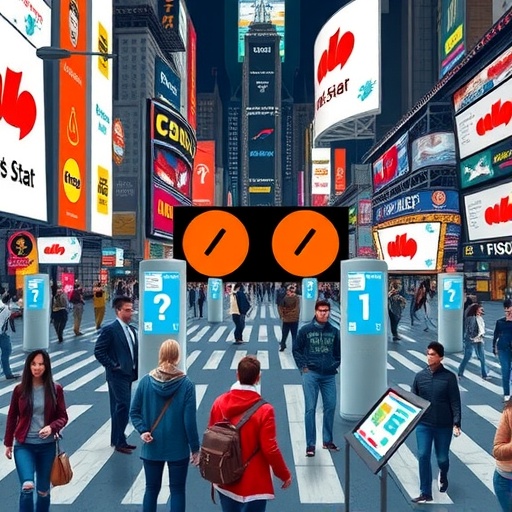
In an intriguing study published in Attention, Perception, & Psychophysics, researchers made ground-breaking advances in understanding visual search behavior, particularly how individuals tend to navigate distractors and when they decide to withdraw from a search task. The work, led by A. Shaikh, I. Mbithi, and M. Okamura, delves deeply into the cognitive mechanisms underlying distractor avoidance and premature quitting in complex visual environments. Their findings provide vital insights not only for psychology but also for practical applications in design and technology.
Visual search tasks are a common part of everyday life, from picking out a friend in a crowded space to identifying vital information on screens filled with data. Understanding how people manage distractions during these tasks has significant ramifications for multiple fields, including ergonomics, user experience design, and cognitive neuroscience. In this research, the authors explored the strategies employed by participants as they engaged in visual searches, shedding light on the cognitive processes that dictate attention allocation and response strategies.
A core focus of the study was the phenomenon of “distractor avoidance.” In visual search tasks, individuals are often faced with distractions that can divert their attention from relevant targets. The research identified distinct strategies that participants developed to counteract these distractions. For example, the study found that some participants utilized tactical scanning methods, actively directing their gaze and cognitive resources to minimize the influence of distractors. This approach not only aided in more effective searching but also reduced the cognitive load associated with such tasks.
Moreover, during these visual tasks, it became evident that there is a threshold of frustration or boredom that prompts participants to withdraw early from the search. The study quantitatively assessed these quitting behaviors and correlated them with various psychological metrics. It was observed that individuals with higher tolerance levels to frustration tended to persist longer in challenging search scenarios, while others who quickly succumbed to the distractions were more likely to abandon the task prematurely. This behavioral insight unveils layers of decision-making that blend emotional responses with cognitive processes.
The researchers also introduced new methodologies to measure the efficiency of participants in discerning targets from distractors. Utilizing eye-tracking technology, they meticulously recorded fixations and saccades, allowing them to paint a detailed picture of how attention flows in the face of distractions. These data not only validated existing theories on visual attention but also provided new angles of understanding that may redefine how cognitive psychologists interpret visual search tasks.
In practice, the implications of this research are profound. For instance, in online environments where information overload is prevalent, designing interfaces that minimize distracting elements can enhance user experience and task completion rates. Additionally, the study underscores the importance of understanding how cognitive fatigue can affect performance, thereby informing better strategies to optimize environments in which visual searches are critical — such as in airports, warehouses, and even during emergency response situations.
Notably, the researchers avoided confounding variables that could distort their findings. They controlled for factors such as lighting, background noise, and the complexity of visual arrays to ensure the results were robust. This meticulous approach not only strengthens the credibility of their findings but also sets a new standard for research methods in cognitive psychology, where precision is paramount.
The overarching conclusion drawn from this research highlights the intricate balance between attention management and emotional resilience. It paints a nuanced picture of human cognition, revealing that the ability to focus intently on targets amid distractions is not solely a measure of cognitive ability but also of emotional states and behavioral tendencies. This interplay suggests pathways for future research, including the exploration of interventions that could foster better focus in distraction-laden environments.
Another aspect worth noting is how these findings resonate with broader societal challenges. As technology advances and the digital world proliferates, understanding how to navigate information efficiently becomes increasingly crucial. Educational institutions, workplaces, and technology developers must work hand in hand to create environments that bolster attention and productivity, drawing on research such as this.
As we extend this conversation, it invites us to reflect on our habits in a world where distractions are omnipresent. Whether in our personal lives, at work, or during online interactions, the implications of Shaikh and colleagues’ findings encourage us to develop a greater awareness of how we manage our attention and when we decide to step back. By fostering environments that promote sustained engagement without overwhelming cognitive capacities, we can enhance our collective ability to function effectively in both personal and professional spaces.
In summary, the findings from this study by Shaikh et al. not only provide a deeper understanding of the cognitive underpinnings of visual search but also challenge us to rethink how we design our environments in an increasingly distracting world. The research serves as a reminder of the interplay between cognition and emotion and the importance of managing both to thrive amid distractions. As we move forward, this exploration of visual search dynamics sets the stage for further interdisciplinary collaboration, paving the way for innovations that can transform our understanding of attention and performance in visual contexts.
Subject of Research: Visual search behavior and distractor avoidance.
Article Title: Distractor avoidance and early quitting in visual search.
Article References:
Shaikh, A., Mbithi, I., Okamura, M. et al. Distractor avoidance and early quitting in visual search. Atten Percept Psychophys 88, 23 (2026). https://doi.org/10.3758/s13414-025-03188-2
Image Credits: AI Generated
DOI: https://doi.org/10.3758/s13414-025-03188-2
Keywords: Distractor avoidance, visual search, cognitive processes, attention management, decision-making, emotional resilience, eye-tracking technology.


