


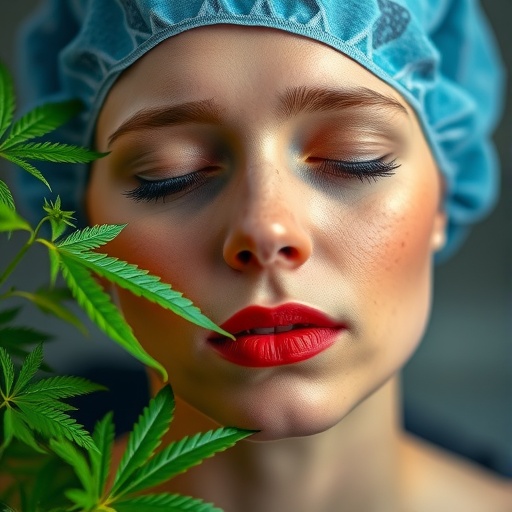
University of Oklahoma researchers have embarked on a pioneering clinical investigation aimed at elucidating the role cannabis use plays in the complex process of wound healing following head and neck cancer surgeries. This novel research, co-led by Dr. Lurdes Queimado, M.D., Ph.D., and Dr. Mark Mims, M.D., seeks to fill a critical knowledge gap in medical science regarding how cannabis consumption may alter physiological recovery in patients undergoing extensive surgical procedures involving tumor excision and subsequent reconstructive efforts. With an anticipated enrollment of 220 adult patients, this prospective study promises to produce definitive, biochemically validated data to inform clinical practice.
The impetus for this study arises from the high prevalence of cannabis usage among oncologic populations, with existing surveys indicating usage rates exceeding 50% or even climbing as high as 80% in those who concurrently use tobacco products. Despite such widespread consumption, the scientific community remains largely uninformed about the implications of cannabinoids on post-operative tissue repair, immunological function, and overall recovery dynamics. Previous investigations into related topics have been retrospective, limiting the ability to infer causality or temporal relationships. Therefore, this prospective study design marks a substantial methodological advancement by tracking patients longitudinally over six months, starting at the time of their surgical therapy.
A distinctive strength of this research lies in its rigorous verification of cannabis exposure. Patients’ self-reports of cannabis usage will be corroborated by blood biomarker analyses, mitigating the common issue of reporting bias that plagues observational studies. This biochemical validation will enhance data quality and strengthen conclusions regarding potential associations between cannabis use patterns and wound healing outcomes. Furthermore, the study’s nuanced approach considers the heterogeneity of cannabis administration modes—namely smoking, vaping, and edible consumption—which possess distinct pharmacokinetic profiles and physiological impacts.
Dr. Queimado, who directs the Tobacco Regulatory Science Lab at the University of Oklahoma’s TSET Health Promotion Research Center, hypothesizes that cannabis smoking, in particular, may exert deleterious effects on wound healing. Her preliminary data from non-cancer cohorts demonstrated increased inflammatory markers and suppressed immune cell functionality among cannabis smokers, factors known to impede tissue regeneration and elevate the risk of postoperative complications. However, the clinical relevance of these findings in cancer surgery patients remains uncharted territory, prompting this comprehensive study to dissect how different modes and frequencies of cannabis use impact diverse healing parameters.
To untangle the complex interplay between cannabis and tobacco use on surgical recovery, the research protocol stratifies participants into four distinct groups: exclusive cannabis users, dual cannabis and tobacco users, exclusive tobacco users, and a control group abstaining from both substances. This stratification permits granular analysis of additive or synergistic effects of these substances on wound healing trajectories. Key clinical endpoints under meticulous observation include infection rates, bleeding incidents, wound dehiscence, scar maturation, and other medical complications.
Facial plastic and reconstructive surgeon Dr. Mark Mims emphasizes the clinical urgency underpinning this research. Physicians routinely face patient inquiries regarding cannabis use and surgical outcomes yet currently lack robust evidence to provide definitive guidance. By generating scientifically rigorous data, this study aims to empower clinicians with the knowledge necessary to counsel patients accurately, thereby optimizing perioperative management and improving prognostic assessments.
In addition to surgical recovery metrics, the study will evaluate how cannabis consumption modulates patients’ responses to adjunctive cancer therapies such as chemotherapy and radiation. These treatments intrinsically affect immune function and tissue homeostasis, and understanding cannabis interactions within this therapeutic context could reveal broader implications for comprehensive cancer care and survivorship.
Beyond oncologic surgery, the broader scientific significance of this research extends to medical conditions characterized by chronic inflammation and immunological dysfunction. Conditions such as autoimmune diseases also hinge on delicate balances between immune activation and suppression, resilience of connective tissues, and control of inflammatory cascades. Insights gleaned from this work may catalyze expanded investigations into cannabis effects in these domains, ultimately shaping therapeutic guidelines and public health policies.
This prospective cohort study by University of Oklahoma’s medical researchers not only pioneers a previously neglected area of inquiry, but also establishes a robust framework for future explorations into cannabis pharmacology and surgical science. The integration of biochemical confirmation, stratified patient groups, and longitudinal follow-up elevates the standard of research rigor, setting a precedent for subsequent studies in diverse clinical settings.
The Presbyterian Health Foundation’s funding support underscores the societal relevance and translational potential of this research endeavor. By advancing understanding at the intersection of substance use and surgical healing, the study promises to inform patient care decisions and possibly influence regulatory stances on cannabis consumption in medical populations.
As cannabis legalization expands nationwide, generating evidence-based clarity on its effects within sensitive medical contexts is critical. This University of Oklahoma-led investigation stands at the forefront of this effort, offering hope for improved clinical protocols that accommodate patient behaviors while safeguarding healing and recovery.
News Publication Date: (Not provided)
Web References: http://www.ouhsc.edu/
References: (Not provided)
Cite Scienmag News
Nathaniel Bowman. (August 12, 2025). OU Researchers Investigate Impact of Cannabis on Post-Surgical Facial Wound Healing. Scienmag. https://scienmag.com/ou-researchers-investigate-impact-of-cannabis-on-post-surgical-facial-wound-healing/
Nathaniel Bowman. "OU Researchers Investigate Impact of Cannabis on Post-Surgical Facial Wound Healing." Scienmag, 12 August 2025, https://scienmag.com/ou-researchers-investigate-impact-of-cannabis-on-post-surgical-facial-wound-healing/. Accessed 4 September 2026.
Nathaniel Bowman. "OU Researchers Investigate Impact of Cannabis on Post-Surgical Facial Wound Healing." Scienmag. August 12, 2025. https://scienmag.com/ou-researchers-investigate-impact-of-cannabis-on-post-surgical-facial-wound-healing/


