


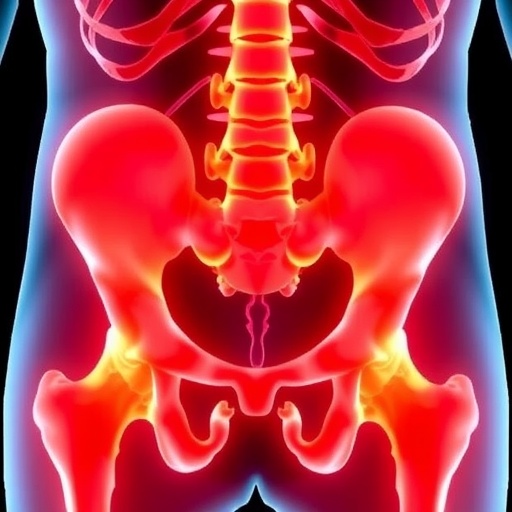
Recent research has illuminated critical associations between osteosarcopenia, sarcopenia, and fragility fractures in older women, showcasing a multifaceted health challenge for this demographic. The study, conducted by Sanchez-Rodriguez and colleagues, delves into the complexities of these conditions, exposing the undercurrents linking them to validated incidents of fragility fractures. The implications of these findings extend beyond mere statistics, touching upon the quality of life, healthcare costs, and intervention strategies for aging women globally.
Osteosarcopenia, a term often overshadowed by more commonly discussed age-related conditions, refers to the simultaneous decline in both bone mass and muscle strength. This dual deterioration poses a heightened risk of fractures—particularly in older women who experience significant hormonal changes post-menopause. The research underscores an alarming trend where a lack of muscle strength can lead to decreased bone density, creating a vicious cycle that exacerbates mobility issues and overall fragility.
Sarcopenia, defined primarily as the loss of muscle mass, is frequently recognized as a standalone condition, yet it is intricately linked to osteosarcopenia. With the prevalence of sarcopenia increasing in older populations, it becomes essential to understand how it correlates with bone health. This research implements seven distinct definitions of sarcopenia to explore these associations, illustrating the complexity of diagnosing and addressing these interrelated conditions.
The FRISBEE 2 study serves as a substantial foundation for this research, providing extensive data that allows for a nuanced analysis of the interplay between muscle health and bone integrity. Utilizing validated recent fragility fractures as a key focus, the study examines how muscle weakness can contribute to reduced bone density, leading to an increased risk of fractures.
Data from the study reveal concerning statistics, highlighting the prevalence of both osteosarcopenia and sarcopenia among older women with fragility fractures. The findings indicate that approximately one-third of women experiencing fragility fractures also meet the criteria for osteosarcopenia. This underscores the need for healthcare providers to consider both conditions in their assessments and treatment plans.
Importantly, the research notes that the definitions applied in diagnosing sarcopenia significantly influence prevalence rates and health outcomes. By applying seven different definitions, Sanchez-Rodriguez and colleagues provide a compelling argument for the need for standardized criteria in clinical settings. Such standardization would allow for better identification of at-risk populations and more targeted interventions.
Furthermore, this study highlights the critical need for awareness and education regarding these interconnected conditions among healthcare professionals. The research emphasizes the importance of integrating strategies for muscle and bone health into routine assessments for older women. Enhancing knowledge within the healthcare community can lead to improved outcomes through early detection and preventative measures.
The implications for clinical practice are far-reaching. As older women represent a growing demographic, addressing the dual challenges of osteosarcopenia and sarcopenia becomes increasingly vital. Interventions that focus on strength training, nutritional support, and preventive healthcare can mitigate risks significantly. The study advocates for holistic approaches that encompass both muscle and bone health, providing a framework for future research and clinical guidelines.
In addition to immediate clinical applications, the findings also resonate with broader public health concerns. As global populations age, the economic burden associated with managing fragility fractures is anticipated to escalate. This research serves as a clarion call for policymakers and public health officials to prioritize initiatives aimed at promoting healthy aging, emphasizing the importance of comprehensive strategies addressing both muscle and bone health.
The nuances of this study shine a light on areas for further exploration. Future research may consider the role of genetic predispositions, environmental factors, and lifestyle interventions in shaping the risk profiles for osteosarcopenia and sarcopenia. Breaking down these barriers may offer invaluable insights into personalized healthcare approaches for older women.
In conclusion, Sanchez-Rodriguez et al. illuminate a crucial intersection in geriatric health that necessitates urgent attention. The dual challenges of osteosarcopenia and sarcopenia are profound yet often overlooked, particularly within the context of fragility fractures. This research advocates for a paradigm shift in understanding and addressing these interrelated conditions, promoting a future where older women can thrive without the debilitating constraints of muscle and bone health deterioration.
As we stand at a crossroads in geriatric medicine, this study beckons healthcare practitioners, researchers, and policymakers to embrace an integrated perspective. By fostering an environment where proactive measures are prioritized, we can pave the way for healthier aging and improved quality of life for millions of women worldwide.
Sanchez-Rodriguez, D., Bellanger, A., Iconaru, L. et al. Osteosarcopenia, sarcopenia, and their associations with validated recent fragility fractures in older women: applying seven definitions in the FRISBEE 2 study.
Eur Geriatr Med (2025). https://doi.org/10.1007/s41999-025-01273-1
Cite Scienmag News
Ophelia Keating. (September 4, 2025). Osteosarcopenia and Fractures: Insights from FRISBEE 2. Scienmag. https://scienmag.com/osteosarcopenia-and-fractures-insights-from-frisbee-2/
Ophelia Keating. "Osteosarcopenia and Fractures: Insights from FRISBEE 2." Scienmag, 4 September 2025, https://scienmag.com/osteosarcopenia-and-fractures-insights-from-frisbee-2/. Accessed 5 September 2026.
Ophelia Keating. "Osteosarcopenia and Fractures: Insights from FRISBEE 2." Scienmag. September 4, 2025. https://scienmag.com/osteosarcopenia-and-fractures-insights-from-frisbee-2/


