


URBANA, Ill. — Nanozymes are tiny, engineered substances that mimic the catalytic properties of natural enzymes, and they serve a variety of purposes in biomedicine, chemical engineering, and environmental applications. They are typically made from inorganic materials, including metal-based elements, which makes them unsuitable for many purposes due to their toxicity and high production costs.

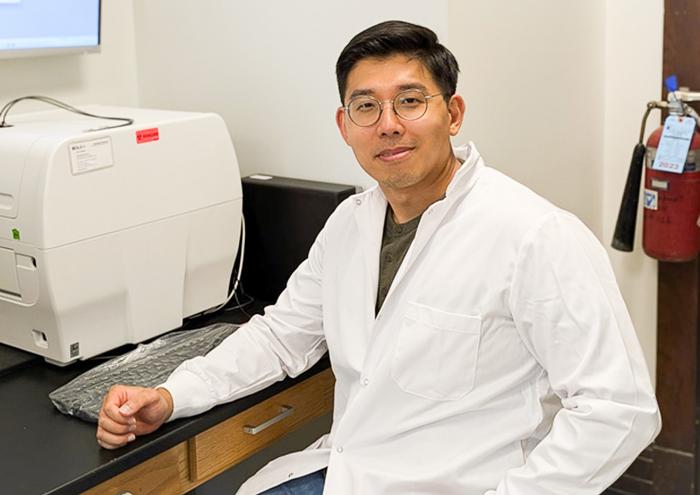
Credit: College of ACES
URBANA, Ill. — Nanozymes are tiny, engineered substances that mimic the catalytic properties of natural enzymes, and they serve a variety of purposes in biomedicine, chemical engineering, and environmental applications. They are typically made from inorganic materials, including metal-based elements, which makes them unsuitable for many purposes due to their toxicity and high production costs.
Organic-based nanozymes partially overcome some of these problems and have the potential for a broader range of applications, including food and agriculture, but they are still in the early stages of development. A new paper from the University of Illinois Urbana-Champaign provides an overview of the current state of organic nanozymes and their future potential.
“Inorganic nanozymes have only been around since 2007, when researchers discovered that iron oxide nanoparticles could perform catalytic activity similar to natural enzymes like peroxidase. Their usage has rapidly advanced, but they have some major drawbacks. They are made from expensive ingredients, and they require a time-consuming, heavy engineering process for fabrication. They are potentially toxic to humans and the environment, and they aren’t naturally degradable so they cause waste management issues,” said lead author Dong Hoon Lee, a doctoral student in the Department of Agricultural and Biological Engineering (ABE), part of the College of Agricultural, Consumer and Environmental Sciences and The Grainger College of Engineering at the U. of I.
These issues led to the emergence of organic nanozymes a few years ago, said Mohammed Kamruzzaman, assistant professor in ABE and co-author of the study.
“Organic nanozymes are cost-effective, non-toxic, and environmentally friendly. The fabrication process is less complicated, and they can be produced in a few hours, compared to several days for inorganic nanozymes,” he stated.
“They are also much less expensive. The precious metals that are used for inorganic nanozymes cost around $400 per gram, while the organic materials and transition metal components cost less than 50 cents per gram. This makes them much more accessible for use in real-world applications outside of the laboratory,” he added.
Furthermore, organic nanozymes are sustainable, and some of them are biodegradable. They still contain a small metal component, such as iron or copper, which is needed to form an ‘active site’ for the enzyme-like catalytic activity, but at a much lower toxicity level.
In the paper, the researchers identify four main types of organic nanozymes based on the organic materials that are used in creating them, including polymers, biomacromolecules (primarily cellulose), organic compounds, and biological materials such as DNA and peptides. They outline chemical structure, components, functionality, and catalytic activity for each of these types, providing fundamental information for other scientists. They also illustrate the corresponding applications from agriculture, food, and environment to biomedicine.
Inorganic nanozymes originated in the biomedical area, and that’s where approximately 80% of research occurs, Kamruzzaman noted. For example, they are used in diagnostic medicine, imaging, therapeutics, and biosensing. However, there are concerns about innate toxicity and their impact on cell viability in therapeutic applications. Organic nanozymes can alleviate those concerns and extend applications to food and agriculture.
In a previous study, Kamruzzaman and Lee pioneered the use of agricultural-centered organic nanozymes and incorporated molecular sensing tools that can detect the presence of agricultural pesticides in food products. The ultimate goal is to create a simple test kit that people can apply anywhere and scan the results with a phone app to get a color reading that indicates the concentration of pesticide in the food. Several additional organic nanozymes made from sustainable materials have also been introduced, and further advanced molecule sensing systems are underway.
“Organic nanozymes have many advantages compared to inorganic nanozymes, but they are still in the early development stages, and there are many challenges that we need to overcome to apply them in the food and agriculture sector,” Kamruzzaman said.
One obstacle is a limited range of suitable organic materials for production. The researchers note that lipids or amino acids are promising materials for future prototypes that could play a crucial role in developing the next generation of nanozymes.
The paper , “Advancements in organic materials-based nanozymes for broader applications,” is published in Trends in Chemistry [DOI: 10.1016/j.trechm.2024.06.007].
Journal
Trends in Chemistry
Method of Research
Systematic review
Article Title
Advancements in organic materials-based nanozymes for broader applications
Article Publication Date
30-Jul-2024
Cite Scienmag News
Alan Morgan. (July 30, 2024). Organic nanozymes have broad applications from food and agriculture to biomedicine. Scienmag. https://scienmag.com/organic-nanozymes-have-broad-applications-from-food-and-agriculture-to-biomedicine/
Alan Morgan. "Organic nanozymes have broad applications from food and agriculture to biomedicine." Scienmag, 30 July 2024, https://scienmag.com/organic-nanozymes-have-broad-applications-from-food-and-agriculture-to-biomedicine/. Accessed 6 September 2026.
Alan Morgan. "Organic nanozymes have broad applications from food and agriculture to biomedicine." Scienmag. July 30, 2024. https://scienmag.com/organic-nanozymes-have-broad-applications-from-food-and-agriculture-to-biomedicine/

