

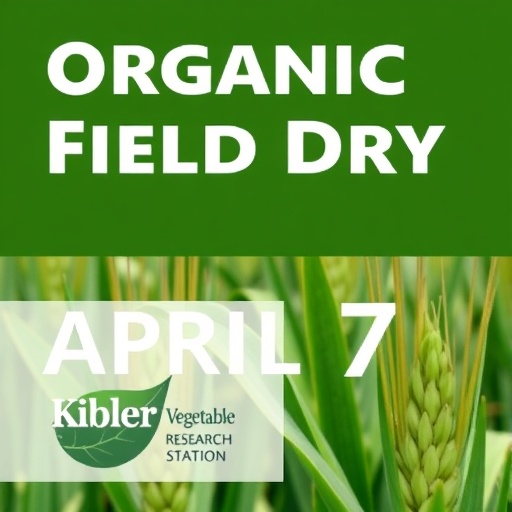
In the ever-evolving landscape of sustainable agriculture, Arkansas is gearing up to become a critical hub for advancing organic field crop production through an upcoming meeting slated for April 7, 2026. Hosted at the University of Arkansas Vegetable Research Station near Kibler, this event promises to connect grain farmers, researchers, and market buyers, spotlighting innovative organic farming practices and research breakthroughs. The convergence of stakeholders underlines the growing momentum and commercial potential for organic agriculture in the Southern United States.
Organic farming, characterized by the exclusion of synthetic pesticides and fertilizers, demands careful management of soil health, pest control, and crop productivity. Recognizing these challenges, the Arkansas event will delve into cutting-edge agronomic research focusing on sustainable termination and weed control treatments specifically tailored for organic soybeans. This includes comparative studies between conventional tillage practices and emerging no-till methods, essential for maintaining soil structure while reducing erosion and labor inputs.
The importance of this field meeting is accentuated by its inclusive approach, offering free access to growers, researchers, and organic crop market buyers. Sessions will illuminate the USDA’s Transition to Organic Partnership Program, an initiative designed to facilitate farmers’ shift to certified organic production systems. This transition phase can be fraught with uncertainty due to certification standards and yield variability. In Arkansas, research is addressing these concerns by generating empirical yield data and developing cover crop systems that enhance nutrient cycling and suppress weeds organically.
A notable feature of the agenda is an interactive panel presenting real-world buyer perspectives on organic grain markets. Such linkage between production and marketing is vital to creating scalable economic models that incentivize organic agriculture. Arkansas is uniquely positioned given its agronomic diversity and proximity to regional markets, enabling an integrated supply chain that aligns production capabilities with consumer demand.
Technical exposition during the field day promises to elevate understanding of no-till agricultural techniques within organic systems. No-till, a soil-conservation method that minimizes mechanical soil disturbance, plays a pivotal role in enhancing soil biodiversity and carbon sequestration. Its adoption in organic crop systems, however, requires innovative weed management strategies, given the absence of chemical herbicides. Presenters will share findings from field trials that compare the efficacy of no-till with conventional tillage plots, providing data-driven insights valuable to growers weighing the trade-offs.
Complementing on-site technical sessions is an afternoon tour showcasing mature cover crop stands—green manure practices that synergistically improve soil organic matter and nutrient availability. Diverse cover crop species such as legumes and grasses function as natural bio-fumigants, helping to mitigate soil-borne pests and diseases. This aspect of organic research exemplifies integrated cultural controls essential for sustainable pest management without synthetic inputs.
Moreover, the event serves an educational role, fostering collaboration among multiple partners including the Natural Soybean and Grain Alliance, Rodale Institute, Winrock International, and researchers from the University of Arkansas System Division of Agriculture. This interdisciplinary coalition combines expertise in agronomy, environmental sciences, and economics, thereby facilitating comprehensive advances in organic production systems.
An anticipated highlight is the panel discussion on accessibility and market creation for organic field crops in Arkansas scheduled mid-morning during the event. This dialogue will address socio-economic barriers and infrastructure needs that influence the growth trajectory of organic farming. Creating equitable market access ensures that diverse farming communities can benefit from the expanding demand for organic products, promoting rural development and environmental stewardship jointly.
Complementing the day’s technical discourse will be a buyer-seller mixer hosted by the Rodale Institute in Fort Smith. This social engagement fosters networking among organic producers, grain buyers, and value chain stakeholders, aiming to forge new partnerships and expedite market integration. Such interactions exemplify the dynamic relationship between scientific innovation and market forces shaping agricultural transformation.
The Arkansas Organic Agriculture project, serving as the event’s backbone, exemplifies how land-grant institutions can leverage research and extension programs to drive real-world applications. By pooling resources and expertise, the project advances knowledge transfer from experimental plots to commercial farms, ultimately enhancing sustainability metrics such as input efficiency and ecosystem health.
This event also underscores the University of Arkansas System Division of Agriculture’s broader mission to bridge research with community impact across all 75 counties in the state. Extension agents and researchers work collaboratively to tailor technologies and best practices that resonate with local agronomic conditions and farmer knowledge systems, fostering resilient agricultural landscapes.
Through this concerted effort, Arkansas is not only fostering innovation in organic field crop management but is also laying the groundwork for economic and ecological sustainability. The April 7 meeting represents a pivotal moment for organic agriculture, providing a platform where science, policy, and industry converge to reimagine the future of farming in the region.
Subject of Research: Organic Field Crop Production, No-Till Tillage, Weed Control, Organic Soybeans, Cover Crops, Sustainable Agriculture
Article Title: Advancing Organic Field Crop Production: Arkansas Hosts Critical Research and Market Integration Event for Grain Farmers
News Publication Date: April 7, 2026
Web References:
- Arkansas Organic Agriculture Project: https://arkansasorganicag.uada.edu/events/organic-crop-meeting-2026/
- USDA Transition to Organic Partnership Program: https://www.organictransition.org/
- Organic Agriculture Research and Extension Initiative: https://www.nifa.usda.gov/grants/funding-opportunities/organic-agriculture-research-extension-initiative
- Rodale Institute: https://rodaleinstitute.org/
- University of Arkansas Division of Agriculture: https://uada.edu/
Image Credits: UADA photo
Keywords: Organic farming, sustainable agriculture, no-till, organic soybeans, cover crops, weed management, organic grain markets, USDA organic program, Arkansas agriculture, Rodale Institute, Agricultural Experiment Station, crop research


