

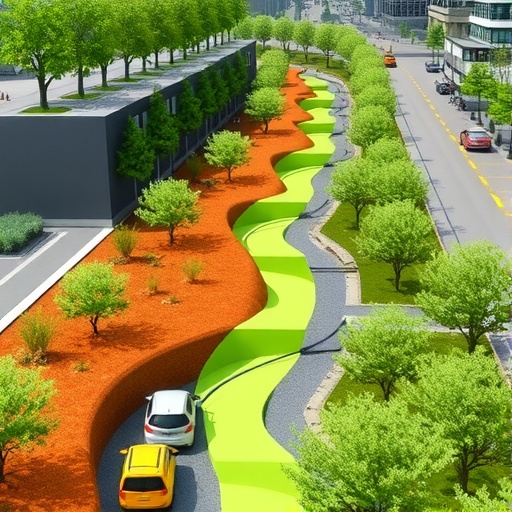
Recent advancements in urban ecosystem management have brought to light the growing significance of integrated urban drainage systems (IUDS). The coordination of multifacility operations within these systems stands as a critical issue, particularly in the context of urbanization and climate change. Research conducted by Liu and Zeng aims to address these challenges through innovative multiobjective optimization control strategies that can vastly improve the resilience and efficiency of urban drainage systems. This work signifies a milestone in the quest to enhance urban sustainability, demonstrating that advanced control mechanisms can lead to substantial improvements in water management in cities worldwide.
Climate change has thrown a spotlight on the vulnerabilities of urban water management systems. As rainfall patterns become increasingly erratic, cities face heightened risks of flooding and sewage overflow, straining existing infrastructure. Liu and Zeng have approached this issue with a focus on optimizing the coordination among multiple facilities such as storage tanks, pumping stations, and treatment plants. Their formulated strategies promise to mitigate these challenges by ensuring that all components of the drainage system operate cohesively, thereby reducing the risk of system failure during critical weather events.
The multiobjective optimization methodology proposed by Liu and Zeng evaluates various factors including cost efficiency, environmental impact, and operational reliability. By effectively balancing these competing objectives, the researchers present a robust framework that decision-makers can utilize to enhance the functionality of integrated urban drainage systems. Their approach underscores a multidimensional perspective, acknowledging that sustainable water management must address a variety of metrics rather than focusing solely on financial outcomes.
One of the pivotal components of the research is the integration of real-time data analytics. By employing advanced sensors and data acquisition technologies, IUDS can significantly enhance operational responsiveness. Liu and Zeng highlight that the effectiveness of the control strategies hinges upon accurate and timely information which, when analyzed, enables facilities to adapt to changing conditions promptly. This positions cities to respond dynamically to precipitative phenomena and urban runoff challenges.
In terms of practical applications, the implementation of these optimization strategies requires collaboration across various stakeholders, including urban planners, engineers, and policymakers. Liu and Zeng stress that for optimal results, an interdisciplinary approach is crucial. By pooling knowledge from diverse fields, teams can better assess the potential impacts of different operational decisions on the urban drainage systems, creating more resilient infrastructures that can withstand climatic challenges.
As urban areas continue to expand, the pressures on existing drainage systems mount. Liu and Zeng’s findings illustrate that multiobjective optimization can aid in transitioning towards a more sustainable urban environment. By minimizing waste and maximizing resource efficiency, their approach signifies a forward-thinking pathway for urban water systems. Given the growing urban populations, such strategies are not just beneficial but essential in managing the increasing demand for reliable water management solutions.
Moreover, the environmental implications of optimized drainage systems extend beyond immediate urban settings. Effectively managed urban drainage can enhance water quality in nearby ecosystems by reducing pollutants that often accompany runoff events. Liu and Zeng’s research indicates that effective coordination of multiple facilities not only minimizes risks of system overload but also preserves aquatic environments, contributing to overall ecological health.
There is also a socio-economic perspective to consider in implementing such systems. Liu and Zeng note that improved urban drainage mechanisms can yield significant financial returns in the long run. By preventing flood-related damages and reducing the need for costly repairs and upgrades, municipalities stand to save substantial amounts of taxpayer funds. Their findings serve as a call to action for city officials to invest in modernized drainage solutions that promote financial prudence alongside environmental stewardship.
The researchers stress that despite the promising outcomes, the transition to optimized drainage systems is laden with challenges. Resistance to change, funding constraints, and the complexity of integrating new technologies can hinder progress. Liu and Zeng advocate for pilot projects to demonstrate the viability of their methodologies, providing tangible evidence of the benefits to win over stakeholders and secure necessary investments.
In the context of global sustainability goals, the innovative strategies presented by Liu and Zeng resonate with larger efforts to combat climate change. The increasing prevalence of climate-related disasters underscores the critical need for cities to adapt their infrastructures. IUDS represent a key opportunity in creating urban environments that are resilient, capable of managing fluctuating water availability and extreme weather events with greater efficiency.
Ultimately, the research conducted by Liu and Zeng marks a significant turning point in urban drainage management. Their multiobjective optimization approach not only addresses immediate operational challenges but also contributes to a larger dialogue on sustainable urban development. The findings offer a glimpse into a future where cities can thrive amidst potential environmental crises, ensuring safety and sustainability for generations to come.
Liu and Zeng’s landmark study poses a blueprint for other cities worldwide facing similar challenges. By leveraging technology and prioritizing integrated management, urban centers can evolve from traditional water infrastructure prone to failure to advanced systems designed for resilience and efficiency. The call to action is clear: it is imperative for urban areas to adopt innovative solutions like those proposed by Liu and Zeng to navigate the complexities of modern water management and sustainability.
As awareness of these urban challenges rises, Liu and Zeng’s research serves as a beacon for further inquiry in the field. Additional studies focusing on refining these optimization strategies and adapting them to local conditions will be crucial in fostering widespread adoption. The notion that coordinated multifacility approaches can significantly enhance the performance of urban drainage systems is a pivotal topic that deserves the attention of both scholars and practitioners alike.
In conclusion, Liu and Zeng’s multiobjective optimization control for multifacility coordination in integrated urban drainage systems stands as a significant contribution to environmental science and engineering. Through their rigorous research, they have illuminated pathways to create smarter, more resilient urban systems, paving the way for a sustainable future in urban water management.
Subject of Research: Multiobjective optimization control for multifacility coordination in integrated urban drainage systems.
Article Title: Multiobjective optimization control for multifacility coordination in integrated urban drainage systems.
Article References: Liu, X., Zeng, S. Multiobjective optimization control for multifacility coordination in integrated urban drainage systems. Front. Environ. Sci. Eng. 19, 125 (2025). https://doi.org/10.1007/s11783-025-2045-0
Image Credits: AI Generated
DOI: 10.1007/s11783-025-2045-0
Keywords: Urban drainage systems, multiobjective optimization, integrated systems, sustainability, climate resilience, water management, environmental impact, data analytics, urban planning.


