


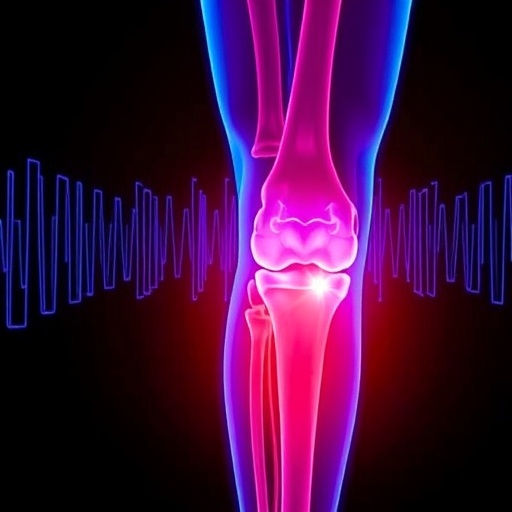
Recent advancements in medical technology continue to pave the way for innovative treatments that address chronic conditions effectively and non-invasively. Among them, knee osteoarthritis, a prevalent degenerative joint disease, has emerged as a significant concern affecting millions of individuals worldwide. The search for optimal treatment modalities has led researchers to explore a new frontier in medical therapies: pulsed electromagnetic field (PEMF) therapy. In their recent study, Jha and colleagues focused on optimizing PEMF parameters specifically for knee osteoarthritis treatment and validating its clinical efficacy.
Knee osteoarthritis is characterized by the gradual deterioration of cartilage in the knee joint, resulting in pain, stiffness, and reduced mobility. Traditional treatment options include physical therapy, medications, and, in severe cases, surgical intervention. However, these approaches may not always provide long-lasting relief and can sometimes come with significant side effects. The authors of the study recognized the need for a safer, more effective alternative that could significantly improve patient quality of life without the drawbacks of conventional treatments.
Pulsed electromagnetic field therapy is gaining attention in the field of regenerative medicine for its ability to enhance tissue repair and reduce inflammation. PEMF works by emitting low-frequency electromagnetic fields that penetrate the body, fostering cellular processes that support healing. The treatment has shown promise in alleviating pain and improving functionality in patients with various musculoskeletal conditions, including osteoarthritis. However, the effectiveness of PEMF therapy can be influenced by several parameters, including frequency, intensity, and duration of exposure.
In their research, Jha and colleagues aimed to identify and optimize these parameters to maximize therapeutic benefits for osteoarthritis sufferers. They conducted a series of experiments that involved testing different PEMF settings, assessing their effects on both cellular responses and symptom relief in patients. The methodology employed was rigorous, involving both in vitro and in vivo studies, to ensure comprehensive insight into the biomechanical and biological mechanisms at play.
The investigation revealed that specific combinations of frequency and intensity could significantly enhance tissue repair and pain mitigation. For instance, certain frequencies were found to stimulate cellular proliferation and increase the production of healing factors, while specific intensity levels boosted blood circulation in the affected area. These findings suggest that tailoring PEMF therapy to individual patient needs could optimize recovery outcomes and lead to more personalized treatment plans.
Clinical validation played a crucial role in the research, as it aimed to provide solid evidence of the therapy’s effectiveness. Jha and colleagues conducted randomized controlled trials where participants with diagnosed knee osteoarthritis received PEMF therapy under the optimized parameters identified in their experiments. The trials monitored various outcomes, including pain levels, mobility, and overall life quality, over several weeks of treatment.
The results were promising. Participants who underwent optimized PEMF therapy reported significant reductions in pain and marked improvements in joint function compared to control groups receiving sham treatments. Such results indicate that PEMF therapy, when finely tuned, could serve as a viable non-invasive option for managing knee osteoarthritis, potentially delaying or even preventing the need for surgical interventions.
Furthermore, the long-term benefits of PEMF therapy on joint health have significant implications. With continued use, patients might experience sustained relief from symptoms, which could improve their overall physical health and well-being. This aligns with a growing body of research advocating for alternatives that minimize reliance on medication, especially with the opioid crisis and the side effects associated with long-term drug use.
The implications of these findings extend beyond just knee osteoarthritis. The principles of PEMF therapy could be applied to a variety of musculoskeletal disorders, opening avenues for broader applications in pain management and rehabilitation. With further studies and clinical trials, the potential to use PEMF therapy could redefine the standard care path for many patients facing similar challenges.
Admittedly, challenges remain in standardizing PEMF therapy and making it widely accessible to patients in clinical settings. Ongoing research will be essential in establishing guidelines for practitioners and ensuring that the treatment can be effectively administered in various medical environments.
In conclusion, the work of Jha and collaborators marks a significant step forward in the application of innovative technologies for the treatment of knee osteoarthritis. Their findings underscore the importance of optimizing treatment parameters to enhance therapeutic efficacy, ultimately leading to better patient outcomes. As we continue to explore the boundaries of medical technology, PEMF therapy stands out as a beacon of hope for those coping with the pain and limitations imposed by chronic conditions.
By further investigating the mechanisms behind PEMF therapy and its application in diverse medical contexts, the potential for revolutionary advancements in how we approach pain management and rehabilitation is immense. The study paves the way for a future where chronic pain can be managed more effectively, improving the quality of life for countless individuals worldwide, and marking a pivotal moment in the evolution of integrative health care.
Cite Scienmag News
Ophelia Keating. (August 26, 2025). Optimizing Pulsed Electromagnetic Fields for Knee Osteoarthritis Treatment. Scienmag. https://scienmag.com/optimizing-pulsed-electromagnetic-fields-for-knee-osteoarthritis-treatment/
Ophelia Keating. "Optimizing Pulsed Electromagnetic Fields for Knee Osteoarthritis Treatment." Scienmag, 26 August 2025, https://scienmag.com/optimizing-pulsed-electromagnetic-fields-for-knee-osteoarthritis-treatment/. Accessed 6 September 2026.
Ophelia Keating. "Optimizing Pulsed Electromagnetic Fields for Knee Osteoarthritis Treatment." Scienmag. August 26, 2025. https://scienmag.com/optimizing-pulsed-electromagnetic-fields-for-knee-osteoarthritis-treatment/


