

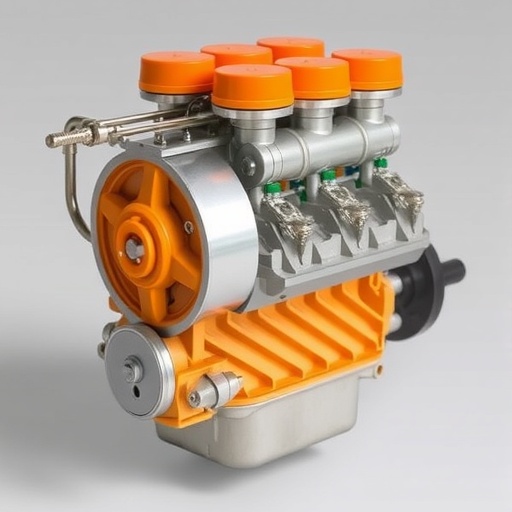
In a transformative era where clean energy technologies are becoming paramount, researchers are spotlighting innovative solutions to reduce carbon footprints. The latest study authored by Himmelseher, Lampkowski, and Sterlepper focuses on a groundbreaking control strategy for hydrogen combustion engines, specifically emphasizing the nuances of both lean and stoichiometric combustion systems. This research emerges amidst growing concerns over traditional fossil fuels, which continue to dominate the automotive landscape, contributing significantly to pollution and climate change. The authors’ efforts aim to pivot the narrative towards a cleaner, hydrogen-powered future.
Hydrogen combustion engines have long been seen as a promising alternative to gasoline and diesel engines. Their utilization of hydrogen—a clean fuel source only emitting water vapor as a byproduct—holds strong appeal in the fight against global warming. The critical challenge, however, lies in optimizing combustion processes to harness hydrogen’s full potential while maintaining performance and efficiency. Himmelseher and colleagues delve deep into this optimization through a meticulously crafted control strategy that integrates both lean and stoichiometric combustion techniques.
Lean combustion refers to an engine operation where the amount of air present surpasses the fuel amount, which typically improves fuel efficiency and reduces harmful emissions. Meanwhile, stoichiometric combustion occurs at an ideal air-to-fuel ratio, enabling complete fuel combustion. The researchers argue that a dual approach, employing both strategies, can significantly enhance the overall performance of hydrogen engines. By understanding how to switch between these combustion modes effectively, they aim to maximize their efficiency under varied operating conditions.
The research presents an innovative control framework that continuously monitors engine parameters, enabling real-time adjustments to combustion strategies. This adaptive mechanism is vital in addressing the inherent complexities and variabilities associated with hydrogen fuel usage in combustion engines, ensuring optimal performance. The researchers utilized advanced algorithms that not only assess the operational environment but also predict the best combustion mode to adopt at any given moment.
One of the intriguing outcomes from this study is the performance boost achieved through the dual combustion strategy. Experimental results indicated that engines using this adaptive control strategy exhibited improved torque and horsepower comparisons to traditional hydrogen combustion engines. This finding is not just academic; it has real implications for manufacturers and the broader automotive industry, suggesting a viable path forward in the quest for sustainable energy sources.
Moreover, the implications for emissions reductions are substantial. By leveraging lean combustion for periods of light load and transitioning to stoichiometric operation during high-load scenarios, the researchers have illustrated that significant decreases in nitrogen oxides can be achieved. As tighter emissions regulations loom in many parts of the world, this research could help automotive engineers design engines that not only comply with but exceed these mandates.
In addition to the environmental benefits, the economic potential arising from hydrogen fuel adoption is noteworthy. The automotive industry is at a crossroads, with consumers increasingly demanding greener alternatives. As the technology surrounding hydrogen combustion engines matures, this study lays essential groundwork for future research and development. Investments in hydrogen infrastructures, like production and refueling stations, could lead to wider market acceptance, driving the transition towards sustainable transportation systems.
As curiosity grows around green technologies, the research conducted by Himmelseher and colleagues adds to a rich tapestry of efforts aimed at creating a sustainable automotive future. The study’s implications extend beyond just technical achievements; they resonate with a larger narrative of ecological responsibility. Moving from traditional fuels towards hydrogen not only reflects technological progress but signifies a societal shift towards valuing sustainability in the face of climate change.
Furthermore, this study could have a profound effect on the perceptions of hydrogen technology. Historically, hydrogen combustion has faced skepticism regarding safety and practicality. Scientific explorations, such as this one, serve to demystify the operational frameworks needed for effective hydrogen usage. With well-documented results, stakeholders in the energy and transportation sectors may increasingly consider hydrogen combustion engines a plausible and economically viable solution moving forward.
In a world where energy independence is increasingly prioritized, hydrogen presents an exciting opportunity. The potential for hydrogen fuels extends far beyond automotive applications, influencing energy generation, industrial processes, and heating systems. Himmelseher and their co-authors highlight the importance of a multifaceted approach to combustion strategies, paving the way for innovations that could extend across multiple domains of energy consumption.
A plethora of challenges remains in achieving widespread acceptance and application of hydrogen combustion technology. Still, innovation like this study’s control strategy offers a glimpse into a future where vehicles powered by clean energy dominate our roads. The researchers’ commitment to experimenting with complex combustion systems reflects a growing understanding that multipronged strategies may yield the best results for transitioning from fossil fuel dependency.
In conclusion, Himmelseher, Lampkowski, and Sterlepper’s study contributes significantly to the growing body of knowledge surrounding hydrogen combustion engines. Their explorations into control strategies for both lean and stoichiometric systems add depth to an emerging field of study poised to revolutionize our approach to sustainable energy. As this research gains exposure, its findings may inspire an upsurge in the development of hydrogen technology across various sectors.
Hydrogen-powered vehicles, once relegated to the realm of speculative technology, are now inching closer to becoming a mainstream reality. The advancements presented in this study underscore the undeniable potential of hydrogen as a game-changing fuel source—a prospect that could redefine not just the automobile industry, but the global landscape of energy consumption as a whole.
Subject of Research: Control strategy for hydrogen combustion engines with lean and stoichiometric combustion systems.
Article Title: Control strategy for a hydrogen combustion engine with lean and stoichiometric combustion system.
Article References: Himmelseher, K., Lampkowski, A., Sterlepper, S. et al. Control strategy for a hydrogen combustion engine with lean and stoichiometric combustion system. Automot. Engine Technol. 10, 15 (2025). https://doi.org/10.1007/s41104-025-00160-y
Image Credits: AI Generated
DOI: https://doi.org/10.1007/s41104-025-00160-y
Keywords: Hydrogen combustion engines, lean combustion, stoichiometric combustion, control strategy, sustainable energy.


