

Sunday, November 22, 2026
Science
No Result
View All Result
  • Login
  • HOME
  • SCIENCE NEWS
  • CONTACT US
  • HOME
  • SCIENCE NEWS
  • CONTACT US
No Result
View All Result
Scienmag
No Result
View All Result
Home Science News Technology and Engineering

Optimized Lithium Excess Boosts Conductivity in Ta-Substituted LLZO

November 8, 2026
in Technology and Engineering
Denise Maddox
By Denise Maddox Scienmag Editorial Profile - Mechanical Engineering
Reading Time: 2 mins read
0
Optimized Lithium Excess Boosts Conductivity in Ta-Substituted LLZO

Optimized Lithium Excess Boosts Conductivity in Ta-Substituted LLZO

65
SHARES
587
VIEWS
Share on FacebookShare on Twitter
ADVERTISEMENT

Published in the Journal of Materials Science, the study demonstrates that adding 15% excess lithium hydroxide monohydrate to the precursor mixture during a rapid flash sintering process yields the highest room-temperature ionic conductivity among the tested samples. These results establish a practical excess-Li window for flash-sintered Ta-LLZO.

The research team, led by Yue Yang and Wei Lü, investigated the role of excess lithium in compensating for volatilization during the synthesis of Li6.4La3Zr1.4Ta1.0O12, commonly known as Ta-substituted LLZO. While excess lithium is a standard practice in garnet electrolyte production to account for lithium loss during heating, its specific impact during rapid flash sintering had not been fully resolved. The study focused on samples prepared with 0%, 5%, 10%, 15%, and 20% excess LiOH·H2O, all subjected to flash sintering at 800 °C for 10 minutes. By systematically varying the excess lithium content, the researchers aimed to clarify how this parameter influences the phase structure, density, surface composition, and local lithium-oxygen structure of the final material.

The results indicated that the sample containing 15% excess lithium exhibited the best overall performance. This specific composition achieved a relative density of 95.97% and a room-temperature ionic conductivity of 8.20 × 10⁻⁴ S cm⁻¹. Additionally, the apparent activation energy for ion transport was measured at 0.24 eV. In contrast, increasing the excess lithium content to 20% resulted in a decrease in ionic conductivity, indicating that there is an optimal threshold beyond which additional lithium becomes detrimental to the material’s transport properties.

To understand the structural basis for these transport trends, the researchers employed radial distribution functions to analyze the local lithium-oxygen ordering. The data supported a change in local structure that was consistent with the observed experimental transport behavior. This structural insight helps explain why the 15% excess lithium sample outperformed others, linking the macroscopic conductivity to the microscopic arrangement of ions within the garnet lattice.

Further validation of the material’s potential was conducted through cell-level testing. It is important to note that these cell-level performance metrics were obtained under elevated-temperature and liquid-assisted conditions, which may not directly reflect performance at room temperature or in fully solid-state configurations without liquid additives.

The study concludes that optimizing the excess lithium amount is a viable strategy for enhancing the conductivity of flash-sintered Ta-substituted LLZO. By defining a practical excess-lithium window, the research offers a clear guideline for the synthesis of high-quality solid electrolytes.

Subject of Research: Optimization of excess lithium in Ta-substituted LLZO for solid-state battery electrolytes

Article Title: High conductivity enabled by optimized Li excess amounts in Ta-substituted LLZO for solid-state Li-ion batteries

Article References: Yang, Y., Zhang, Z., Ma, Y., Jia, S., Meng, J., & Lü, W. (2026). High conductivity enabled by optimized Li excess amounts in Ta-substituted LLZO for solid-state Li-ion batteries. Journal of Materials Science. https://doi.org/10.1007/s10853-026-13957-5

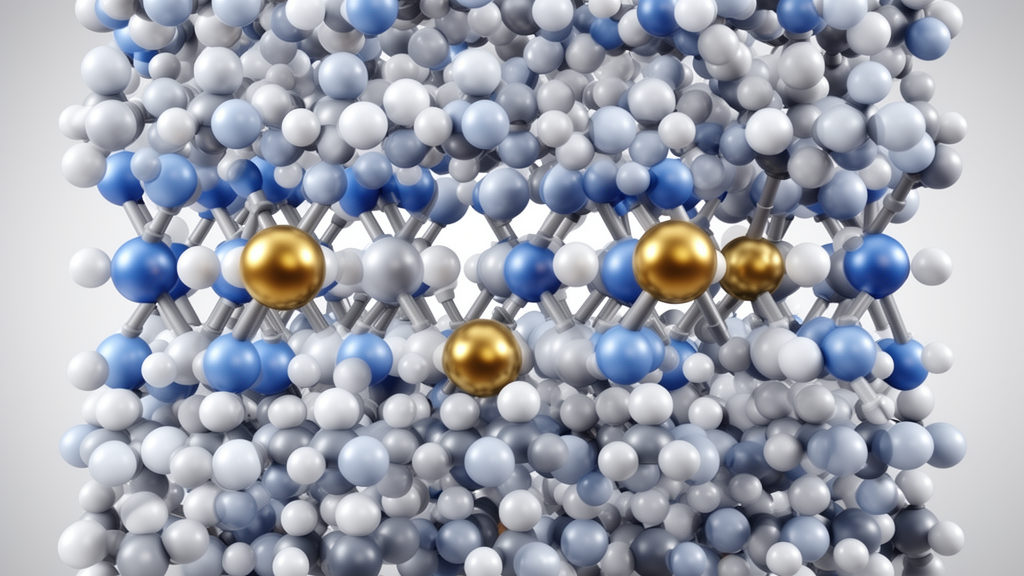
Image Credits: AI Generated

DOI: 10.1007/s10853-026-13957-5

Keywords: solid-state batteries, ionic conductivity, LLZO, flash sintering, lithium excess, garnet electrolyte, materials science, lithium-ion transport, High, conductivity, enabled, optimized

Cite Scienmag News

Denise Maddox. (November 8, 2026). Optimized Lithium Excess Boosts Conductivity in Ta-Substituted LLZO. Scienmag. https://scienmag.com/optimized-lithium-excess-boosts-conductivity-in-ta-substituted-llzo/

Denise Maddox. "Optimized Lithium Excess Boosts Conductivity in Ta-Substituted LLZO." Scienmag, 8 November 2026, https://scienmag.com/optimized-lithium-excess-boosts-conductivity-in-ta-substituted-llzo/. Accessed 22 November 2026.

Denise Maddox. "Optimized Lithium Excess Boosts Conductivity in Ta-Substituted LLZO." Scienmag. November 8, 2026. https://scienmag.com/optimized-lithium-excess-boosts-conductivity-in-ta-substituted-llzo/

Tags: conductivityenabledflash sinteringgarnet electrolytehighionic conductivitylithium excesslithium ion transportLLZOmaterials scienceoptimizedsolid-state batteries
Share26Tweet16
Previous Post

Lipid Complex Enhances Chrysanthemum Extract Bioactivity and Entrapment Against Inflammation

Next Post

GWAS Pinpoints Body Size Genes in Tibetan Plateau Sheep

Related Posts

Precast Concrete Shear Walls with UHPC Boundary Connections Improve Seismic Performance
Technology and Engineering

Precast Concrete Shear Walls with UHPC Boundary Connections Improve Seismic Performance

November 21, 2026
Portable Raman Spectroscopy Screens Microbial Carotenoids for Solar Cell Fabrication
Technology and Engineering

Portable Raman Spectroscopy Screens Microbial Carotenoids for Solar Cell Fabrication

November 21, 2026
New Unified Contraction Framework Establishes Fixed Point Results in Metric Spaces
Technology and Engineering

New Unified Contraction Framework Establishes Fixed Point Results in Metric Spaces

November 21, 2026
Simulations Show Zwitterion Pair Enhances Dialysis Membrane Blood Compatibility
Technology and Engineering

Simulations Show Zwitterion Pair Enhances Dialysis Membrane Blood Compatibility

November 21, 2026
Electrospun Polymer-Derived Carbon Fibers Deliver Effective Lightweight Electromagnetic Shielding
Technology and Engineering

Electrospun Polymer-Derived Carbon Fibers Deliver Effective Lightweight Electromagnetic Shielding

November 21, 2026
Digital Twin Framework Coordinates Vehicular Edge Computing with Opportunistic Vehicles
Technology and Engineering

Digital Twin Framework Coordinates Vehicular Edge Computing with Opportunistic Vehicles

November 21, 2026
Next Post
GWAS Pinpoints Body Size Genes in Tibetan Plateau Sheep

GWAS Pinpoints Body Size Genes in Tibetan Plateau Sheep

  • Mothers who receive childcare support from maternal grandparents show more optimized

    Mothers who receive childcare support from maternal grandparents show more parental warmth, finds NTU Singapore study

    27656 shares
    Share 11059 Tweet 6912
  • University of Seville Breaks 120-Year-Old Mystery, Revises a Key Einstein Concept

    1061 shares
    Share 424 Tweet 265
  • Bee body mass, pathogens and local climate influence heat tolerance

    682 shares
    Share 273 Tweet 171
  • Researchers record first-ever images and data of a shark experiencing a boat strike

    546 shares
    Share 218 Tweet 137
  • Groundbreaking Clinical Trial Reveals Lubiprostone Enhances Kidney Function

    531 shares
    Share 212 Tweet 133
Science

Embark on a thrilling journey of discovery with Scienmag.com—your ultimate source for cutting-edge breakthroughs. Immerse yourself in a world where curiosity knows no limits and tomorrow’s possibilities become today’s reality!

RECENT NEWS

  • Adding Canakinumab to Chemoradiotherapy Yields Favorable Survival in Stage III Lung Cancer
  • Wealthier UK Households Generate More Emissions but Resist Curtailing Travel
  • Dual Drug-Device Platform Enables Safe Intraoperative Photodynamic Therapy for Glioblastoma
  • Instrumentalists Show Higher Visuospatial Recall Than Vocalists in Cross-Sectional Analysis

Categories

  • Agriculture
  • Anthropology
  • Archaeology
  • Athmospheric
  • Biology
  • Biotechnology
  • Blog
  • Bussines
  • Cancer
  • Chemistry
  • Climate
  • Earth Science
  • Editorial Policy
  • Marine
  • Mathematics
  • Medicine
  • Pediatry
  • Policy
  • Psychology & Psychiatry
  • Science Education
  • Science News
  • Social Science
  • Space
  • Technology and Engineering

Subscribe to Blog via Email

Enter your email address to subscribe to this blog and receive notifications of new posts by email.

Join 5,151 other subscribers

© 2026 Scienmag - Science Magazine

Welcome Back!

Login to your account below

Forgotten Password?

Retrieve your password

Please enter your username or email address to reset your password.

Log In
No Result
View All Result
  • HOME
  • SCIENCE NEWS
  • CONTACT US

© 2026 Scienmag - Science Magazine

Discover more from Science

Subscribe now to keep reading and get access to the full archive.

Continue reading

