


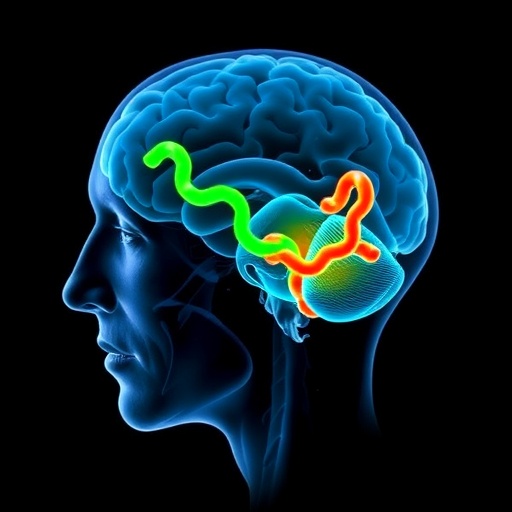
In a groundbreaking new study set to redefine our understanding of Parkinson’s disease progression, researchers have unveiled compelling evidence linking the age at onset of the disease with a complex biochemical dialogue between sphingolipids and dopaminergic systems. This discovery sheds new light on the autonomic dysfunction that frequently accompanies Parkinson’s and may pave the way for more tailored therapeutic strategies.
Parkinson’s disease (PD) is widely recognized as a neurodegenerative disorder characterized primarily by the loss of dopamine-producing neurons in the substantia nigra, leading to hallmark motor symptoms such as tremors, rigidity, and bradykinesia. However, it is increasingly clear that non-motor symptoms, particularly autonomic impairments affecting cardiovascular, gastrointestinal, and thermoregulatory systems, play a significant role in patients’ quality of life and disease morbidity. The intricate interplay between lipid metabolism and neuronal health is emerging as a critical factor in such multi-system involvement.
The research team, led by Ye, Zhang, Liu, and colleagues, zeroed in on sphingolipids, a class of bioactive lipids integral to cellular membrane structure, signal transduction, and neuroinflammation. Previous work has hinted at aberrations in sphingolipid metabolism in PD, but this study is among the first to systematically examine how these lipid pathways intersect with dopamine signaling in the context of autonomic nervous system degeneration and how this relationship evolves with disease onset age.
Utilizing state-of-the-art lipidomic profiling alongside advanced neurochemical assays, the team investigated post-mortem brain samples and peripheral tissues from a diverse cohort of PD patients stratified by age at disease onset. Their meticulous analysis revealed distinct sphingolipid signatures that correlate with altered dopaminergic receptor expression and function, particularly within autonomic regulatory centers of the brainstem and peripheral ganglia.
A striking finding was the modulation of sphingolipid species such as ceramides and sphingosine-1-phosphate (S1P), molecules known to mediate cell survival, apoptosis, and neuroinflammation pathways. Ceramide accumulation, often associated with pro-apoptotic effects, was disproportionately elevated in patients with early-onset PD, coinciding with more pronounced autonomic dysfunction. Contrastingly, individuals with later-onset PD exhibited a relative increase in neuroprotective S1P levels, suggesting an adaptive lipid-driven response that could slow autonomic deterioration.
This age-dependent lipid-dopaminergic interplay provides a plausible mechanistic framework to explain the heterogeneity observed in Parkinson’s progression. The dual role of sphingolipids in promoting either neurodegeneration or neuroprotection appears to be finely tuned by the temporal dynamics of disease onset, opening new avenues for biomarker development and pharmacological targeting.
Importantly, the study also highlighted alterations in dopaminergic receptor subtypes contributing to autonomic failures. In early-onset PD cases, the downregulation of D2-like receptors within autonomic nuclei correlated with sphingolipid imbalances, potentially exacerbating neuronal vulnerability and synaptic dysfunction. This discovery underscores the possibility that manipulating sphingolipid metabolism could restore dopaminergic signaling fidelity and alleviate autonomic symptoms.
The research carries profound implications for clinical practice. Personalized medicine approaches could emerge that factor in not just genetic or clinical phenotypes but also lipidomic profiles and dopaminergic receptor status to stratify patients more accurately. Therapies aimed at rebalancing sphingolipid metabolism — such as inhibitors of ceramide synthesis or modulators of S1P receptors — may represent novel adjuncts to traditional dopaminergic treatments, particularly for patients with early-onset disease who tend to experience more aggressive autonomic declines.
From a neuroscientific perspective, these findings challenge the conventional neuron-centric view of Parkinson’s pathology, emphasizing the importance of lipid signaling milieus and their systemic effects. The interdependency between lipid homeostasis and neurotransmitter systems may constitute a fundamental axis governing neurodegenerative vulnerability and resilience, inviting broader investigation into similar mechanisms in other disorders.
Methodologically, the study employed cutting-edge mass spectrometry coupled with multiplex immunohistochemistry, allowing unprecedented spatial and molecular resolution of sphingolipid alterations in autonomic pathways. The integration of clinical data with biochemical and histological findings exemplifies the power of multidisciplinary collaboration to unravel the complexity of neurodegeneration.
The potential for translating these insights into diagnostic and monitoring tools is particularly exciting. Non-invasive assays measuring circulating sphingolipid profiles could serve as biomarkers to track disease progression or response to interventions, enabling earlier and more dynamic adjustments in patient care paradigms.
While the findings are promising, the authors caution that further investigations are necessary to elucidate the precise causal mechanisms linking sphingolipid dysregulation to dopaminergic deficits and neurodegeneration. Longitudinal studies, coupled with experimental models mimicking varying ages of onset, will be crucial to dissect these interactions and optimize therapeutic regimens.
Moreover, the study invites a reevaluation of how aging-related changes in lipid metabolism might intersect with neurodegenerative processes beyond Parkinson’s, potentially offering insights relevant to Alzheimer’s disease, multiple system atrophy, and related conditions exhibiting autonomic disturbances.
This research not only advances our fundamental understanding of Parkinson’s disease heterogeneity but also holds the promise of empowering clinicians with new tools to tailor treatments according to individual biochemical landscapes. The carefully elucidated sphingolipid-dopaminergic axis offers a tantalizing target for future drug development and a beacon of hope for improved clinical outcomes.
As next steps, the team plans to expand their cohorts and include longitudinal sampling to validate sphingolipid signatures as predictive biomarkers. Parallel experimental work aims to test pharmacological modulation of sphingolipid pathways in preclinical PD models, potentially laying the groundwork for clinical trials.
In essence, the study by Ye and colleagues heralds a new era in Parkinson’s research — one where the nuanced interrelation of lipids and neurotransmitters is recognized as a cornerstone of disease pathophysiology and personalized therapy. As the global burden of Parkinson’s rises, such innovative insights are both timely and imperative.
Ultimately, this work exemplifies the transformative potential of integrating molecular lipidomics with neurobiology to decode the complex narrative of neurodegeneration, inspiring optimism that we are moving closer to breaking Parkinson’s enigmatic code.
Cite Scienmag News
Cassandra Pierce. (March 20, 2026). Onset Age Shapes Sphingolipid-Dopamine Parkinson’s Progression. Scienmag. https://scienmag.com/onset-age-shapes-sphingolipid-dopamine-parkinsons-progression/
Cassandra Pierce. "Onset Age Shapes Sphingolipid-Dopamine Parkinson’s Progression." Scienmag, 20 March 2026, https://scienmag.com/onset-age-shapes-sphingolipid-dopamine-parkinsons-progression/. Accessed 3 September 2026.
Cassandra Pierce. "Onset Age Shapes Sphingolipid-Dopamine Parkinson’s Progression." Scienmag. March 20, 2026. https://scienmag.com/onset-age-shapes-sphingolipid-dopamine-parkinsons-progression/


