

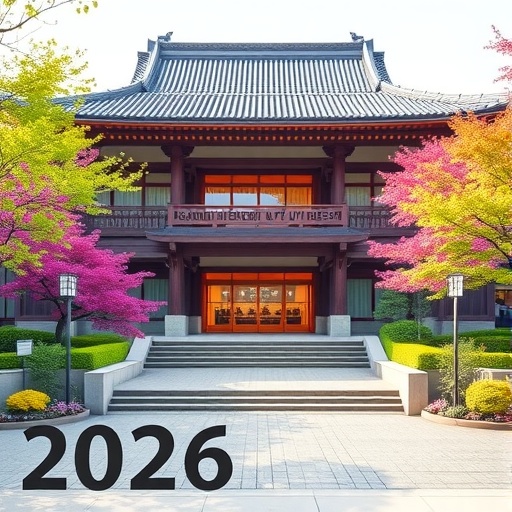
In a recent release that captivates the scientific academia worldwide, Times Higher Education (THE), a preeminent UK-based publication specializing in global higher education metrics, unveiled the 2026 edition of its Interdisciplinary Science Rankings. These rankings serve to highlight institutions that are breaking conventional academic silos through pioneering interdisciplinary scientific research. The results showcase a dynamic reshaping of Japan’s educational landscape, with Okayama University of Science emerging as a noteworthy contender.
Okayama University of Science earned a commendable position in the rankings, tying for 23rd place nationally among all universities in Japan, as well as securing a distinguished fifth place among private universities nationwide. This remarkable achievement places it in close proximity to Japan’s established scientific powerhouses, such as Keio University and Tokyo University of Science. Such recognition is pivotal in a competitive academic environment where interdisciplinary approaches are increasingly critical to tackling complex global challenges.
The significance of the THE Interdisciplinary Science Rankings lies in their innovative approach to evaluating university contributions that span multiple traditional disciplines. Unlike conventional rankings that gauge performance within siloed fields such as physics or biology, these rankings assess how institutions integrate varied scientific domains. This approach reflects the evolving nature of scientific inquiry, where complex phenomena—from climate change to biomedical innovation—demand cross-disciplinary collaboration and integrative methodologies.
In Western Japan, Okayama University of Science distinguished itself even further. It was recognized as tied for first place among private universities in this region, sharing this honor with other prominent institutions like Kindai University and Kansai University. This regional excellence underscores the university’s strategic emphasis on fostering interdisciplinary research that not only advances scientific knowledge but also enhances regional innovation ecosystems.
Delving into the technical underpinnings of interdisciplinary research, the methodology behind THE’s rankings captures various metrics related to research output, citation impact, and collaborative initiatives that transcend traditional boundaries. This includes the extent to which research projects integrate knowledge and techniques from diverse scientific backgrounds, thereby generating holistic insights that singular disciplines cannot achieve independently.
Among the private universities cataloged, Keio University emerged in the highest tier (195 band), reflecting its longstanding heritage and robust investment in interdisciplinary initiatives. Tokyo University of Science follows in the 351-400 band, reflecting solid but comparatively emerging interdisciplinary engagements. Shibaura Institute of Technology and Teikyo University are positioned in the 601-800 band, with Okayama University of Science and several peers occupying the 801+ band, indicating a burgeoning yet impactful presence in this multidisciplinary arena.
These rankings do more than quantify academic prowess; they contextualize how universities cultivate environments conducive to interdisciplinary science. Elements such as organizational structures that promote cross-departmental research, funding mechanisms aimed at integrative scientific themes, and partnerships with industry or governmental research bodies contribute to these standings. Okayama University of Science’s rise in this scheme suggests a concerted institutional effort to align academic output with these dynamic, integrative models.
The growing emphasis on interdisciplinary science reflects broader scientific and societal trends. Complex global issues such as pandemic response, sustainable energy development, and advanced materials design require combining insights from molecular biology, computational sciences, environmental studies, and engineering, among others. Universities adept at fostering such collaborations are positioned not only as academic leaders but also as key drivers of innovation with tangible societal benefits.
Furthermore, the ranking validates Okayama University of Science’s strategic investments in research infrastructure, faculty diversification, and interdisciplinary curricula that equip students to navigate and contribute to multifaceted scientific landscapes. Their collaborative frameworks facilitate cross-pollination of ideas, enabling novel hypotheses and breakthrough solutions to emerge, a hallmark of cutting-edge contemporary science.
It is critical to recognize that this ranking’s impact extends beyond prestige. It influences student recruitment, attracting talented individuals keen on engaging with multidisciplinary scientific challenges. It also enhances funding prospects and encourages international collaborations, further embedding the university within the global scientific discourse.
The Times Higher Education Interdisciplinary Science Rankings thus serve as a prism through which the shifting paradigms in scientific education and research can be observed. Okayama University of Science’s position within these rankings mirrors its visionary approach toward embracing interdisciplinary research as a core institutional driver, supporting advancements that transcend narrow academic confines.
In sum, the ascent of Okayama University of Science in the 2026 Interdisciplinary Science Rankings heralds a promising trajectory for Japanese private universities willing to embrace complexity and innovation through integrated scientific research. The university’s rising stature augurs well for the future of interdisciplinary science both regionally and internationally, embodying a vital shift in how research excellence is defined and pursued in the 21st century.
Readers eager to explore further details regarding this ranking and the methodologies governing it are encouraged to visit the official Times Higher Education website, which meticulously documents the criteria and comparative analyses that underpin this influential benchmarking system.
Subject of Research: Interdisciplinary Scientific Research and University Ranking
Article Title: Okayama University of Science Achieves High Standing in Times Higher Education Interdisciplinary Science Rankings 2026
News Publication Date: 2024
Web References: Official Times Higher Education website (https://www.timeshighereducation.com)
Image Credits: Okayama University of Science
Keywords: Higher Education, Interdisciplinary Science, University Rankings, Japan, Okayama University of Science, Scientific Collaboration, Private Universities, Research Innovation


