

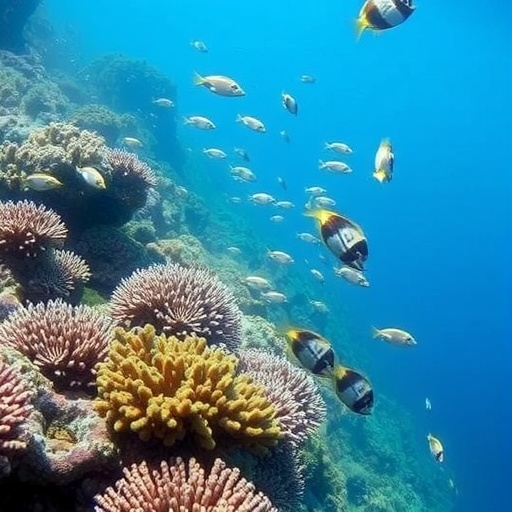
A groundbreaking study from New York University Abu Dhabi (NYUAD) has unveiled a critical, yet previously overlooked, stressor affecting coral reef fish in the Arabian Gulf: nighttime hypoxia, or low oxygen levels. While the extreme heat of these reefs has long raised concerns, this research highlights how oxygen fluctuations at night add an insidious layer of physiological strain on these fish, with potential cascading effects on coral reef ecosystems. The findings, stemming from meticulous laboratory simulations and field data, reveal that such oxygen dips compel fish to expend significantly more energy, undermining their survival and growth in an already challenging habitat.
The Arabian Gulf is notorious for hosting some of the hottest coral reef environments on the planet, well beyond the tolerance of many marine species. This extreme temperature backdrop prompted scientists to explore other environmental stressors interacting with heat. One such factor, nocturnal oxygen depletion, can be severe on these reefs due in part to increased respiration by marine organisms and stratification of water layers during warm nights. NYUAD researchers focused on a small, cryptic reef fish known as the Gulf blenny, an ideal subject due to its ecological importance and prevalence in these ecosystems.
Through carefully controlled laboratory experiments, researchers recreated the oxygen conditions that these fish encounter during Arabian Gulf nights. By monitoring the Gulf blenny’s movement, metabolic rate, and cellular responses, the team discovered a striking pattern: when oxygen levels plummet, fish enter a state of reduced metabolic activity to conserve energy. However, upon the return to normal oxygen concentrations at dawn, the fish’s metabolism spikes sharply as their bodies engage in a costly recovery process. This after-effect means that the total daily energy budget of the fish is increased by about three percent, an additional energetic cost that can have serious repercussions over time.
At a cellular level, the study detected activation of oxygen-sensing molecular pathways during hypoxic events, signifying an acute physiological response to low oxygen. These pathways are responsible for initiating adjustments that help cells cope with oxygen deprivation, such as altering energy production methods and optimizing oxygen use. Interestingly, this molecular activation is transient and diminishes quickly once oxygen levels rebound, indicating a rapid switch between conservation and recovery modes. This dynamic adds complexity to understanding how marine organisms manage fluctuating oxygen landscapes.
The research gains urgency from observational data collected from multiple reef sites in the Arabian Gulf, showing that these nocturnal hypoxia events are not isolated or rare. Instead, they occur on more than half of all summer nights. Given that these small fish form the base of coral reef food webs, their diminished vitality could ripple through the entire ecosystem. Reduced growth rates and increased mortality risk in foundational species like the Gulf blenny impair ecosystem resilience, threatening ecological balance and the services that reefs provide, from fisheries to coastal protection.
Climate change projections indicate that ocean warming and deoxygenation are intensifying globally, suggesting that what the Gulf blenny experiences today might soon become common in reefs worldwide. As such, the Arabian Gulf serves as a natural laboratory, offering a glimpse into future conditions under climate stress. This knowledge enhances our understanding of how hypoxia interacts with thermal stress, providing critical insight for conservationists and fisheries managers aiming to protect vulnerable reef systems under shifting environmental realities.
Daniel Ripley, a postdoctoral associate leading the study, emphasized the importance of this new angle on reef fish stress, pointing out that while temperature effects have been well studied, the energetic impacts of fluctuating oxygen levels remain underappreciated. These “hidden” stressors add to the existing pressure on marine organisms, potentially lowering their ability to withstand other challenges such as disease, pollution, and habitat destruction.
NYUAD’s Marine Biology Lab, where this innovative research was conducted, combines experimental physiology with field ecology to dissect complex environmental interactions. By stitching together laboratory findings with real-world measurements, the team crafted a comprehensive picture of how oxygen fluxes modulate fish energetics and behavior. Their approach underscores the necessity of integrating multiple scientific disciplines to unravel the nuanced effects of climate-related stressors on marine life.
John Burt, head of the Marine Biology Lab, highlighted the broader implications, noting that the Gulf blenny is emblematic of many small, cryptic fish species globally. These fish often go unnoticed but play fundamental roles in nutrient cycling, predation, and habitat structure within reef ecosystems. Understanding their responses to changing oxygen regimes informs not only regional management but also global strategies aimed at preserving coral reef biodiversity and productivity amid accelerating environmental change.
The study’s revelations also bear significance for local and global fisheries, as small reef fishes contribute to the diet of larger commercially important species. Energetic strain and population declines in these foundational fish may translate to reduced catches and economic losses. This intersection of ecological function and human livelihood accentuates the urgent need for targeted conservation policies that incorporate oxygen variability alongside temperature stress.
Finally, the study serves as a clarion call to the scientific community and policymakers alike, urging incorporation of oxygen dynamics into future reef health assessments and climate adaptation frameworks. As nocturnal hypoxia events become a hallmark of warming seas, strategies that mitigate their impact—through habitat conservation, pollution control, and enhanced monitoring—will be crucial to safeguarding coral reef ecosystems and their associated human communities.
Subject of Research: Animals
Article Title: The energetic consequences of oxygen fluxes in a coral reef fish
Web References: http://dx.doi.org/10.1111/1365-2435.70255
Image Credits: Photo taken by Rebekka Pentti
Keywords: Ecophysiology, Coral reef fish, Hypoxia, Oxygen flux, Energetics, Climate change, Marine biology, Arabian Gulf, Coral reef ecosystems


