

Wednesday, April 15, 2026
Science
No Result
View All Result
  • Login
  • HOME
  • SCIENCE NEWS
  • CONTACT US
  • HOME
  • SCIENCE NEWS
  • CONTACT US
No Result
View All Result
Scienmag
No Result
View All Result
Home Science News Social Science

NUS Study Reveals That Guessing Before Learning Enhances Memory in Language Acquisition

April 15, 2026
in Social Science
Reading Time: 4 mins read
0
65
SHARES
590
VIEWS
Share on FacebookShare on Twitter
ADVERTISEMENT

In an era where mastering a second language has become not only a popular personal goal but also a professional necessity, digital tools and mobile applications dominate the landscape of language acquisition. Thousands of apps promise rapid learning through interactive exercises and engaging visual content. Yet, a fundamental question has lingered: what precisely makes certain language apps more effective at imprinting new vocabulary into the learner’s mind? A recent pioneering study from the National University of Singapore (NUS) sheds light on this question by rigorously examining how guessing-based learning methods combined with immediate feedback can significantly enhance vocabulary retention.

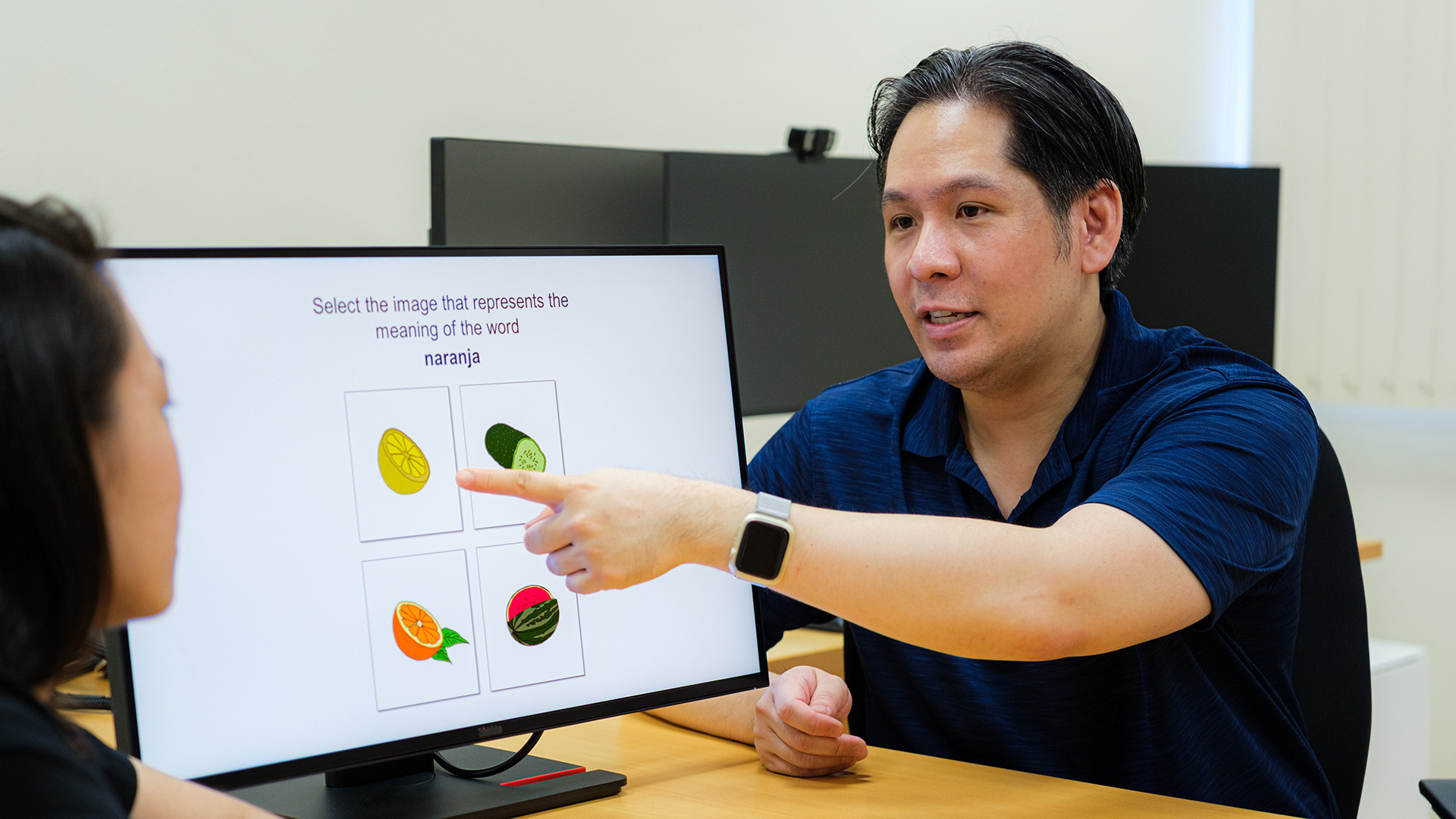
The core principle behind many successful language-learning platforms revolves around the concept of “guessing with feedback.” This entails learners attempting to identify a foreign word from an image or vice versa, before being shown the correct answer. While this technique appears intuitive and enjoyable on the surface, it draws deeply from cognitive psychology research that highlights the potency of active retrieval attempts followed by corrective information in strengthening long-term memory. This process, known in scientific circles as “pretesting,” has now been empirically validated in the domain of word-picture association.

Assistant Professor Steven Pan of NUS’s Department of Psychology, who spearheaded the research, explains the underlying neuroscience: “When learners actively retrieve a potential answer, even if incorrect, they engage neural mechanisms involved in memory search and encoding more efficiently than through passive exposure. The immediate provision of correct feedback then enables consolidation of accurate knowledge, forging stronger memory traces.” This interplay of guessing and feedback recruits higher cognitive effort, which is vital for durable learning as opposed to superficial recognition.

Despite the well-documented benefits of pretesting in verbal learning—such as acquiring word pairs or textual information—previous research largely neglected the specific formats widely used in language apps, which typically rely on multimodal stimuli like pictures paired with words. Addressing this gap, the NUS study is groundbreaking in quantifying how pretesting effects manifest in word-picture matching exercises, a hallmark of modern language acquisition apps such as Duolingo.

The experimental design involved 341 adults with no prior knowledge of Spanish, an ideal subject pool to isolate the impact of the learning methods free from confounds related to prior language exposure. The researchers implemented four controlled experiments comparing two teaching approaches: one where participants guessed the Spanish word associated with an image (or vice versa) followed by feedback, and another where learners simply studied word-picture pairs without guessing. To further simulate app-like learning environments, the study varied the sequence of stimulus presentation—either presenting the Spanish word first or the picture first.

Memory assessments took the form of cued recall tests, requiring participants to reproduce the correct word from memory, and multiple-choice recognition tests, measuring identification accuracy. Remarkably, across all experimental conditions, participants who engaged in the guessing-with-feedback method demonstrated superior recall performance. This finding strongly suggests that active engagement elicited by guessing primes the brain for more robust learning, enhancing both recognition and production of new vocabulary.

One of the study’s crucial insights challenges the common hesitancy among language learners to guess words before gaining confidence. Assistant Professor Pan emphasizes that early guesses, even when incorrect, serve as cognitive primers. This “desirable difficulty” activates deeper encoding processes, which, coupled with immediate corrective feedback, function synergistically to cement vocabulary retention. Such empirical backing advocates for apps and educators alike to encourage learners to embrace early attempts rather than waiting for mastery before engaging actively.

This research also bridges theoretical foundations with practical applications in digital education. Many language learning platforms already incorporate guess-and-feedback mechanics, but prior to this study, the scientific justification for their efficacy remained ambiguous. Now, with rigorous experimental validation, designers of digital tools and curriculum developers can confidently anchor their teaching strategies in cognitive science principles, optimizing the sequencing, presentation, and interactivity of vocabulary exercises.

Additionally, the study’s methodological innovation lies in its fidelity to real-world app scenarios. By mimicking the bi-directional learning modes common in apps—word-to-image and image-to-word— the findings possess high ecological validity. This breadth of testing ensures that both receptive and productive vocabulary skills benefit from pretesting, an important consideration for comprehensive language acquisition practices.

Published in the prestigious journal Cognitive Research: Principles and Implications on March 6, 2026, this pioneering work does not merely contribute to academic discourse but aims to transform language education globally. Its implications extend beyond app developers to classroom instruction, highlighting the importance of integrating active guessing strategies in lesson plans. Educators may consider embedding formative retrieval attempts even before formal learning, turning traditional rote memorization into an interactive and cognitively stimulating practice.

The synergy of guessing and immediate feedback taps into a fundamental characteristic of human memory: its adaptability through error correction and active retrieval. This research underscores that learning is not a linear absorption of knowledge but an iterative process amplified by cognitive challenge and reinforcement. As language learning apps continue their rapid evolution, evidence-based refinements inspired by such research could accelerate language proficiency acquisition, enhancing both motivation and efficacy for millions worldwide.

Looking ahead, the NUS team hopes further investigations will explore how varying feedback timing, the complexity of vocabulary, and incorporation of other modalities like audio can further augment learning. Furthermore, personalized adaptive algorithms leveraging pretesting principles could revolutionize digital language platforms, tailoring difficulty and feedback to individual learner profiles to maximize engagement and retention.

In sum, this landmark study by Assistant Professor Steven Pan and colleagues firmly establishes the cognitive advantage of pretesting in language learning and validates why guess-and-feedback mechanisms often lead to more effective vocabulary retention compared to passive study alone. Their findings invite a paradigm shift in how language learners approach new material and how educators and app developers design learning experiences—transforming guesses from mere trials into powerful tools for memory enhancement.

Subject of Research: People
Article Title: Duolingo-inspired pretesting with words and pictures improves vocabulary learning
News Publication Date: 6 March 2026
Web References: https://link.springer.com/article/10.1186/s41235-026-00708-y
References: DOI 10.1186/s41235-026-00708-y
Image Credits: National University of Singapore
Keywords: Psychological science, Cognitive psychology, Language learning, Vocabulary acquisition, Pretesting, Feedback, Memory encoding, Digital education, Language apps

Tags: active retrieval practice benefitscognitive psychology in language learningdigital language learning toolsguessing-based learning methodsimmediate feedback in language learninglanguage acquisition memory enhancementmobile language apps effectivenessNational University of Singapore language studypretesting in vocabulary learningsecond language vocabulary acquisitionvocabulary retention techniquesword-picture association memory
Share26Tweet16
Previous Post

Advancing Precision Medicine with Spatial Proteomics: Innovative Technologies, Bioinformatics, and Clinical Applications

Next Post

New Learning-Based Motion Planning Policy Paves the Way for More Personalized Driving in Intelligent Vehicles

Related Posts

blank
Social Science

Brain Scans May Predict Risk of Psychiatric Hospitalization

April 15, 2026
blank
Social Science

Why Gay Men Often Feel More Attractive While on Holiday: A Scientific Perspective

April 15, 2026
blank
Social Science

Study Reveals Values, Beyond Politics, Influence Israeli Views on Hostage Deals

April 15, 2026
blank
Social Science

Soccer Referee Decisions Often Reversed After VAR Review, Confirming Objectivity Without External Influence

April 15, 2026
blank
Social Science

Academic Expert Explores the Addictive Nature of Social Media

April 15, 2026
blank
Social Science

New Pediatric Investigation Study Reveals Connection Between Academic Burnout, Internet Gaming, and Depression

April 15, 2026
Next Post
blank

New Learning-Based Motion Planning Policy Paves the Way for More Personalized Driving in Intelligent Vehicles

  • Mothers who receive childcare support from maternal grandparents show more parental warmth, finds NTU Singapore study

    Mothers who receive childcare support from maternal grandparents show more parental warmth, finds NTU Singapore study

    27634 shares
    Share 11050 Tweet 6906
  • University of Seville Breaks 120-Year-Old Mystery, Revises a Key Einstein Concept

    1037 shares
    Share 415 Tweet 259
  • Bee body mass, pathogens and local climate influence heat tolerance

    675 shares
    Share 270 Tweet 169
  • Researchers record first-ever images and data of a shark experiencing a boat strike

    538 shares
    Share 215 Tweet 135
  • Groundbreaking Clinical Trial Reveals Lubiprostone Enhances Kidney Function

    524 shares
    Share 210 Tweet 131
Science

Embark on a thrilling journey of discovery with Scienmag.com—your ultimate source for cutting-edge breakthroughs. Immerse yourself in a world where curiosity knows no limits and tomorrow’s possibilities become today’s reality!

RECENT NEWS

  • Brain Scans May Predict Risk of Psychiatric Hospitalization
  • UT Health San Antonio Multispecialty and Research Hospital Enrolls First Participant in Groundbreaking Cancer Clinical Trial
  • Why Gay Men Often Feel More Attractive While on Holiday: A Scientific Perspective
  • Study Finds One in Five Assessed Soil Species Threatened with Extinction; Calls for Data on Thousands More

Categories

  • Agriculture
  • Anthropology
  • Archaeology
  • Athmospheric
  • Biology
  • Biotechnology
  • Blog
  • Bussines
  • Cancer
  • Chemistry
  • Climate
  • Earth Science
  • Editorial Policy
  • Marine
  • Mathematics
  • Medicine
  • Pediatry
  • Policy
  • Psychology & Psychiatry
  • Science Education
  • Social Science
  • Space
  • Technology and Engineering

Subscribe to Blog via Email

Enter your email address to subscribe to this blog and receive notifications of new posts by email.

Join 5,145 other subscribers

© 2025 Scienmag - Science Magazine

Welcome Back!

Login to your account below

Forgotten Password?

Retrieve your password

Please enter your username or email address to reset your password.

Log In
No Result
View All Result
  • HOME
  • SCIENCE NEWS
  • CONTACT US

© 2025 Scienmag - Science Magazine

Discover more from Science

Subscribe now to keep reading and get access to the full archive.

Continue reading
