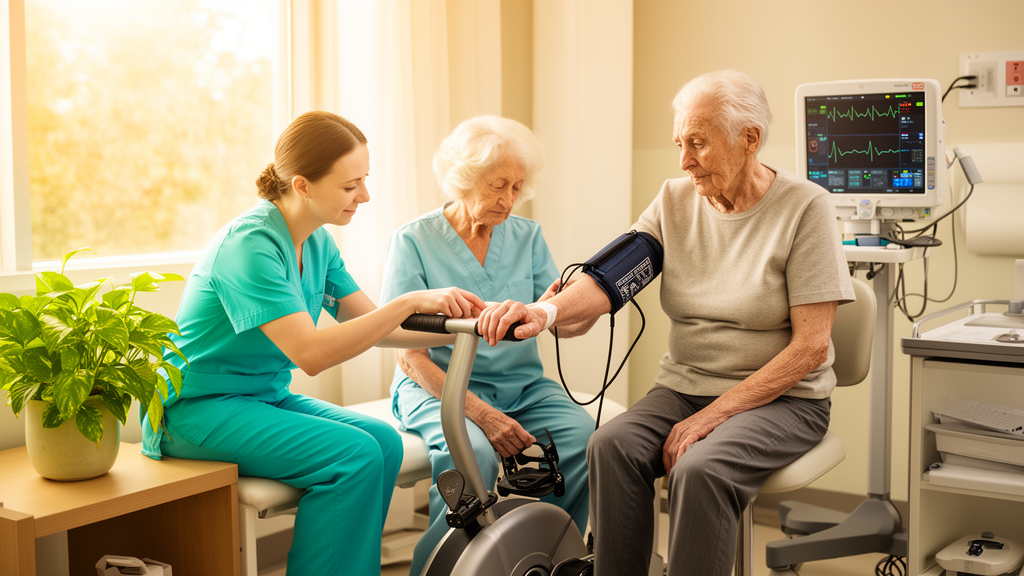
Cardiac rehabilitation is one of the most consistently recommended therapies in cardiovascular medicine, yet most people living with heart failure never take part in it. A new systematic review published in Frontiers in Cardiovascular Medicine argues that this persistent gap is not primarily a failure of patient motivation, but the result of layered barriers spanning patients, providers, health systems, and society — and that nurses, positioned at nearly every step of the heart failure care pathway, may be the profession best equipped to dismantle them.
The review, conducted by researchers at Mohammed Bin Rashid University of Medicine and Health Sciences in Dubai and The Hashemite University in Jordan, followed the PRISMA 2020 reporting guidelines and was prospectively registered with PROSPERO. The team searched five electronic databases — PubMed, CINAHL, EMBASE, Scopus, and MEDLINE — for peer-reviewed studies published between 2015 and 2025. To be included, studies had to involve adults aged 18 or older with heart failure, explicitly examine barriers to participation, access, or adherence in cardiac rehabilitation, and report a nursing role, perspective, or intervention. Methodological quality was appraised with the Mixed Methods Appraisal Tool (MMAT 2018), and the evidence was combined through narrative and thematic synthesis.
From 1,509 identified records, only 17 studies survived the screening process. After removing 146 duplicates, 1,363 records were screened at title and abstract level, 1,221 were excluded, and 142 full-text articles were assessed. The most common reason for exclusion was a focus on cardiac conditions other than heart failure, with 63 studies rejected on that ground alone. The authors argue that this pattern reveals a genuine scarcity of evidence specific to heart failure populations, whose unique challenges — symptom instability, frailty, multiple comorbidities, and frequent hospital readmissions — may shape rehabilitation engagement differently from other cardiac conditions.
The 17 included studies, published between 2019 and 2024, came predominantly from high-income countries: five from the United States, two each from Australia and Denmark, and single studies from Scotland, South Korea, Portugal, Saudi Arabia, China, Germany and the Netherlands, and the United Kingdom and Ireland. Designs ranged from a single randomized controlled trial and two mixed-methods studies to qualitative interviews, cross-sectional surveys, and observational cohorts, with samples spanning 16 participants in a Chinese qualitative study of home-based rehabilitation to population-level analyses covering 3,142 US counties.
Four overarching themes emerged from the synthesis. The first concerned patient-related barriers. Alexandre and colleagues’ retrospective cohort of 214 patients with reduced ejection fraction in Portugal found that lack of medical referral, concomitant medical problems, patient refusal, and geographical distance to the hospital all impeded enrolment. Vonk and colleagues surveyed 850 patients in Germany and the Netherlands and found that the main reasons for non-attendance and dropout were motivational and perceptual: patients said they did not need supervision, did not need the rehabilitation trajectory, were already exercising regularly, had other physical problems, or felt the programme was not personal enough. In China, Yang and colleagues’ qualitative interviews with 16 patients with chronic heart failure identified lack of knowledge, activity intolerance, exercise fear, role conflict, and lower exercise self-efficacy as obstacles to home-based programmes.
Psychological resistance emerged as a recurring thread. Patients with heart failure often develop fear-avoidance behaviours, limiting their movement because physical activity is associated with the distressing experience of severe breathlessness. This anxiety is compounded by low self-confidence and a heavy perceived treatment burden. Interestingly, the evidence on health literacy was more nuanced than expected: Aaby and colleagues’ cross-sectional study of 1,435 patients in Denmark found that health literacy scores by themselves did not determine participation rates, although lower education and living alone were more common among non-respondents, suggesting that social isolation may matter more than literacy alone.
The second and third themes concerned systemic, structural, socio-cultural, and equity barriers. Kim and colleagues’ nationwide survey of South Korean hospitals found that organisational obstacles — weak perceptions of rehabilitation effectiveness and weaker support in hospitals without percutaneous coronary intervention facilities — hindered care transitions. Daw and colleagues documented implementation barriers to the REACH-HF programme within UK and Irish National Health Service settings. Geographic isolation loomed large: Foster and colleagues’ survey of 295 referrals in Scotland identified distance, longer travel time and costs, class starting times, and poor information as key rural attendance barriers, while Chen and colleagues’ ecological cross-sectional analysis of nationwide Medicare data showed that geographic access to rehabilitation is consistently poorer in socially vulnerable and rural communities. DeLara and colleagues’ county-level assessment across the United States confirmed the widespread existence of so-called cardiac rehabilitation deserts — counties entirely lacking local facilities — and found that broadband access was generally not the main limitation, which is why hybrid delivery was suggested. On the equity side, Al-Sharifi and colleagues’ qualitative work with migrants in Denmark documented language-related barriers, including inadequate provision of core rehabilitation components for non-Danish-speaking patients and suboptimal interpreter services, while Beleigoli and colleagues’ mixed-methods study in rural Australia framed low socioeconomic status and rurality as central to non-completion.
The fourth theme identified nursing as a critical facilitator. Boggess and colleagues evaluated a nurse-led care coordination initiative in a pre-post study of more than 500 referrals in the United States, showing that proactive nurse-led monitoring, specialised workflows to detect suitable patients at the bedside, and effective referral management reduced the delay between Phase 1 and Phase 2 enrolment and improved enrolment speed — suggesting that late referral and readiness were the key problems. Aldhahir and colleagues’ cross-sectional survey of 412 nurses in Saudi Arabia found that, from the nursing perspective, the main barriers to delivering rehabilitation were limited facility availability, treatment cost, and the absence of a standardised referral strategy. Braver and colleagues’ qualitative study of both patients and nurses showed that telerehabilitation nurses act as essential technical and clinical support, handling administrative complexity, helping patients navigate digital platforms, resolving connectivity issues, and building the relational trust needed to compensate for the absence of face-to-face care.
The review also highlighted promising delivery models. The HEART Camp randomized controlled trial by Alonso and colleagues, involving 204 patients with heart failure with preserved ejection fraction in the United States, showed that structured, behaviourally supported intervention models produced improvements in long-term exercise adherence, functional capacity, and health-related quality of life. Eichner and colleagues’ observational cohort of 185 patients identified predictors of lower compliance in virtual rehabilitation — older age, diabetes, cardiovascular diagnoses, and smoking at admission — pointing to where clinical monitoring should concentrate. The authors caution, however, that the evidence base is predominantly observational, with only one randomized controlled trial included, which constrains causal inference about the effectiveness of nurse-led interventions.
The methodological quality assessment reflected this heterogeneity. Experimental and cohort studies generally demonstrated clearer eligibility criteria and outcome measurement, while cross-sectional surveys frequently lacked justification for sample representativeness and were more susceptible to non-response bias. Qualitative studies showed coherence between research questions, data collection, and analysis, but limited reflexivity and insufficient reporting of researcher positionality were common. Across all study types, limited adjustment for confounding constrained causal interpretation.
The review carries important limitations of its own. It was restricted to English-language publications — ten full-text articles in other languages were excluded — which may have introduced language bias and excluded relevant evidence from non-English-speaking regions. Most included studies originated from high-income countries, limiting generalizability to low- and middle-income settings where rehabilitation infrastructure and nursing roles may differ considerably. Grey literature was not systematically searched.
Nevertheless, the authors’ conclusion is pointed: cardiac rehabilitation participation should be viewed as an issue of implementation and healthcare equity rather than a matter of patient motivation alone. They recommend automatic referral systems, enhanced service coverage, and adaptable delivery models, alongside policy emphasis on culturally and linguistically appropriate services for migrant and minority populations and outreach for rural and socially disadvantaged communities. Nurses, they argue, should actively identify obstacles early in referral and discharge procedures — health literacy, transportation challenges, digital accessibility, language proficiency, and self-management abilities — and improve adherence through teaching, motivational interviewing, cultural sensitivity, and structured follow-up. As health systems shift toward home-based, hybrid, and digitally enabled rehabilitation, the review suggests that outcomes will improve most when services are delivered through accessible, adaptable, and well-coordinated processes, with nursing support persisting whether care is delivered online or at the patient’s home.
Subject of Research: Barriers to cardiac rehabilitation participation among adults with heart failure and the role of nursing in improving referral, enrolment, and adherence
Article Title: Barriers to cardiac rehabilitation among adults with heart failure and nursing-led strategies to improve participation: a systematic review
Article References: Ahmed, H., Alsharawneh, A., & Jaber Salameh, L. I. (2026). Barriers to cardiac rehabilitation among adults with heart failure and nursing-led strategies to improve participation: a systematic review. Frontiers in Cardiovascular Medicine, 13, 1932972. https://doi.org/10.3389/fcvm.2026.1932972
Image Credits: AI Generated
DOI: 10.3389/fcvm.2026.1932972
Keywords: heart failure, cardiac rehabilitation, systematic review, nursing, health equity, referral barriers, exercise adherence, tele-rehabilitation, health literacy, rural access, migrant health, care coordination
Cite Scienmag News
Ophelia Keating. (October 27, 2026). Nurses Hold the Key to Cardiac Rehabilitation for Heart Failure Patients. Scienmag. https://scienmag.com/nurses-hold-the-key-to-cardiac-rehabilitation-for-heart-failure-patients/
Ophelia Keating. "Nurses Hold the Key to Cardiac Rehabilitation for Heart Failure Patients." Scienmag, 27 October 2026, https://scienmag.com/nurses-hold-the-key-to-cardiac-rehabilitation-for-heart-failure-patients/. Accessed 27 October 2026.
Ophelia Keating. "Nurses Hold the Key to Cardiac Rehabilitation for Heart Failure Patients." Scienmag. October 27, 2026. https://scienmag.com/nurses-hold-the-key-to-cardiac-rehabilitation-for-heart-failure-patients/