


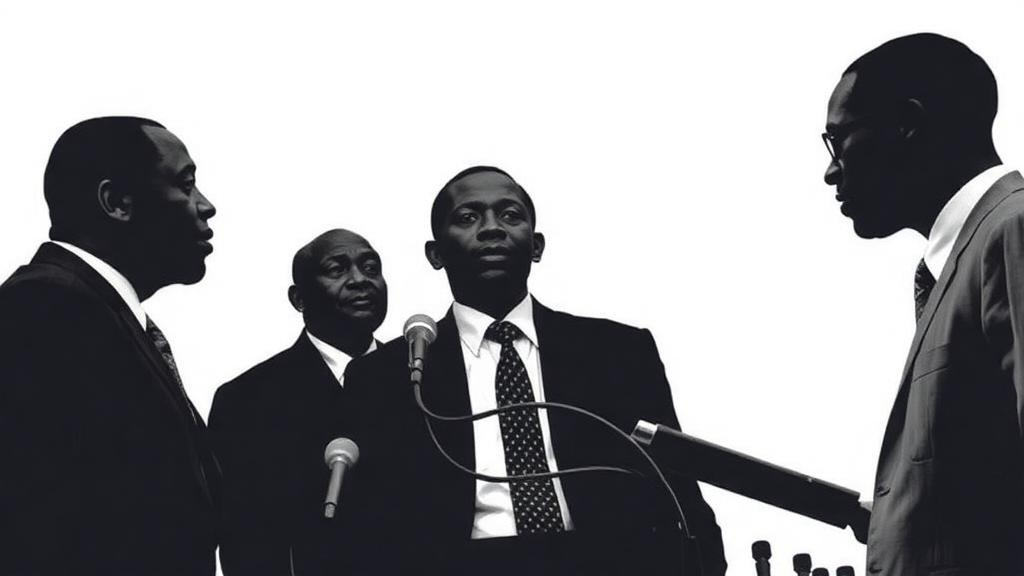
Few tensions in modern intellectual history are as charged as the one that consumed Kwame Nkrumah, Ghana’s first Prime Minister and President, throughout his political career. A new open-access perspective published in Discover Global Society by Chika C. Mba of the University of Ghana revisits this clash, arguing that the dilemma Nkrumah faced—how to champion academic freedom while pursuing the decolonisation and Africanisation of higher education—was never resolved, and remains the central problem confronting knowledge production in Africa today. Drawing on the hermeneutic-narrative method from African philosophy, Mba dissects three of Nkrumah’s speeches delivered between 1959 and 1964, along with a 1964 editorial from his party’s newspaper, to show that the conflict was not a simple case of a politician crushing dissent, but a genuine ethical dilemma rooted in competing moral imperatives.
Nkrumah was uniquely positioned to understand the value of intellectual autonomy. As a doctoral candidate in the United States and Europe, he experienced firsthand how anti-Black racism and colonial politics could stifle a scholar’s freedom to think and act. His dissertation in philosophy at the University of Pennsylvania was rejected, presumably for being too pro-Communistic, and he never completed the degree. That experience hardened his conviction that a free Ghana and a free Africa must offer African scholars something he had been denied: academic sovereignty. Yet when he returned to govern the newly independent state, he discovered that the very institution meant to produce knowledge—the University College of the Gold Coast, founded in 1948 as an extension of the University of London—was structured in ways that jeopardised that sovereignty.
The scale of the problem was striking. By 1959, the university’s staff was essentially European, with Ghanaians making up only 16 percent of teaching personnel, and there was not a single African professor. One-ninth of the institution’s total estimated expenditure went to British faculty and administrators, including up to £100,000 in annual leave funds covering first-class passages to Britain. When Nkrumah’s government questioned this arrangement as a matter of accountability, the College resisted, invoking academic freedom. Geoffrey Bing, Nkrumah’s Attorney-General, later described this standoff as the first struggle for academic freedom in Ghana, and argued that defending first-class travel on those grounds foreshadowed the far harder battles to come over the curriculum itself.
Nkrumah’s response was a cultural policy on education centred on intellectual decolonisation, Africanisation, and what he called the African Personality—not a racialised psychological trait, but a dynamic socio-political assertion of African agency and dignity against colonial depersonalisation. His philosophical framework, Consciencism, was designed to synthesise the three competing strands of Africa’s intellectual heritage: traditional African society, Euro-Christian influence, and Islamic thought. Together, these ideas treated culture not as a passive inheritance but as an active instrument of statecraft, aimed at replacing an education system built to produce subservient clerks with one rooted in African identity, history, and the practical needs of national development.
Yet the same president who threatened to impose reforms from outside also delivered one of the most eloquent defences of free inquiry ever voiced by an African head of state. At a university dinner at Flagstaff House in February 1963, Nkrumah declared that without academic freedom there can be no university, that scholars must be free to pursue truth and publish their research without fear, and that true scholarship fears nothing. In the same breath, however, he warned that academic freedom can be perverted and abused, becoming a dangerous cloak for activities outside the academic interests of the community. This oscillation, Mba argues, refutes critics who claim Nkrumah simply turned against academic freedom as his grip on power weakened; the tension was present from the very beginning of his career.
The dilemma hardened into open conflict. Nkrumah’s Africanisation agenda met fierce resistance within the University of Ghana, so much so that, according to the writer Kofi Awoonor, the Prime Minister could not visit the campus without a formal invitation. The university’s first Principal, David Mowbray Balme, insisted that the things studied at universities happened to have started in Greece and spread through Europe, but should no longer be called European—as though no other forms existed to distinguish them. Bing described Balme’s restructuring of the university’s governing bodies, which bypassed the College Council and invested sovereignty in a European-majority faculty, as an academic coup d’état. By 1964, an editorial in Nkrumah’s party newspaper, likely authored by or for him, titled Shame unto Colonial Lecturers, threatened to crush subversive groups among the staff.
Mba situates this history against contemporary critiques, most prominently the Nigerian philosopher Olúfẹ́mi Táíwò, who argues that decolonisation in its current iteration merely mourns the past, is compromised by an enduringly Eurocentric gaze, and undermines African innovation and agency. Táíwò and the scholar Damtew Teferra contend that what Teferra calls dumb decolonisation constrains young Africans from engaging with the sources they need, robbing the continent of a pragmatic march toward modernity. Mba counters that these critiques are misdirected and ahistorical, noting that modernity itself is not a European invention: evolutionary anthropologists trace the capacities for symbolic thought, complex language, and technological innovation to Africa between 50,000 and 100,000 years ago, while theorists such as Shmuel Eisenstadt and Dipesh Chakrabarty have dismantled the idea that becoming modern requires mirroring Western blueprints.
The constructive core of Mba’s argument lies in the concept of epistemic freedom, developed by the decolonial theorist Sabelo Ndlovu-Gatsheni. Epistemic freedom refers to the ability of individuals and communities of knowers to freely seek, construct, and validate knowledge grounded in their lived experiences, viewpoints, and cultural contexts. Because epistemology frames ontology—how knowledge is framed dictates what can be brought into existence—epistemic colonisation in Africa meant ontological colonisation, incapacitating Africans’ ability to build the economic and political structures necessary for their flourishing. On this account, academic freedom without epistemic freedom is hollow: it merely protects the right to reproduce Eurocentric knowledge without interference. The two, Mba insists, are mutually dependent, and any acceptable definition of academic freedom in Africa must account for what Kwesi Prah calls intellectual sovereignty, or the domestication of knowledge production.
What makes the analysis compelling is its refusal to idealise Nkrumah. He appointed European scholars to head the University of Ghana and even the Institute of African Studies he founded in 1963, while proclaiming that a university planted in African soil must take root amidst African traditions and culture. Susan Williams’ book White Malice, drawing on declassified files, suggests his fears of foreign infiltration—including CIA monitoring of newly independent Ghana and involvement in his eventual deposition—may not have been paranoia, adding a geopolitical dimension to the campus battles. Nkrumah himself never found a clean answer to the question of whether Africa should borrow ready-made ideas from the West or develop indigenous knowledge from within, and Mba argues that imposing a definitive blueprint today would repeat the top-down universalist errors of the past.
The enduring question Mba leaves open is deliberately provocative: where does the know-how to solve Africa’s problems lie—in so-called universal knowledge rooted in Western constructs, in knowledge anchored in African lived experiences and epistemes, or in some framing yet to be discovered? His answer, following Nkrumah, is that grounding knowledge validation in lived experiences and indigenous epistemes does not collapse into parochialism or a rejection of objectivity. Rather, it challenges a false hegemonic objectivity by insisting on a more robust, intersubjective standard of truth, in which African epistemes engage global knowledge as equal interlocutors rather than passive subjects. Six decades after Nkrumah’s fall, the friction he could not dissolve remains the live frontier of African Studies—and, Mba suggests, recognising that tension as an open site of negotiation is the only philosophically rigorous position available.
Subject of Research: The intersection of academic freedom, decolonisation and knowledge production in postcolonial African higher education
Article Title: Negotiating Kwame Nkrumah’s dilemma and the systemic intersection of academic freedom, decolonisation and knowledge production in Africa
Article References: Mba, C. C. (2026). Negotiating Kwame Nkrumah’s dilemma and the systemic intersection of academic freedom, decolonisation and knowledge production in Africa. Discover Global Society, 4(1), Article 273. https://doi.org/10.1007/s44282-026-00593-2
Image Credits: AI Generated
DOI: 10.1007/s44282-026-00593-2
Keywords: Kwame Nkrumah, academic freedom, decolonisation, epistemic freedom, African Studies, Ghana, higher education, Africanisation, Consciencism, neocolonialism, knowledge production, postcolonial philosophy
Cite Scienmag News
Courtney Benton. (October 14, 2026). Nkrumah’s Unsolved Puzzle: Can Academic Freedom and Decolonisation Coexist in Africa? Scienmag. https://scienmag.com/nkrumahs-unsolved-puzzle-can-academic-freedom-and-decolonisation-coexist-in-africa/
Courtney Benton. "Nkrumah’s Unsolved Puzzle: Can Academic Freedom and Decolonisation Coexist in Africa?" Scienmag, 14 October 2026, https://scienmag.com/nkrumahs-unsolved-puzzle-can-academic-freedom-and-decolonisation-coexist-in-africa/. Accessed 14 October 2026.
Courtney Benton. "Nkrumah’s Unsolved Puzzle: Can Academic Freedom and Decolonisation Coexist in Africa?" Scienmag. October 14, 2026. https://scienmag.com/nkrumahs-unsolved-puzzle-can-academic-freedom-and-decolonisation-coexist-in-africa/


