


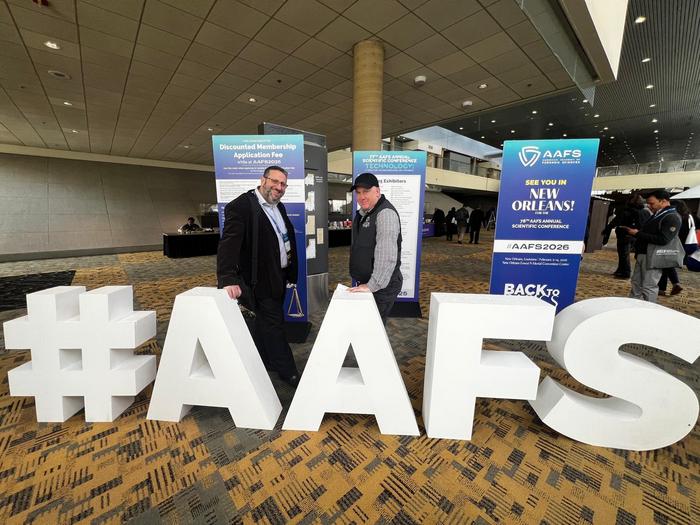
At the forefront of forensic science education, the New Jersey Institute of Technology (NJIT) recently showcased groundbreaking innovations at the 77th Annual American Academy of Forensic Sciences (AAFS) Conference held in Baltimore. This year’s theme, “Technology: A Tool for Transformation or Tyranny?” resonated deeply with the presentations made by NJIT’s faculty and students, who collectively emphasized how technological advancements are reshaping forensic methodologies. Amidst a diverse array of programs, NJIT’s contributions stood out, particularly in areas intersecting virtual reality, genetic analysis, and pedagogy’s evolution in forensic science.
The conference served as an illuminating platform for NJIT’s faculty in the forensic science program to share their research and interactive demonstrations. David Fisher, the director of this program, expressed immense pride in the collective performance during the conference. With their recent accreditation from the AAFS’s Forensic Science Education Programs Accreditation Commission, this event symbolized a significant milestone, highlighting the institute’s commitment to excellence in forensic science education and research. The accreditation is a testament to NJIT’s rigorous academic standards and innovative research frameworks.
One of the pivotal highlights was the introduction of CSIxR, a sophisticated virtual reality application developed through collaborative efforts among NJIT’s faculty and students. Engagingly presented by Fisher and Forensic Science Senior University Lecturer Kevin Parmelee, CSIxR immerses learners in realistic crime scene environments, transforming theoretical knowledge into practical skills. This virtual tool empowers students to navigate crime scene investigations by allowing them to practice essential procedures, such as evidence collection and witness interaction, within a risk-free digital environment. The architecture of CSIxR presents an opportunity to circumvent several logistical challenges associated with traditional forensic training.
Nancy Vinnikov, a key collaborator in the development of CSIxR, elaborated on how the app’s design employs adaptive learning principles to enhance student engagement and enrich the educational experience. The ability for students to repeat scenarios and learn from mistakes without real-world consequences is invaluable. This interactive system mimics the dynamics of a real crime scene, where every decision can have significant ramifications, enabling students to hone their skill sets effectively. By enhancing hands-on experience in a digital format, CSIxR holds the potential to revolutionize how forensic curricula are structured.
As CSIs grapple with real-world unpredictabilities, innovative tools like CSIxR deliver a compelling solution to traditional training limitations. Parmelee noted the vital role of virtual environments in developing critical thinking skills. Real-time feedback and error assessment can be incorporated into the training process, a feature not often available in conventional settings. Parmelee’s instructional methods have evolved significantly through the integration of such technologies, allowing him to better prepare students for actual fieldwork while concurrently boosting their confidence.
The conference also provided a stage for presentations centered on the cutting-edge realm of forensic epigenetics. Sara Zapico, NJIT’s assistant professor of forensic science, introduced research focused on chemical modifications in DNA that can reveal insights into a person’s age. This emerging field is progressively gaining traction and offers tremendous implications for the accuracy and efficacy of forensic investigations. By exploring age estimation through tooth dentin analysis, Zapico’s work aims to create forensic methodologies that provide higher precision in age determinations, a factor critical in many criminal cases.
The contributions didn’t end there; Maria Josefina Castagnola, a Ph.D. student at NJIT and a prestigious Fulbright scholar, presented innovative research on DNA extraction techniques. Her focus was on how environmental factors and incubation times affect the efficacy of simultaneous DNA, RNA, and protein extraction from human teeth. This research streamlines the process of gathering comprehensive genetic evidence from limited biological samples, an essential advancement for forensic scientists often working under the constraints of challenging scenarios.
Fisher emphasized the broad spectrum of technological integration evident in this year’s conference. NJIT’s presentations were not only diverse but reflective of the institution’s proactive approach to integrating the latest advancements in forensic science. From utilizing technological innovations to combat wrongful murder statements to the practical implementation of VR training, the NJIT delegation highlighted a future where technology will play an increasingly central role in forensic science practices.
Attendees at the conference expressed a heightened awareness of the sophisticated capabilities that technology introduces to forensic science. The successful demonstration of CSIxR and insightful discussions surrounding ongoing research affirm NJIT’s position as a leader in the educational and technological transformation of forensic science. The enthusiasm exhibited by students and faculty alike underscores the potential impact of these innovations beyond just academic realms, extending to practical applications in law enforcement and criminal justice sectors.
The palpable excitement surrounding the advancements shared reinforces the collaborative environment at NJIT, where interdisciplinary efforts drive the discovery and utilization of new technologies. These interactions fortify NJIT’s mission to not only educate future leaders in forensic science but to pioneer innovations that will shape the future landscape of the field.
As the forensic community continues to evolve, NJIT’s strategic emphasis on technology and research will unquestionably play a pivotal role in redefining educational methodologies and practices. The future of forensic science, intertwined with technologically enriched curricula and hands-on experiences, promises to foster a new generation of CSIs equipped to tackle the complexities of modern investigations with enhanced skills and knowledge.
In conclusion, the notable contributions presented at the AAFS Conference epitomize the ongoing commitment of NJIT to advance forensic science through innovative education and research. As technology continues to permeate every aspect of our lives, its incorporation into forensic science education not only prepares students for contemporary challenges but also enhances the field’s potential for societal impact.
Cite Scienmag News
Courtney Benton. (March 24, 2025). NJIT Introduces VR Crime Scene Technology and Research at the Nation’s Premier Forensic Conference. Scienmag. https://scienmag.com/njit-introduces-vr-crime-scene-technology-and-research-at-the-nations-premier-forensic-conference/
Courtney Benton. "NJIT Introduces VR Crime Scene Technology and Research at the Nation’s Premier Forensic Conference." Scienmag, 24 March 2025, https://scienmag.com/njit-introduces-vr-crime-scene-technology-and-research-at-the-nations-premier-forensic-conference/. Accessed 4 September 2026.
Courtney Benton. "NJIT Introduces VR Crime Scene Technology and Research at the Nation’s Premier Forensic Conference." Scienmag. March 24, 2025. https://scienmag.com/njit-introduces-vr-crime-scene-technology-and-research-at-the-nations-premier-forensic-conference/


