


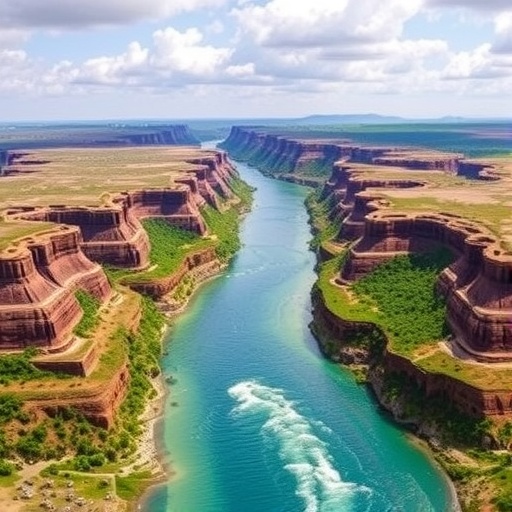
The Nile River, one of the longest rivers in the world, is a lifeline for millions of people across northeastern Africa. Its waters have sustained ancient civilizations, supported agriculture, and now face significant challenges due to climate change and variability. Recent research published in Commun Earth Environ by Elhaddad, Sultan, and Yan sheds new light on how the flow regimes of the Nile Basin may evolve under the pressures of 21st-century climate variability. This study is vital not only for environmental scientists but also for policy-makers and communities that depend on the river’s resources.
As global temperatures rise, one of the chief concerns is how precipitation patterns will change. Previous studies have indicated that climate change could disrupt conventional weather patterns, leading to more extreme weather events. In the Nile Basin, the researchers employed advanced hydrological models to simulate various climate scenarios through the 21st century, focusing on how increased variability could alter river flow. The findings suggest significant shifts in seasonal flows, impacting both agriculture and drinking water supplies.
One of the standout features of this research is the innovative approach taken to model the hydrological cycles in the Nile Basin. The team used a combination of observational data and cutting-edge modeling techniques that account for both historical climate influences and projected climate variables. This multi-faceted approach yielded more reliable forecasts, illustrating the complicated interactions between river flow, precipitation, and evaporation rates.
Another critical element of their research is the acknowledgment of socio-economic dynamics in the Nile Basin. Many countries depend on the Nile for water supply and agriculture, and any changes to the river’s flow regime will have cascading effects on food security and economic stability. The study emphasizes that local communities must adapt to these changes while promoting sustainable water management practices. By integrating social and environmental data, the authors make a compelling case that effective adaptation strategies are essential.
The researchers also delve into the implications of altered flow regimes on the ecosystem. Changes in river flow can dramatically affect biodiversity, particularly for aquatic species that rely on specific flow conditions for spawning and breeding. The resilience of these species will be tested as climate pressures intensify. Moreover, fluctuations in water levels can have implications for wetland areas, which act as natural buffers and filters for water quality.
In their findings, Elhaddad and colleagues provide projections for both average flows and peak discharge events, which are critical for infrastructure planning. Many cities in the Nile Basin are facing the dual challenges of flooding during periods of heavy rain and drought during dry spells. The research flags the importance of adaptive infrastructure, such as improved drainage systems and sustainable water storage solutions, to mitigate these risks.
Furthermore, the study highlights the urgency for collaboration among the Nile Basin countries. With many nations relying on this shared resource, unilateral approaches to water management can lead to disputes and exacerbate existing tensions. Through diplomacy and strategic planning, stakeholders can address potential conflicts around water usage while striving for equitable access for all.
The findings also serve as a wake-up call about the need for effective climate policy at both national and regional levels. Policymakers are urged to incorporate scientific insights into their planning efforts. By doing so, they can ensure that development goals are met sustainably while preserving water resources for future generations. The path forward, as outlined in the study, must consider both immediate needs and long-term repercussions.
In conclusion, this research does not merely provide forecasts; it calls for action. It emphasizes that understanding the dynamic nature of the Nile’s flow regimes is crucial in the face of climate change. With its extensive reach and historical significance, the Nile River is not just a waterway; it’s a vital resource that spans borders, cultures, and ecosystems. By heeding these findings, we can work towards a more sustainable and resilient future for the Nile Basin and its inhabitants.
In summary, the research by Elhaddad et al. challenges us to rethink how we perceive and manage the Nile. It transcends mere academic inquiry, speaking to the pressing realities millions face daily. As climate variability becomes an accepted norm, the strategies we implement today will determine the survival of ecosystems and human communities alike.
Incorporating these insights into the fabric of governance and local practices would represent a significant stride toward ensuring a stable and sustenance-rich environment for the future. Our approach towards understanding and managing the delicate ecosystems surrounding the Nile must be as innovative as it is urgent. The final takeaway is clear: adaptability, collaboration, and foresight will be the keys to unlocking a sustainable future for the Nile Basin.
Cite Scienmag News
Sloane Callahan. (November 10, 2025). Nile Basin Flow Patterns Shift Due to Climate Change. Scienmag. https://scienmag.com/nile-basin-flow-patterns-shift-due-to-climate-change/
Sloane Callahan. "Nile Basin Flow Patterns Shift Due to Climate Change." Scienmag, 10 November 2025, https://scienmag.com/nile-basin-flow-patterns-shift-due-to-climate-change/. Accessed 5 September 2026.
Sloane Callahan. "Nile Basin Flow Patterns Shift Due to Climate Change." Scienmag. November 10, 2025. https://scienmag.com/nile-basin-flow-patterns-shift-due-to-climate-change/


