


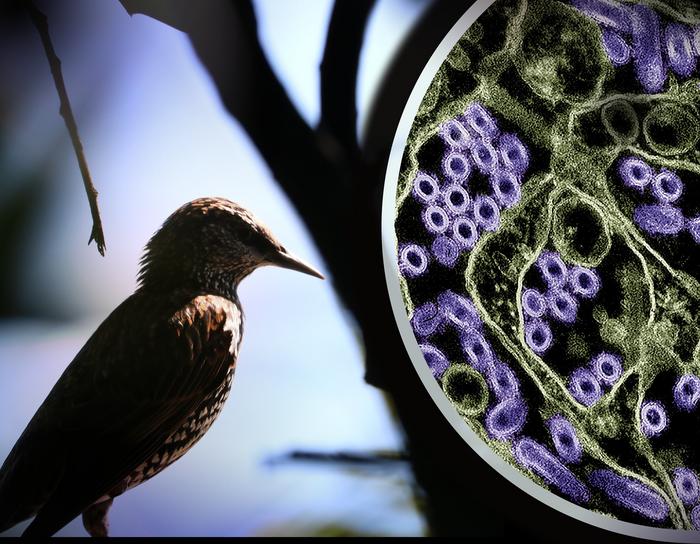
The highly pathogenic H5N1 avian influenza A virus (HPAI H5N1) has maintained its presence in wild birds across multiple continents, raising significant concerns among public health officials. This virus has been implicated in sporadic outbreaks since its emergence in the late 1990s, gaining its notoriety for causing severe disease in poultry and its potential threat to human health. As the virulence of HPAI H5N1 continues to evolve, its recent emergence in U.S. dairy herds comprises a complex challenge requiring urgent attention from researchers and health authorities.
In 2024, the H5N1 outbreak has reached a critical juncture, necessitating a balanced response from public health experts. The National Institutes of Health (NIH) has emphasized that the current risk to the general public remains low due to the availability of existing treatments and vaccines. The management of zoonotic infections, particularly those stemming from avian sources, necessitates ongoing monitoring and evaluation to prevent potential spillover events that could lead to severe human cases of influenza.
Published observations in the New England Journal of Medicine highlight the ongoing efforts by scientists to reconcile enhanced vigilance against HPAI H5N1 with the need for normalcy in everyday activities. The authors, Dr. Jeanne M. Marrazzo and Dr. Michael G. Ison, recommend a multifaceted approach, underscoring the importance of collaboration among various disciplines including human and veterinary medicine and public health. Such interdisciplinary collaborations are crucial to foster trust and efficacy as stakeholders navigate the challenges posed by HPAI H5N1 infections.
Since its first documented cases in the 1990s across at least 23 countries, HPAI H5N1 has undergone significant geographic and genetic diversification. A particularly alarming trend has been the virus’s transition from Europe to North America, which began in late 2021. The subsequent spread to South America by 2022 wreaked havoc on avian and marine mammal populations, with notable die-offs linked to the virulent strain of the virus. In 2024, the unprecedented identification of H5N1 in U.S. dairy cows marks a critical event, triggering alerts across the agricultural sector as herds across 16 states have reported viral presence.
Approximately 66 confirmed and 7 probable cases of influenza in humans have been documented in the U.S. during 2024. Epidemiological investigations indicate that these infections predominantly stem from either the variant seen in birds (D1.1) or the strain found in dairy cows (B3.13). The emergence of H5N1 in mammals—specifically livestock—represents a significant endpoint in the virus’s evolutionary trajectory, potentially paving the way for increased interaction with human populations.
To mitigate the outbreak, Drs. Marrazzo and Ison outline key strategies for effective control, starting with robust collaboration among all stakeholders involved in the containment of HPAI H5N1. This imperative for collaboration emphasizes building trust with community members and those seeking medical attention for related symptoms. Fortunately, current observations indicate that many cases arising in the U.S. have been mild, exhibiting a capacity for self-resolution without extensive medical intervention.
Research into a Canadian case of HPAI H5N1 illustrates an urgent call to arms for viral surveillance. The infected patient, who experienced respiratory failure, required extensive medical care before recovery. This incident revealed specific mutations within the virus, stressing the urgent need to monitor these viral changes closely. Health experts advocate for thorough genomic sequencing of both animal and human samples, which would equip scientists with the insights necessary to determine the risk for potential human-to-human transmission.
Without diligent genomic tracking and collection of viral samples, understanding H5N1’s evolutionary pathways is almost impossible. The absence of vital context regarding the dates and locations of these isolates limits the ability to attribute phylogenetic relationships to reported sequences, thereby restricting the scientific community’s insight into viral dissemination dynamics. Such a framework for data-sharing could yield early warnings regarding mutations that might increase the virus’s affinity for human hosts.
Innovation in countermeasures remains crucial in the fight against avian influenza, and ongoing research into vaccines and antiviral treatments stands at the forefront of public health initiatives. Promising vaccine candidates currently show efficacy against circulating strains, indicating that existing antiviral therapies can mitigate severe outcomes associated with the virus. The continuous development and testing of these measures are essential components of any comprehensive response to the H5N1 threat.
Beyond medical advancements, practical preventative steps can significantly diminish the likelihood of infection. Occupational safety recommendations underscore the necessity for poultry and dairy workers to utilize personal protective equipment rigorously. Education regarding the risks associated with working near infected birds or mammals is vital in fostering safer work environments, in line with guidance from the Centers for Disease Control and Prevention (CDC) and the U.S. Department of Agriculture (USDA).
In conclusion, the intricate dynamics of HPAI H5N1 warrant a coordinated and informed response that not only addresses the current outbreak but also anticipates future challenges. The interplay of ecological and epidemiological factors shapes the trajectory of this virus, necessitating vigilance and preparedness. By focusing efforts on collaborative research, robust monitoring, and public education, scientists and health officials aim to elucidate the complexities surrounding H5N1 and safeguard public health against its pervasive threat.
As H5N1 continues to pose risks across various fields—from agriculture to public health—experts underscore the necessity for ongoing vigilance and cooperation. The hope for mitigating its impact lies in a unifying approach that integrates scientific research, public health frameworks, and community engagement, adeptly addressing both the immediate concerns and potential long-term implications of this formidable virus.
Cite Scienmag News
Kristina Jarvis. (January 2, 2025). NIH Officials Evaluate the Risk Posed by H5N1 Virus. Scienmag. https://scienmag.com/nih-officials-evaluate-the-risk-posed-by-h5n1-virus/
Kristina Jarvis. "NIH Officials Evaluate the Risk Posed by H5N1 Virus." Scienmag, 2 January 2025, https://scienmag.com/nih-officials-evaluate-the-risk-posed-by-h5n1-virus/. Accessed 5 September 2026.
Kristina Jarvis. "NIH Officials Evaluate the Risk Posed by H5N1 Virus." Scienmag. January 2, 2025. https://scienmag.com/nih-officials-evaluate-the-risk-posed-by-h5n1-virus/


