


Seatbelts remain one of the most thoroughly proven safety technologies in modern transportation, cutting a vehicle occupant’s risk of death or serious injury in a crash roughly in half. Yet despite decades of public health messaging, mandatory use laws, and high visibility enforcement campaigns, a stubborn share of drivers and front seat passengers continue to travel unbuckled. In the United States, about one in ten people riding in the front seats of a vehicle do not use a seatbelt, and the consequences are stark: nearly half of all crash fatalities in the country involve someone who was not wearing one. A new study from researchers at the Penn Medicine Nudge Unit at the University of Pennsylvania School of Medicine now offers an unusually precise picture of exactly when those lapses happen, and the answer challenges the way safety campaigns have traditionally been designed.
The study, published in the journal Traffic Injury Prevention, drew on an exceptionally rich source of information: the everyday driving behavior of more than a thousand consenting participants captured through connected vehicle technology. Rather than relying on surveys, which are vulnerable to recall errors and social desirability bias, the researchers used data from vehicle sensors, including sensors built directly into the seatbelt latches themselves. Across nearly 130,000 individual trips, the sensors recorded whether the driver buckled up on each and every occasion. This objective, trip by trip measurement allowed the team, led by senior author M. Kit Delgado, an associate professor of Emergency Medicine and faculty director of the Nudge Unit, and lead author Jeffrey Ebert, director of Applied Behavioral Science at the Nudge Unit, to move beyond asking people what they think they do and instead observe what they actually do behind the wheel.
The headline finding is a matter of scale and contrast. Overall, the drivers in the sample buckled up on the vast majority of trips, with seatbelt use recorded on 84 percent of all journeys. But when the researchers examined the trips on which a seatbelt was skipped, they found that the explanation had almost nothing to do with who the driver was. Characteristics such as sex, age, and geographic region of residence accounted for less than 1 percent of the variation in buckling behavior. In contrast, roughly 30 percent of that behavior could be tied to situational factors, the specific circumstances of the trip itself. In other words, the same person who dutifully clicks the latch on a morning commute may leave it undone on a different kind of drive, and the study quantifies which kinds of drives carry the greatest risk of that lapse.
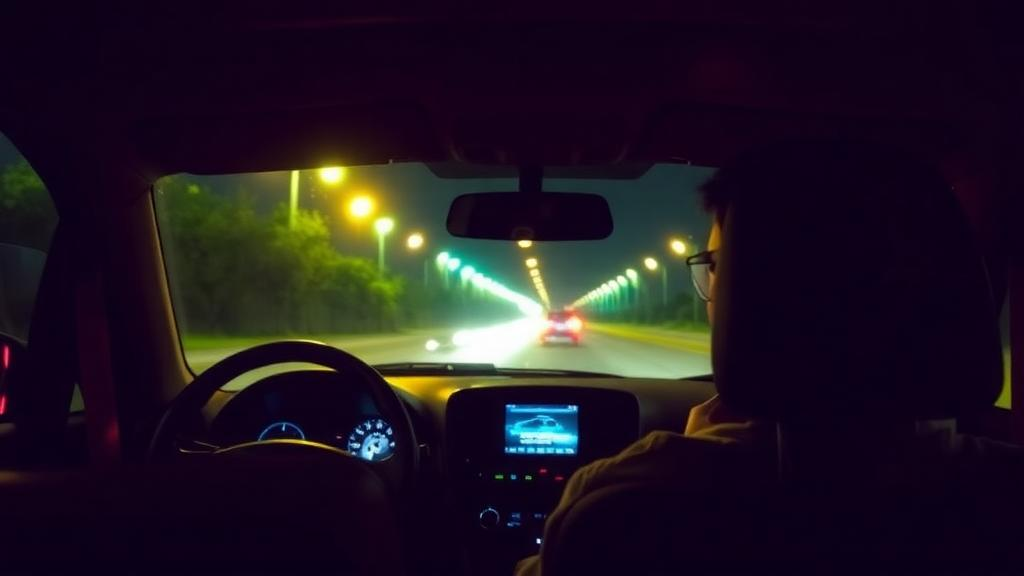
Time of day emerged as one of the clearest situational signals. Drivers were 6 percent less likely to wear a seatbelt in the evening, and the effect deepened as the night wore on, with buckling dropping 13 percent late at night. This pattern is particularly concerning from a safety standpoint because nighttime driving already carries elevated crash risk due to reduced visibility, and the protective value of a seatbelt is arguably greatest precisely in the conditions where drivers were least likely to use one. The researchers emphasized this paradox: people were skipping their seatbelts in the very situations where seatbelts would help the most. Darkness, it appears, does not just make it harder to see the road; it seems to coincide with a subtle relaxation of the safety habit itself.
Speed told a similar and equally counterintuitive story. For any given driver, every 10 mile per hour increase in travel speed was associated with a 2 percent drop in the likelihood of buckling up. The relationship runs directly against the logic of injury physics, since higher speeds are associated with greater crash energy and more severe outcomes, making restraint systems more valuable, not less, at higher velocities. The finding suggests that whatever psychological calculus leads drivers to unbuckle, it does not track the actual risk of harm. If anything, the habit appears strongest in the low stakes conditions and weakest when the potential consequences of a crash are greatest.
Trip length added a third situational dimension. Among trips of five miles or less, only 74 percent of drivers wore their seatbelts, compared with 95 percent on longer trips. Short trips, in other words, are disproportionately represented among unbuckled journeys, even though crashes can and do occur close to home at low speeds and on familiar routes. The pattern is consistent with a common intuition many drivers hold, that a quick errand around the corner does not warrant the full ritual of buckling up. The data quantify just how much that intuition shapes behavior, showing that the perceived triviality of a short journey translates into a substantially higher rate of skipped seatbelts.
The implications for public safety campaigns are significant. Current efforts to promote seatbelt use tend to be broad and undifferentiated, delivered through channels such as electronic billboards and the long running Click It or Ticket advertising and enforcement campaigns. Those approaches have contributed to substantial gains in national seatbelt use over the decades, but the new analysis suggests there may be considerable untapped value in sharpening the aim. If unbuckling is driven by situations rather than by stable demographic characteristics of the people involved, then interventions that target the moments of highest risk, such as late night driving, high speed travel, and short trips, could reach the behavior where it is most likely to occur. Our study suggests that future seatbelt campaigns and other interventions may be more effective if they move beyond broad demographic targeting and instead focus on these moments when people are most likely to skip buckling, Delgado said.
The study also leaves an honest accounting of what remains unexplained. Roughly 25 percent of individuals’ tendency to buckle up could not be pinned down to any factor measured in the research. The team notes that future work could potentially narrow down these unknown variables, which may include non demographic considerations such as personality traits, and that a better understanding of them could lead to more effective interventions. The more we know about when people buckle up, and when they do not, the more lives will be saved, Ebert said. That gap between what sensors can observe and what motivates human behavior underscores a central challenge of behavioral safety science: the situational triggers are measurable, but the internal dispositions that interact with them are harder to capture from vehicle data alone.
The research team is not stopping at diagnosis. The Nudge Unit, which specializes in applying behavioral science to health care and safety problems, has already demonstrated that well designed interventions can shift seatbelt habits. In previous work, offering drivers cash incentives structured as a game, in which participants challenged themselves to stack up consecutive seatbelt streaks, produced increases in seatbelt use that persisted even after the game ended. That durability matters, because the goal of any behavioral intervention is not a temporary spike in compliance but a lasting change in the default habit. The combination of fine grained situational data from connected vehicles and tested nudging techniques appears to the team to be an especially promising direction for reducing unbuckled driving. We have tested ways that seem effective in promoting this safer behavior, Delgado said. Combining all available information and our work in nudging appears especially promising.
The study, titled Quantifying situational, demographic, and regional factors associated with seat belt use in a national sample of connected vehicle customers, was supported by funding from the Abramson Family Foundation and a grant from the Centers for Disease Control and Prevention, and it builds on previous findings generated in collaboration with General Motors. Its broader message extends beyond seatbelts. As connected vehicles proliferate and sensor data becomes an increasingly routine byproduct of driving, researchers gain the ability to observe safety behaviors at a resolution that surveys and crash reports can never match. This study demonstrates what that resolution can reveal: that the decision to buckle up is less a fixed trait of the individual than a response to the moment, and that the moments of greatest danger, darkness, speed, and the deceptive brevity of a short trip, are exactly where the habit most often fails. For a nation where nearly half of crash fatalities involve an unrestrained occupant, that insight may prove to be one of the most actionable findings in seatbelt research in years.
Subject of Research: Situational and demographic factors associated with seatbelt use measured by connected vehicle sensors
Article Title: High speed, low light conditions tied to unbuckled driving
Article References: High speed, low light conditions tied to unbuckled driving. (n.d.). Original publication
Image Credits: AI Generated
DOI: Not provided
Keywords: seatbelts, connected vehicles, traffic safety, behavioral science, nudge unit, night driving, speeding, short trips, crash fatalities, public health campaigns, Penn Medicine, Traffic Injury Prevention
Cite Scienmag News
Courtney Benton. (October 11, 2026). Night Driving and Speed Predict Who Skips the Seatbelt, Penn Study Finds. Scienmag. https://scienmag.com/night-driving-and-speed-predict-who-skips-the-seatbelt-penn-study-finds/
Courtney Benton. "Night Driving and Speed Predict Who Skips the Seatbelt, Penn Study Finds." Scienmag, 11 October 2026, https://scienmag.com/night-driving-and-speed-predict-who-skips-the-seatbelt-penn-study-finds/. Accessed 11 October 2026.
Courtney Benton. "Night Driving and Speed Predict Who Skips the Seatbelt, Penn Study Finds." Scienmag. October 11, 2026. https://scienmag.com/night-driving-and-speed-predict-who-skips-the-seatbelt-penn-study-finds/


