


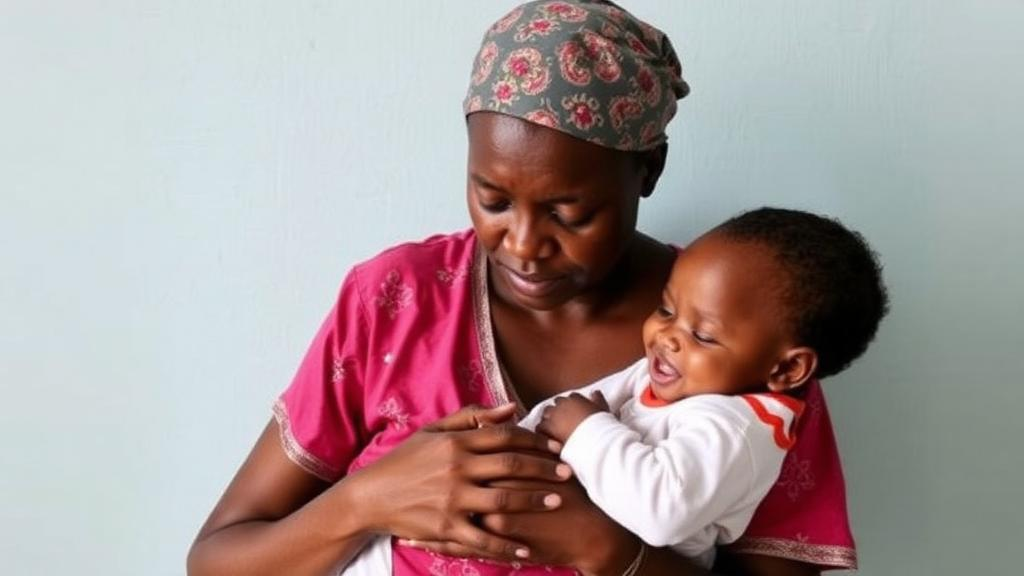
Global health authorities have long been unequivocal about the value of breastfeeding. The World Health Organization and UNICEF recommend that children be nursed for up to two years and beyond, a standard that Nigeria has formally adopted through its National Policy on Infant and Young Child Feeding. Yet a new qualitative study from Ebonyi State in southeastern Nigeria suggests that the mothers asked to carry out this recommendation are struggling under its weight, and that the policy may be asking more of women than their daily realities allow.
The research, led by Chinonyelum Thecla Ezeonu of Ebonyi State University and the Institute of Child Health at Alex Ekwueme Federal University Teaching Hospital in Abakaliki, together with colleagues from several Nigerian institutions, was published in the journal Discover Social Science and Health. It set out to answer a question that global guidelines rarely address directly: what does extended breastfeeding actually look like from the perspective of the women who practice it, and what helps or hinders them in sustaining it?
To explore that question, the team used an exploratory descriptive qualitative design with a phenomenological approach, a methodology intended to capture lived experience in depth rather than to measure prevalence statistically. Thirty-seven mothers whose children were aged two years or older were purposively selected and recruited from the child welfare clinics of two health facilities in Abakaliki: one primary care center, the Maternal and Child Health Center in Azuiyiokwu, and one tertiary facility, the Alex Ekwueme Federal University Teaching Hospital. Data were collected through five focus group discussions, each comprising seven to eight participants, conducted between April and June 2024.
The choice of focus groups is significant for a study of this kind. Breastfeeding in many Nigerian communities is shaped not only by individual preference but by family expectations, social norms, and economic pressure, and group discussion allows these shared and contested understandings to surface. The participants themselves reflected a broad cross-section of maternal life in Abakaliki: their ages ranged from 21 to 45, their educational attainment spanned secondary and tertiary levels, and their employment status included salaried workers, self-employed traders and artisans, and stay-at-home mothers. This diversity matters, because the barriers the study identified cut across these categories rather than being confined to any single group.
The central finding is stark. Many mothers perceived extended breastfeeding as challenging, and the difficulties they described were not primarily matters of knowledge or attitude. The women knew what the guidelines recommended. What they reported instead were material and psychological burdens: maternal stress, hunger, lack of time, and the perception that continuing to breastfeed into the second year of life conferred no added advantage for the child. Each of these barriers points to a different dimension of the problem, and together they sketch a picture of a policy ideal colliding with the constraints of everyday life.
Maternal hunger deserves particular attention. Breastfeeding beyond infancy continues to draw on a mother’s energy reserves, and lactating women require additional caloric intake to sustain milk production without depleting their own health. In households where food security is precarious, the mother’s body becomes the site of a quiet trade-off between her nourishment and her child’s. The study found that having sufficient food for maternal nourishment resonated strongly as a facilitator of extended breastfeeding, which means that the practice is constrained not by culture alone but by whether a woman can afford to eat adequately while feeding a toddler. Any serious attempt to promote the two-year standard, the findings imply, must reckon with household food economics.
Time scarcity emerged as a parallel constraint, and it is closely tied to the employment patterns visible in the participant roster. A large share of the mothers were self-employed or working for wages, often in settings that offer no maternity leave beyond the statutory minimum, no lactation breaks, and no space to express or nurse milk. Breastfeeding a two-year-old on demand is difficult enough for a stay-at-home mother; for a woman trading in a market or holding down a job, it can be practically impossible. The perception of no added advantage compounds this, because mothers who see no clear benefit to themselves or their children are unlikely to absorb such costs willingly. The study’s authors note that this perception, whether or not it aligns with the epidemiological evidence on continued breastfeeding, is a real determinant of behavior and therefore a legitimate target for education and support.
Against these barriers, the facilitators the mothers identified were strikingly social rather than individual. Support from family members and friends emerged as a key enabler of extended breastfeeding, alongside adequate maternal nutrition. This finding aligns with a broader body of research showing that breastfeeding duration is strongly predicted by the presence of supportive networks, and it carries a practical implication: interventions that treat breastfeeding as a solitary maternal duty are likely to fail, while those that mobilize partners, grandparents, and peers may succeed. It also echoes related Nigerian studies, including work on the sociocultural determinants of exclusive breastfeeding among rural mothers in the country’s northwest, which similarly found that practices are embedded in family and community structures.
The authors draw a conclusion that is likely to provoke debate among policymakers. The standard recommendation to breastfeed up to two years, they argue, appears to prioritize infant needs while placing unrealistic demands on the current lives of Nigerian women. On the basis of their findings, they call for a policy review that considers the physical, psychological, and socio-economic needs of mothers when determining adequate and reasonable breastfeeding standards that also benefit babies. This is not a rejection of the WHO and UNICEF guidelines, which rest on strong evidence of protection against infection and improved survival, but a challenge to the way such guidelines are implemented when the surrounding conditions, from food security to workplace accommodation, do not support them.
The study comes with the usual caveats of qualitative research. Thirty-seven mothers recruited from two clinics in one state cannot represent all Nigerian women, and focus group discussions, while rich, can amplify socially acceptable views. The work was also self-funded by the authors from their own salaries, with no external sponsorship, and was conducted with ethical clearance from the Ebonyi State University Research Ethics Committee in accordance with the Declaration of Helsinki, with informed verbal consent obtained from all participants. Within those limits, however, the findings offer something that large surveys cannot: a grounded account of why a globally endorsed recommendation feels burdensome on the ground. As the authors and their mentors at the International Society for Social Pediatrics and Child Health emphasize, closing the gap between policy and lived reality will require supporting mothers, not merely instructing them, and treating maternal well-being as an integral part of infant health rather than an afterthought to it.
Subject of Research: Mothers' perspectives on the barriers and facilitators of extended breastfeeding in Ebonyi State, Nigeria
Article Title: A qualitative study of mothers’ perspectives on extended breastfeeding, in Ebonyi state, Nigeria
Article References: Ezeonu, C. T., Obu, D. C., Asiegbu, U. V., Daniyan, O. W., Oyim-Elechi, O. C., Nnaji, T. N., & Udo, M. A. (2026). A qualitative study of mothers’ perspectives on extended breastfeeding, in Ebonyi state, Nigeria. Discover Social Science and Health. https://doi.org/10.1007/s44155-026-00448-w
Image Credits: AI Generated
DOI: 10.1007/s44155-026-00448-w
Keywords: extended breastfeeding, maternal health, Nigeria, Ebonyi State, qualitative research, WHO guidelines, infant nutrition, maternal stress, food security, focus group discussions, breastfeeding policy, social support
Cite Scienmag News
Harold Sullivan. (October 3, 2026). Nigerian Mothers Say Breastfeeding Until Age Two Comes at a Steep Personal Cost. Scienmag. https://scienmag.com/nigerian-mothers-say-breastfeeding-until-age-two-comes-at-a-steep-personal-cost/
Harold Sullivan. "Nigerian Mothers Say Breastfeeding Until Age Two Comes at a Steep Personal Cost." Scienmag, 3 October 2026, https://scienmag.com/nigerian-mothers-say-breastfeeding-until-age-two-comes-at-a-steep-personal-cost/. Accessed 4 October 2026.
Harold Sullivan. "Nigerian Mothers Say Breastfeeding Until Age Two Comes at a Steep Personal Cost." Scienmag. October 3, 2026. https://scienmag.com/nigerian-mothers-say-breastfeeding-until-age-two-comes-at-a-steep-personal-cost/


