


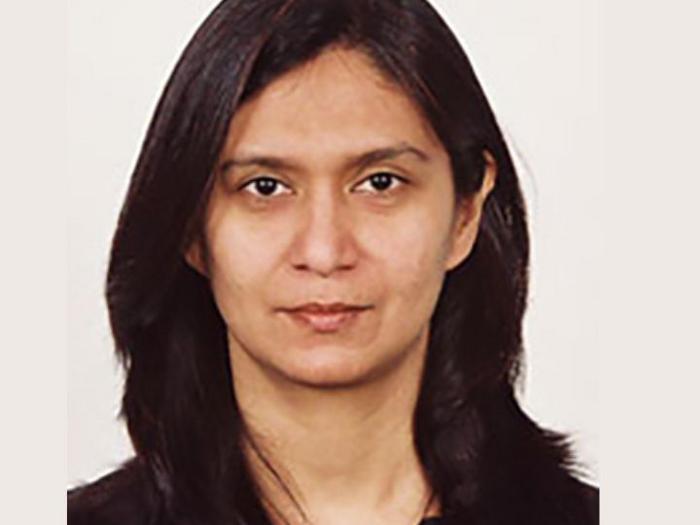
Professor Fatima Merchant, department chair of engineering technology at the University of Houston, is part of a multi-institutional research team designing patient-specific molds for breast cancer patients who undergo reconstructive surgery after cancer surgery.

Credit: University of Houston
Professor Fatima Merchant, department chair of engineering technology at the University of Houston, is part of a multi-institutional research team designing patient-specific molds for breast cancer patients who undergo reconstructive surgery after cancer surgery.
The project, supported by a $2.7 million grant from the National Institutes of Health, is set to make breast reconstruction more efficient, promoting psychosocial adjustment to cancer survivorship and reducing time in care.
“Breast reconstruction can help women retain or regain quality of life by mitigating the impacts of body image disruption due to appearance changes arising from mastectomy,” said Merchant.
“While a few studies have demonstrated the feasibility of using patient-specific molds to shape tissue into a breast form, a critical barrier to progress in the field is that no one has rigorously evaluated their impact. In contrast, our study includes a randomized controlled clinical trial for evaluation.”
In the grim world of cancer statistics, 1-in-8 women in the United States will be diagnosed with breast cancer in her lifetime, and of those who have surgery, more than 40 percent will have additional breast reconstruction surgery.
During the commonly performed autologous reconstruction, the surgeon uses skin, fat, blood vessels and muscle from another part of the patient’s body to rebuild the breast. This method is widely recognized as effective, with long-term advantages over other techniques.
However, autologous reconstruction procedures are complex, lengthy operations requiring substantial skill and experience. Plus, a revision procedure is typically required to adequately restore the patient’s bodily form; in some cases, multiple revisions are needed.
In practice, the new algorithm-driven breast molds should reduce the cost of reconstruction and the pain and risk associated with reconstruction by reducing the number of procedures a patient undergoes.
Prior work investigated simple molds that merely copied the preoperative shape and size of the patient’s breasts, or a mirrored version of the contralateral breast in the case of unilateral breast reconstruction. But many patients desire or require a different breast form after mastectomy and so simply copying the preoperative breast form is inadequate.
“Our approach in developing the clinical decision-support algorithms is informed by our experience in image perception, machine learning, image processing, and shape modeling, and conducting a thorough evaluation in a randomized controlled clinical trial,” said Merchant.
The research team includes multiple principal investigators, Ashleigh M. Francis at The University of Texas MD Anderson Cancer Center and Mia K. Markey at The University of Texas at Austin. The team is part of the Multidisciplinary Breast Reconstruction Research Program. Investigators at UT include Haoqi Wang, doctoral student in the Department of Biomedical Engineering, and the MD Anderson team includes Deepti Chopra, Z-Hye Lee, Christopher Parham, Gregory P. Reece, Margaret Roubaud, Mark Schaverien, and John Shuck.
Merchant is supported in this work by UH investigators, Ann Chen, research associate professor, HEALTH Research Institute, Weihang Zhu, professor, Department of Engineering Technology, and Elizabeth Rodwell, assistant professor, Department of Information Systems Technology.
Cite Scienmag News
Nathaniel Bowman. (August 27, 2024). Next-level breast reconstruction after cancer. Scienmag. https://scienmag.com/next-level-breast-reconstruction-after-cancer/
Nathaniel Bowman. "Next-level breast reconstruction after cancer." Scienmag, 27 August 2024, https://scienmag.com/next-level-breast-reconstruction-after-cancer/. Accessed 10 September 2026.
Nathaniel Bowman. "Next-level breast reconstruction after cancer." Scienmag. August 27, 2024. https://scienmag.com/next-level-breast-reconstruction-after-cancer/

