

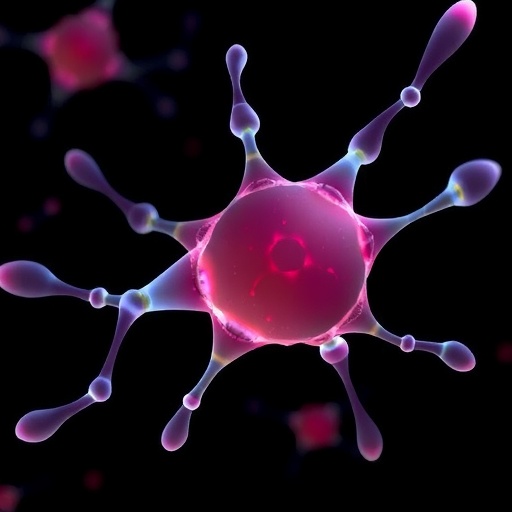
In a significant breakthrough poised to revolutionize regenerative medicine and tissue repair, scientists from the University of Ottawa have developed an innovative peptide-based hydrogel designed for soft tissue adhesion. This next-generation biomimetic material offers an unprecedented combination of bio-compatibility, mechanical strength, and tunability, setting a new standard for wound closure technologies and surgical aids. The research, published in Advanced Functional Materials, heralds a new era in the development of bioengineered solutions that closely mimic the body’s natural healing processes.
Soft tissue repair has long challenged biomedical engineers due to the complex mechanical and biological requirements needed to seamlessly integrate with living tissues. The Ottawa team addressed these challenges by synthesizing peptides inspired by the natural triple helix structure of collagen, the most abundant structural protein in mammals. By engineering these synthetic peptides, the researchers gained exquisite control over the chemical composition and functional behavior of their hydrogel, surpassing the limitations of current polymer-based adhesives that often trigger adverse immune reactions.
Central to this innovation is the dual mechanism of self-assembly and photoactivation. Once introduced into a buffered solution, the peptides autonomously fold and organize into supramolecular arrays that form the soft, gelatinous matrix characteristic of hydrogels. To further enhance mechanical resilience, the material undergoes a rapid light-induced chemical crosslinking process. This photoactivated step strengthens the network by forging stable covalent bonds, transforming a malleable gel into a durable yet flexible adhesive capable of conforming to intricate tissue geometries.
The hydrogel’s mechanical performance is remarkable, offering adhesion strengths comparable to widely used commercial tissue adhesives such as LiquiBand. Unlike synthetic polymer adhesives, which can persist in the body and provoke inflammation, the peptide hydrogel is fully biodegradable. Its molecular design allows enzymatic enzymes naturally present in the human body to break down the material safely over time, mitigating risks associated with long-term implantable devices and eliminating the need for subsequent removal procedures.
This biocompatibility was rigorously tested in cell culture systems, where the hydrogel demonstrated an outstanding capacity to support cell viability and promote normal cellular functions. Such cytocompatibility is crucial for any medical material intended for direct interaction with living tissues. It points to the hydrogel’s suitability not only for soft tissue bonding but also for broader applications such as regenerative scaffolds and drug delivery platforms.
The implications of this work extend beyond wound closure. According to Dr. Emilio I. Alarcón, a lead researcher and professor at the University of Ottawa Faculty of Medicine, the material’s tunability and peptide-based architecture open possibilities for developing next-generation regenerative platforms. By tailoring peptide sequences and modifying photoactivation parameters, future iterations could target diverse tissue types, including cardiac, neural, and musculoskeletal systems.
Further underscoring the material’s clinical potential, PhD candidates Alex Ross and Daniel Nguyen emphasize the importance of minimizing foreign body reactions. Ross notes that biodegradable materials eliminate complications related to removal procedures like suture extraction, while Nguyen highlights the necessity for medical adhesives to be unobtrusive and harmoniously integrate with dynamic physiological environments. Both researchers belong to the BioEngineering and Therapeutic Solutions (BEaTS) lab, which specializes in cutting-edge bioengineering technologies.
The hydrogel also exemplifies a paradigm shift in biomaterial design: moving away from synthetic polymers towards fully peptide-based constructs that harness nature’s principles at the molecular level. This biomimetic strategy not only improves safety profiles but also enhances integration with the body’s intrinsic repair mechanisms. The peptides’ collagen-like triple helices enable precise biochemical signaling and remodeling, enhancing natural tissue regeneration in situ.
Technically, the photoactivated crosslinking utilizes light of specific wavelengths to initiate rapid bond formation among peptide side chains modified with reactive groups. This ability to control gelation spatiotemporally allows surgeons to apply the hydrogel and solidify it on demand, optimizing adherence while preserving tissue viability. This level of control is critical in minimizing surgical complications and improving healing outcomes.
Looking forward, the research team envisions expanding the hydrogel’s applications into minimally invasive surgeries, organ repair, and even injectable formulations for internal wounds. Its combination of mechanical durability, biological compatibility, and modular design positions it as a transformative tool in precision medicine and personalized therapeutics.
This advancement in peptide-based hydrogels exemplifies how interdisciplinary collaboration—melding chemistry, molecular biology, and bioengineering—can converge to solve longstanding clinical challenges. The University of Ottawa’s pioneering effort marks a decisive step towards safer, more effective tissue adhesives that hold promise to improve millions of patient outcomes worldwide.
Subject of Research: Cells
Article Title: Mechanically Stable and Tunable Photoactivated Peptide-Based Hydrogels for Soft Tissue Adhesion
News Publication Date: 27-Dec-2025
Web References:
http://dx.doi.org/10.1002/adfm.202529084
Image Credits: Faculty of Medicine, University of Ottawa
Keywords: Synthetic peptides, Hydrogels, Chemical composition, Chemistry, Surgery, Biomaterials, Immunity, Organ systems, Amino acids, Nanomaterials, Cells


