

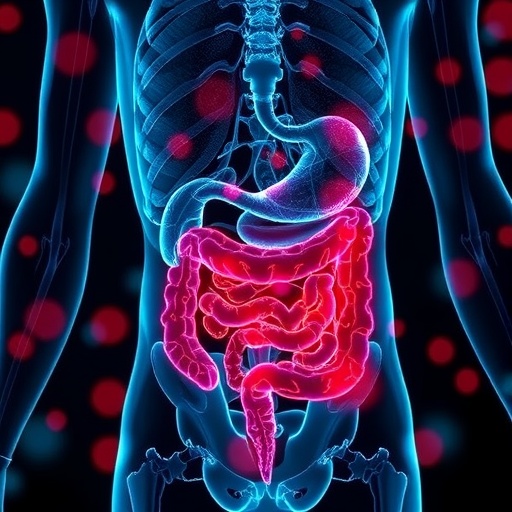
A groundbreaking study recently published in The American Journal of Pathology unveils a novel immunological phenomenon linked to the absence of the angiopoietin-like 4 (ANGPTL4) protein during developmental stages in mice, revealing profound implications for intestinal inflammatory diseases and colorectal cancer. By leveraging a sophisticated mouse knockout model, researchers discovered that lacking ANGPTL4 induces a durable reprogramming of innate immune function, effectively shielding these animals from the otherwise severe intestinal inflammation and subsequent tumorigenesis observed in their wild-type counterparts.
ANGPTL4, a multifunctional glycoprotein primarily celebrated for its regulatory role in lipid metabolism, also exerts significant influence over tissue homeostasis and immune regulation. Its versatile biological roles encompass maintaining vascular integrity, modulating inflammatory responses, and impacting pathological processes such as wound healing, atherosclerosis, and notably, intestinal barrier maintenance. The nuanced function of ANGPTL4 in intestinal immune dynamics has, until now, remained underexplored.
The intestine’s unique position as a central interface for nutrient absorption and immune surveillance underpins its constant exposure to a complex milieu of microbial and dietary antigens. Disruption of intestinal homeostasis precipitates inflammatory bowel disease (IBD) and long-lasting mucosal inflammation, conditions well-recognized for escalating colorectal cancer risk. The present study reveals that developmental ANGPTL4 deficiency molds the immune landscape, tempering inflammatory responses and limiting carcinogenic progression.
Previous investigations into ANGPTL4 knockout (KO) mice predominantly centered on fatal early postnatal consequences, including compromised lymphatic development and intense intestinal inflammation causing mortality within the initial fortnight. Contrastingly, this latest research pivots attention to the surviving cohort, examining their long-term immune adaptability and disease resilience. Such rare survivors presented an unexpected model to interrogate the intersection of developmental immunological programming and susceptibility to chronic intestinal disorders.
The research team postulated that these surviving ANGPTL4 KO mice undergo immunological adaptation processes that circumvent early developmental adversities. This hypothesis was rigorously tested by subjecting these mice to inflammatory challenges later in life, comparing their response profiles against wild-type controls. Remarkably, ANGPTL4-deficient mice exhibited not only reduced colitis severity but also a robust resistance to inflammation-associated colon tumorigenesis.
Mechanistic inquiry into this protective effect highlighted a pivotal shift in macrophage activation states within the intestinal microenvironment. Instead of the classically activated pro-inflammatory macrophages typically associated with tissue damage and tumor promotion, ANGPTL4-deficient mice favored alternative macrophage activation. These alternatively activated macrophages possess immunomodulatory properties conducive to tissue repair and anti-inflammatory functions, thereby mediating enhanced resistance to chronic inflammation and subsequent neoplastic transformation.
This discovery signifies a paradigm shift, underscoring how immune experiences in early developmental windows can indelibly reprogram innate immune components—an immunological memory phenomenon often termed trained immunity. The reprogrammed macrophages suggest an epigenetic underpinning, whereby early-life inflammatory stimuli imprint durable changes onto immune cell progenitors, enhancing protective responses against recurrent inflammatory insults in adulthood.
From a translational perspective, the study evaluated the relevance of these findings in human colorectal cancer by analyzing The Cancer Genome Atlas (TCGA) colorectal adenocarcinoma dataset. Intriguingly, low ANGPTL4 expression in tumor tissues correlated with diminished inflammatory gene signatures and improved patient survival outcomes, validating the immune-protective axis observed in murine models and emphasizing ANGPTL4’s potential as a prognostic biomarker.
The implications of this research extend beyond fundamental immunology. They challenge the traditional view of inflammatory cytokines and accessory proteins in carcinogenesis, offering a nuanced understanding that molecules like ANGPTL4 may exert tissue-context-dependent and developmental stage-specific effects. Therapeutic modulation of ANGPTL4 or its downstream signaling could pave the way for novel interventions aimed at harnessing alternative macrophage activation to curb intestinal inflammation and mitigate cancer risk.
Moreover, these findings invigorate the conceptual framework of trained immunity in gastrointestinal health, suggesting that early-life environmental factors influence chronic disease susceptibility by shaping innate immune programming. The study prompts further exploration into the molecular mediators of AMgPTL4-driven immune reconfiguration and how these might be pharmacologically targeted or mimicked.
While ANGPTL4’s multifaceted roles imply potential challenges in systemic targeting—given its functions in metabolism and vascular biology—this research encourages the pursuit of tissue-specific therapeutic strategies. Distinguishing the divergent roles of ANGPTL4 across organs will be paramount in designing interventions that optimize clinical benefits while minimizing adverse consequences.
In summary, this pioneering work elucidates how loss of ANGPTL4 during development triggers a reprogrammed immune phenotype characterized by alternative macrophage activation, conferring substantial protection against chronic intestinal inflammation and cancer. It underscores the profound interplay between developmental immunology and disease pathogenesis, opening compelling avenues for biomarker discovery and innovative treatments for inflammatory bowel disease and colorectal cancer.
Subject of Research: Animals
Article Title: Loss of Angptl4 Protects Mice from Intestinal Colitis and Tumorigenesis with Alternative Activation of Macrophages
News Publication Date: February 18, 2026
Web References:
https://doi.org/10.1016/j.ajpath.2025.11.003
https://ajp.amjpathol.org/
References:
Yoo et al., The American Journal of Pathology, 2026, “Loss of Angptl4 Protects Mice from Intestinal Colitis and Tumorigenesis with Alternative Activation of Macrophages”
Image Credits: The American Journal of Pathology / Yoo et al.
Keywords: ANGPTL4, intestinal inflammation, inflammatory bowel disease, colorectal cancer, macrophage activation, trained immunity, knockout mice, immune reprogramming, tumorigenesis, alternative macrophage activation, innate immunity, epigenetics


