


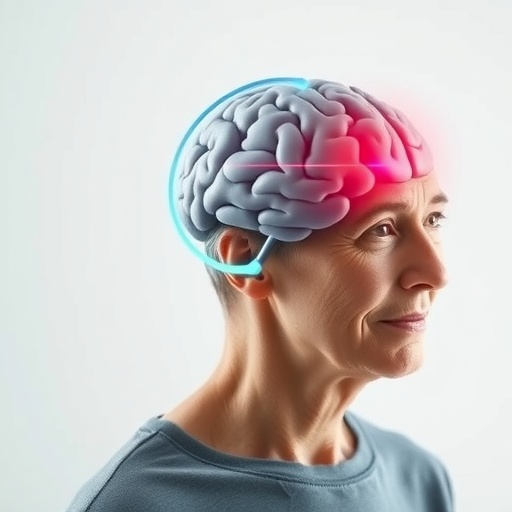
A groundbreaking study, recently published in the prestigious Scientific Reports journal of the Nature Portfolio, challenges the long-held assumption that cognitive decline is an unavoidable consequence of aging. Conducted by researchers at the Center for BrainHealth® at The University of Texas at Dallas, the study unveils powerful evidence demonstrating that brain performance is not only maintainable but can be significantly enhanced at any point in adulthood, from young adulthood through late life. This revelation carries profound implications for public health, redefining our understanding of brain aging as a dynamic, modifiable trajectory rather than a fixed decline.
Over the course of three years, this expansive longitudinal study meticulously tracked almost 4,000 participants aged between 19 and 94. Utilizing the innovative BrainHealth Index (BHI), a multidimensional composite tool designed to measure holistic brain function rather than just deficits or pathology, researchers could assess and quantify improvement across various domains of brain health. The BHI encapsulates three fundamental pillars central to optimal cognitive function: clarity, which refers to higher-order thinking and cognitive agility; connectedness, the sense of social purpose and interpersonal engagement; and emotional balance, highlighting mental resilience and emotional regulation capabilities.
Crucially, the study revealed that brain health improvement exhibited no apparent upper limit. Participants, including those with already high baseline performance, continued to demonstrate measurable cognitive gains even after 1,000 days. This suggests that the brain’s capacity for growth and adaptation remains robust across the human lifespan. Such findings underscore the unparalleled plasticity of neural systems, even in advanced age, contradicting outdated notions that cognitive decline is inevitable and irreversible.
Another salient discovery centered on the remarkable trajectories of those entering the study with lower initial brain health scores. These individuals experienced the most significant rates of improvement, indicating that poor cognitive function or brain health deficits need not translate into a lifelong sentence. Their gains underscore brain health as a trainable and recoverable state rather than a predetermined endpoint, heralding hope for interventions in both ageing populations and those recovering from cognitive challenges.
The methodology focused heavily on small, consistent, daily engagements in targeted brain micro-training exercises lasting between five to fifteen minutes. Participants who maintained high adherence to these habits not only showed superior improvements but also achieved the highest overall BrainHealth Index scores. This finding amplifies the impact of subtle, sustained behavior changes, affirming that even modest daily cognitive investments can cumulatively produce tangible and lasting benefits in brain health and functionality.
Importantly, the benefits of cognitive engagement transcended age boundaries. Younger adults exhibited brain health gains comparable to those seen in participants in their seventies and eighties. This evidence debunks a pervasive myth that proactive brain health efforts are only necessary or beneficial for older adults. Instead, it promotes a model of continuous brain optimization beginning early in adulthood and persisting as a lifelong endeavor.
One of the most compelling implications of this research lies in its defining of brain health as a trainable characteristic, responsive to deliberate interventions and lifestyle changes. The study documented a rebound phenomenon, wherein individuals subject to major life stressors—such as personal illness, job insecurity, or caregiving demands—were able to regain or even improve their brain health through cognitive strategy utilization. This resilience highlights adaptive neuroplasticity, reinforcing the concept of the brain as a dynamic organ capable of rewiring in response to environmental and behavioral stimuli.
Led by Dr. Sandra Bond Chapman, who directs the Center for BrainHealth and serves as a distinguished professor, the research propounds a radical shift in both clinical and societal framing of brain health. Dr. Chapman emphasizes that society’s outdated waiting-for-decline model must be replaced with proactive brain maintenance strategies capable of extending not only lifespan but brain health span. Her vision presents brain potential as a continuum of opportunity, capable of being harnessed and maximized throughout life rather than being diminished inevitably after middle age.
The study also leverages a scalable, digital platform to extend the reach of validated brain health protocols beyond the laboratory. This innovative delivery system, accessible online and via mobile applications, integrates brain strategy training, lifestyle modification pointers, personalized coaching, and longitudinal performance tracking using the BrainHealth Index. This technology-driven approach democratizes access to evidence-based cognitive enhancement strategies, enabling global dissemination and adoption.
Instituted as part of the larger BrainHealth Project, this research initiative embodies a multi-pronged scientific examination of cognitive performance optimization throughout adulthood. This ambitious project investigates the interplay of lifestyle variables, biological markers, neural plasticity, and cognitive training efficacy. Its unique, personalized mindset rejects one-size-fits-all cognitive interventions in favor of tailored blueprints designed to empower individuals in self-managing their brain’s development and maintenance.
Co-lead investigators, including Mark D’Esposito, MD, and others, have rooted this initiative in decades of neuroscientific expertise and translational research methodologies. This collective effort integrates structural and functional brain imaging modalities, cognitive testing metrics, and behavioral science to map and guide brain health trajectories over time. The project reflects a holistic shift towards viewing cognition as a lifelong, modifiable capacity rather than a degeneration-prone system with an inevitable endpoint.
From a public health perspective, this research heralds transformative implications. The possibility of widespread, cost-effective brain optimization could redefine aging, reduce cognitive morbidity, and elevate overall quality of life for populations worldwide. It aligns with current shifts toward preventive, personalized medicine and the notion that enhancing brain health is foundational to maintaining independence, productivity, and well-being in aging societies.
In conclusion, this landmark study advances our scientific understanding of brain plasticity, resilience, and the malleability of cognitive health across the lifespan. It challenges entrenched paradigms that equate aging with cognitive inevitable decline and offers a hopeful, empirically supported course for intervention. By embracing habitual, personalized brain health strategies delivered through scalable digital platforms, humanity stands poised to extend cognitive vitality alongside longevity, unlocking unprecedented potential for thriving in an increasingly complex world.
- Nature Scientific Reports Article
- Center for BrainHealth
- BrainHealth Index
- The BrainHealth Project
- SMART™ Training
Image Credits: Center for BrainHealth
Keywords: Cognitive neuroscience, human brain, neuroplasticity, aging populations, behavioral psychology, clinical psychology
Cite Scienmag News
Ophelia Keating. (May 7, 2026). New Study in Nature Scientific Reports Reveals Cognitive Improvement Is Possible at Any Age, Challenging the Notion of Inevitable Decline. Scienmag. https://scienmag.com/new-study-in-nature-scientific-reports-reveals-cognitive-improvement-is-possible-at-any-age-challenging-the-notion-of-inevitable-decline/
Ophelia Keating. "New Study in Nature Scientific Reports Reveals Cognitive Improvement Is Possible at Any Age, Challenging the Notion of Inevitable Decline." Scienmag, 7 May 2026, https://scienmag.com/new-study-in-nature-scientific-reports-reveals-cognitive-improvement-is-possible-at-any-age-challenging-the-notion-of-inevitable-decline/. Accessed 3 September 2026.
Ophelia Keating. "New Study in Nature Scientific Reports Reveals Cognitive Improvement Is Possible at Any Age, Challenging the Notion of Inevitable Decline." Scienmag. May 7, 2026. https://scienmag.com/new-study-in-nature-scientific-reports-reveals-cognitive-improvement-is-possible-at-any-age-challenging-the-notion-of-inevitable-decline/


