


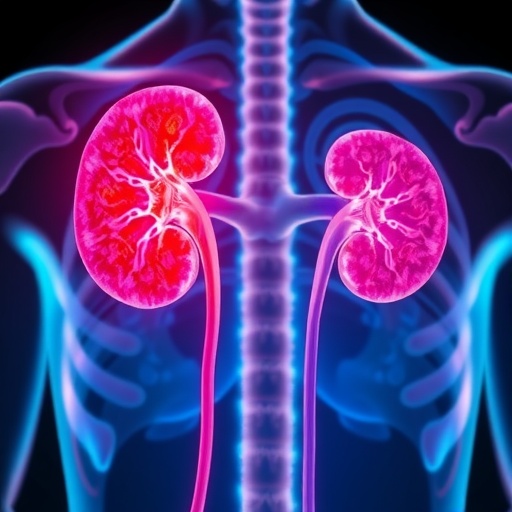
In a groundbreaking study led by University of Texas at Arlington (UTA) researcher Paul J. Fadel, new insights have emerged challenging long-held beliefs about vascular health markers in patients with chronic kidney disease (CKD). For decades, the biomedical community focused on asymmetric dimethylarginine (ADMA) as a critical blood biomarker signaling the risk of vascular complications. However, the latest research published in the American Journal of Physiology-Renal Physiology reveals that symmetric dimethylarginine (SDMA), previously considered relatively inert, may actually hold stronger predictive value for vascular dysfunction in this vulnerable population.
Chronic kidney disease affects millions globally and significantly increases the risk of cardiovascular mortality—far surpassing deaths directly attributed to kidney failure. This paradox has prompted an intensive search for reliable biomarkers that convey early warning signs of vascular deterioration, thereby guiding timely interventions. Dr. Fadel, who directs UTA’s Human Neural Cardiovascular Control Lab, and his team set out to explore these biochemical signals linking kidney function with vascular health, especially during the moderate stages of CKD.
Unexpectedly, the study found that elevated blood levels of SDMA, rather than ADMA, correlated more robustly with impaired endothelial function—an early hallmark of vascular disease—in patients with stage 3 CKD. Endothelial cells line the interior surface of blood vessels and regulate vascular tone and blood flow through the release of nitric oxide, a potent vasodilator. Dysfunction in this system predisposes patients to atherosclerosis and other cardiovascular complications. These findings suggest that SDMA accumulation may serve as an early sentinel of vascular compromise.
SDMA’s stronger association with diminished endothelial vasodilation challenges previous assumptions that relegated it to a less active metabolic byproduct. Its accumulation in CKD likely reflects impaired renal clearance but also implicates SDMA in directly influencing vascular function. Unlike ADMA, which competitively inhibits nitric oxide synthase, SDMA may exert more subtle yet significant effects on vascular smooth muscle and inflammatory pathways. This biochemical nuance redefines the landscape for potential diagnostic and therapeutic targets.
The study predominantly targeted patients with moderate CKD as they represent a critical intervention window before disease progression necessitates dialysis. Dialysis itself often exacerbates cardiovascular risks, making early detection of vascular compromise paramount. By highlighting SDMA’s predictive utility within this group, the research opens a promising avenue for earlier clinical monitoring that could change patient outcomes and reduce cardiovascular mortality.
While neither SDMA nor ADMA serve as perfect stand-alone markers, Dr. Fadel emphasized that SDMA’s modest yet consistent linkage to vascular impairment merits further investigation. The potential of SDMA to enhance existing risk stratification models could inform personalized medical approaches aimed at delaying or preventing cardiovascular sequelae in CKD. This nuanced understanding aligns with the broader scientific imperative to dissect complex pathophysiological mechanisms contributing to chronic disease.
The methodological rigor of the research involved comprehensive vascular function assessments combined with sophisticated biochemical profiling of circulating methylarginines. By integrating clinical data from a well-characterized patient cohort, the team elucidated the multifactorial processes underpinning vascular health and kidney dysfunction. These insights underscore the intricate interplay between renal clearance mechanisms and vascular homeostasis mediated by endogenous metabolites.
Furthermore, the findings prompt a reexamination of the molecular pathways through which SDMA influences cardiovascular tissues, inviting new research initiatives exploring potential therapeutic modulation. If SDMA contributes causally to endothelial dysfunction, targeting its synthesis, metabolism, or downstream signaling could yield innovative treatments that mitigate cardiovascular risk in CKD patients.
Coauthored by a multidisciplinary team including UTA postdoctoral fellows, doctoral candidates, and clinician collaborators led by Ponnaiah Mohan, the study exemplifies translational research bridging fundamental physiology with clinical relevance. Their collective expertise underscores the value of cross-disciplinary efforts to unravel the complex biochemical networks that jeopardize vascular integrity in chronic diseases.
Dr. Fadel’s leadership at the forefront of human neural cardiovascular control research amplifies UTA’s commitment to pioneering investigations that address pressing global health challenges. As CKD prevalence continues to rise, elucidating reliable biomarkers like SDMA enhances the potential to intervene earlier and more effectively, thereby shifting the paradigm of disease management and patient prognosis.
In summary, this seminal discovery pivots attention from ADMA towards SDMA as a more potent indicator of vascular dysfunction in chronic kidney disease patients. It challenges existing clinical dogma and unlocks new possibilities for monitoring and mitigating cardiovascular risks, underscoring the necessity for expanded research to validate SDMA’s role and therapeutic implications. The study not only enriches our understanding of vascular biology but also delivers hope for improved clinical outcomes in a high-risk patient population.
Cite Scienmag News
Jerry Hayes. (October 2, 2025). New Study Identifies Surprising Marker in Kidney Disease. Scienmag. https://scienmag.com/new-study-identifies-surprising-marker-in-kidney-disease/
Jerry Hayes. "New Study Identifies Surprising Marker in Kidney Disease." Scienmag, 2 October 2025, https://scienmag.com/new-study-identifies-surprising-marker-in-kidney-disease/. Accessed 5 September 2026.
Jerry Hayes. "New Study Identifies Surprising Marker in Kidney Disease." Scienmag. October 2, 2025. https://scienmag.com/new-study-identifies-surprising-marker-in-kidney-disease/


