


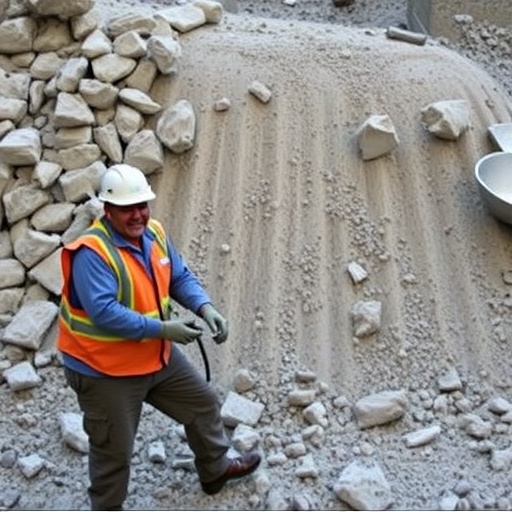
In a groundbreaking study recently published in BMC Public Health, researchers from National Jewish Health have unveiled the most comprehensive systematic review to date on the prevalence, exposure assessment, and occupational risks associated with silicosis in mineral miners worldwide. Silicosis, a progressive and irreversible lung disease triggered by inhaling fine crystalline silica dust, remains a pervasive and preventable health threat in mining sectors globally, yet understanding of its impact and the adequacy of protective measures remains incomplete. This research represents a pivotal assessment that synthesizes data spanning over 200,000 miners from 30 different countries, illuminating the persistent dangers miners face from respirable crystalline silica.
Silicosis originates from chronic exposure to fine silica particles, which, upon inhalation, embed themselves deeply in the lungs’ alveolar regions, inciting a cascade of inflammatory responses culminating in irreversible fibrosis. Unlike many contemporary occupational diseases, silicosis offers no cure once established, rendering its prevention—through effective exposure control and monitoring—the only viable strategy to protect miners’ respiratory health. The study underscores the critical need for rigorous exposure monitoring protocols alongside systematic medical surveillance to mitigate this otherwise preventable disease.
The investigators meticulously compiled and analyzed literature on respirable crystalline silica exposure across diverse mineral mining sectors, including stone, metal, and non-metal mining. Their meta-analytical approach allowed them to discern not only the prevalence rates of silicosis but also the variability in exposure assessment techniques employed internationally. The severity of the disease’s impact was found to be particularly pronounced in mining categories involving stone extraction, where respirable dust concentrations tend to be high due to the mechanical disruption of silica-rich rocks.
One of the study’s salient findings is the persistent global prevalence of silicosis, even in countries with advanced regulatory frameworks and high levels of economic development. While these nations demonstrate comparatively lower prevalence rates, silicosis continues to afflict significant fractions of their mineral mining workforce. Conversely, in lower- and middle-income countries, where occupational health infrastructures and enforcement of dust control measures may be less stringent, the incidence and severity of silicosis remain alarmingly high. This juxtaposition highlights enduring disparities in worker protection and the urgent need for international knowledge transfer and support.
The authors also addressed the limitations and heterogeneity of silica dust sampling methodologies worldwide. Inconsistent use of standardized sampling equipment, variations in the size fractions of collected dust, and differences in analytical laboratory techniques contribute to a patchwork of data quality and hinder effective global exposure comparisons. The study calls for harmonization of silica dust monitoring protocols to enhance the reliability of occupational exposure assessments and thereby facilitate evidence-based policy interventions.
Medical surveillance emerged as a crucial pillar for early detection and intervention. Regular health monitoring, including radiographic imaging and pulmonary function testing tailored to detect silicosis at latent stages, is essential. The research advocates for integrating these surveillance programs systematically within mining operations to identify at-risk workers before irreversible lung damage occurs. Comprehensive surveillance not only aids in protecting affected miners but also enhances epidemiological data quality, feeding back into improved preventive strategies.
Given the ever-increasing global demand for critical minerals essential for the green energy transition—such as lithium, cobalt, and rare earth elements—mining activities are expanding rapidly. This escalation magnifies occupational exposure risks, particularly in regions where mining regulations are still evolving or inadequately enforced. The study presciently warns that without stringent dust control and medical monitoring policies, the growth of mineral mining could unwittingly propagate a resurgence of silicosis on a global scale.
The systemic review provides more than a snapshot; it is a call to action for multisectoral collaboration. Researchers emphasize the role of policymakers, mining companies, occupational health professionals, and labor organizations in forging integrated approaches to silica dust management. Embedding advanced engineering controls, personal protective equipment standards, and worker education programs within mining practices are non-negotiable components of an effective silicosis prevention framework.
From a scientific standpoint, the study advances the understanding of silicosis epidemiology by synthesizing data across geographically diverse mining environments. It exposes knowledge gaps, particularly in exposure-response relationships and the effectiveness of contemporary dust mitigation technologies in mineral mines distinct from coal mining. Such granular analysis supports targeted research agendas seeking to innovate safer mining methodologies and refine occupational exposure limits.
The extensive dataset analyzed also reveals temporal trends suggesting some progress in reducing silicosis prevalence in certain jurisdictions over recent decades. Nonetheless, the disease’s persistence, especially among older miners and in artisanal mining contexts, signals that existing regulatory and preventive efforts are far from sufficient. The study highlights that current silicosis control measures need scaling up and adaptation to context-specific mining challenges.
In conclusion, this seminal work by National Jewish Health researchers represents a landmark in occupational health literature, providing a robust evidence base that underscores silicosis as a pressing, preventable public health issue affecting mineral miners globally. With its detailed examination of prevalence, exposure assessment practices, and regional disparities, the study lays the foundation for enhanced surveillance, stronger regulatory frameworks, and intensified advocacy to protect mining workers worldwide before this debilitating disease claims more victims.
This research not only charts the present landscape of silicosis in mineral mining but also anticipates future challenges amidst a mining industry transforming under the pressures of global climate goals. To safeguard miners’ lives and health, silicosis prevention must be prioritized as a fundamental aspect of sustainable mineral extraction in the 21st century.
News Publication Date: May 5, 2026
Web References:
- Article on BMC Public Health: https://link.springer.com/article/10.1186/s12889-026-27032-w
- DOI Link: http://dx.doi.org/10.1186/s12889-026-27032-w
Cite Scienmag News
Ophelia Keating. (May 5, 2026). New Study by National Jewish Health Reveals Major Global Impact of Silicosis Among Mineral Miners. Scienmag. https://scienmag.com/new-study-by-national-jewish-health-reveals-major-global-impact-of-silicosis-among-mineral-miners/
Ophelia Keating. "New Study by National Jewish Health Reveals Major Global Impact of Silicosis Among Mineral Miners." Scienmag, 5 May 2026, https://scienmag.com/new-study-by-national-jewish-health-reveals-major-global-impact-of-silicosis-among-mineral-miners/. Accessed 5 September 2026.
Ophelia Keating. "New Study by National Jewish Health Reveals Major Global Impact of Silicosis Among Mineral Miners." Scienmag. May 5, 2026. https://scienmag.com/new-study-by-national-jewish-health-reveals-major-global-impact-of-silicosis-among-mineral-miners/


