


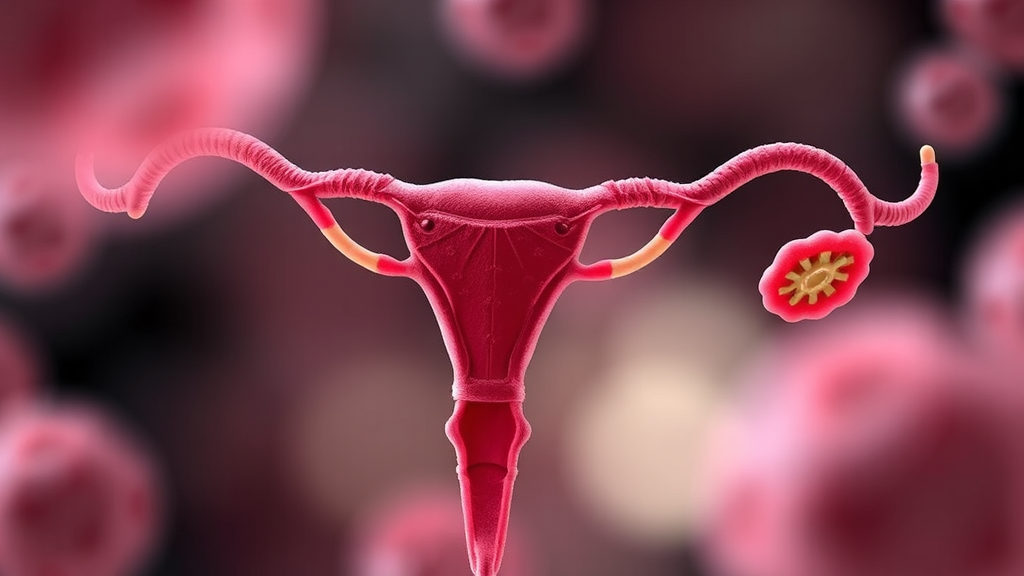
For millions of women living with type 1 diabetes, the monthly rhythm of the menstrual cycle is far more than a reproductive event. Fluctuating levels of estradiol and progesterone can measurably alter insulin sensitivity, glucose uptake, and hepatic glucose production, translating into day-to-day swings in blood sugar that current diabetes technologies largely ignore. A new narrative review published in Bioengineering & Translational Medicine systematically examines how ovarian hormones interact with glucose–insulin regulation and exposes a striking gap: the mathematical models that underpin modern insulin delivery systems remain almost entirely blind to these cyclical endocrine effects.
The review, conducted by researchers working at the intersection of biomedical engineering and endocrinology, synthesizes evidence from physiology, clinical studies, and computational modeling to answer a deceptively simple question: what hormonal processes underlie the sex-specific impact on glucose regulation, and can modern diabetes care continue to overlook physiological differences between the sexes without compromising precision and equity? The authors argue that the answer to the second question is increasingly no, particularly as automated insulin delivery systems become the standard of care and their algorithms remain calibrated to a sex-neutral, hormonally static patient.
The physiological backdrop is well established. Across an approximately 28-day cycle, estradiol and progesterone oscillate in patterns that modulate thermoregulation, energy expenditure, substrate utilization, and insulin sensitivity. Studies in healthy women show that these endocrine fluctuations influence glucose kinetics, gastric emptying, incretin secretion, and even exercise performance in a phase-dependent manner. Estradiol tends to enhance insulin-mediated glucose uptake and lipid oxidation, whereas progesterone induces relative insulin resistance and increases hepatic glucose output. The cyclic interplay between these hormones generates measurable variation in glycemia and metabolic efficiency throughout the cycle.
In women with type 1 diabetes, even modest hormonal fluctuations can produce clinically meaningful changes in insulin sensitivity and glycemic control. Yet the clinical literature is inconsistent. Some studies report increased insulin resistance or higher glucose levels during the luteal phase, when progesterone dominates; others observe minimal or no systematic phase-related effects; and interindividual variability frequently exceeds the average effect size. The review attributes these discrepancies to methodological heterogeneity, differing definitions of cycle phases, and the confounding influence of physical activity, stress, diet, and sleep, factors that are difficult to control in real-world settings but that interact directly with hormonal and metabolic pathways.
The complexity deepens considerably in the context of polycystic ovary-like metabolic dysfunction, which the review reports reaches a pooled prevalence of nearly 25 percent among women with type 1 diabetes. Here the pathophysiology is driven primarily by chronic exposure to supraphysiological peripheral insulin levels rather than classical insulin resistance. Exogenous hyperinsulinemia stimulates ovarian theca cell steroidogenesis and suppresses hepatic production of sex hormone–binding globulin, raising circulating androgens. Elevated androgens then impair insulin sensitivity through tissue-specific mechanisms: in skeletal muscle they disrupt post-receptor signaling, including IRS-1/PI3K/Akt activation and GLUT4 translocation; in adipose tissue they promote visceral fat accumulation, enhanced lipolysis, and increased free fatty acid flux. The result is a vicious cycle in which exogenous insulin excess drives ovarian hyperandrogenism, which further deteriorates insulin sensitivity and amplifies long-term cardiometabolic risk.
Against this physiological landscape, the review evaluates the state of mathematical modeling. Physiological models—computational representations built on differential equations describing hormone secretion, glucose–insulin kinetics, and metabolic fluxes—are the foundation of in silico simulators used to test insulin dosing algorithms and closed-loop control strategies before clinical deployment. The field’s canonical frameworks, from the Bergman Minimal Model of 1981 and Sorensen’s comprehensive physiological model of 1985 through the Hovorka and Dalla Man models and the widely adopted UVA/Padova simulator, have achieved remarkable methodological maturity and clinical validation. But the review finds that virtually all of these frameworks rely on sex-neutral assumptions and do not incorporate the cyclical effects of estradiol and progesterone on insulin sensitivity, glucose uptake, or hepatic glucose production.
The authors systematically classified 25 unique studies into categories spanning sex-specific physiological models of energy metabolism, machine learning approaches to menstrual phase detection from wearable data, deep learning frameworks for glucose forecasting in type 1 diabetes, and mechanistic models of the hypothalamic–pituitary–ovarian axis. Notable contributions include Fischer and Röblitz’s mechanistic model of the ovarian cycle describing estradiol, luteinizing hormone, follicle-stimulating hormone, and progesterone dynamics, validated in women undergoing in vitro fertilization, and machine learning frameworks that identify menstrual phases from heart rate, temperature, and sleep metrics with high accuracy. Yet only a handful of studies attempt to couple ovarian hormone dynamics directly to glucose regulation, and fewer still in a diabetes-specific context.
Three recent frameworks emerge as the most significant attempts to bridge the divide, and the review provides a detailed comparative analysis of their abstraction levels. Manrique-Córdoba and colleagues modify a single parameter governing peripheral insulin action within the oral glucose minimal model, representing the cycle implicitly through cycle day; the approach preserves interpretability but cannot distinguish the mechanistic contributions of individual hormones. Díaz and colleagues take a control-oriented approach, discretizing the cycle into follicular and luteal phases and translating insulin sensitivity variability, derived from euglycemic clamp data, into phase-dependent adjustments of basal rate, carbohydrate ratio, and correction factor—an approach directly relevant to automated insulin delivery but agnostic to underlying endocrine mechanisms. Ramírez offers the most mechanistically integrated strategy, coupling a phenomenological ovulatory cycle model with a minimal glucose–insulin–beta-cell system in which estradiol and progesterone are dynamic state variables modulating insulin sensitivity, insulin secretion, and beta-cell mass through saturating nonlinear functions, though the model remains exploratory and unvalidated in diabetic populations.
The review’s central conclusion is that no existing framework simultaneously provides hormonal explicitness, clinical validation in type 1 diabetes populations, and direct applicability to closed-loop insulin delivery. Current automated insulin delivery algorithms do not incorporate explicit hormonal modeling, and phase-adaptive control has not been clinically validated as a strategy to improve glycemic outcomes across the menstrual cycle. Clinical studies of automated insulin delivery across cycle phases have yielded mixed results, with some reporting no statistically significant differences in overall glycemic outcomes and others noting contrasts in time in range, underscoring the need for larger, better-controlled investigations.
The authors emphasize that hormonal fluctuations alone cannot fully explain the variability observed in glycemic responses across menstrual phases. Lifestyle factors, behavioral routines, psychosocial context, ethnicity, geographical environment, and emotional state all contribute and warrant further investigation. Nevertheless, the path forward is clear: clinically validated, control-oriented frameworks capable of identifying, tracking, and integrating ovarian hormonal dynamics into insulin delivery algorithms are needed to advance truly personalized diabetes care for women. By mapping the field’s achievements and its gaps, this review provides both a foundation and a roadmap for the next generation of sex-specific, hormone-aware diabetes technology.
Subject of Research: Mathematical modeling of ovarian hormone effects on glucose–insulin regulation in type 1 diabetes
Article Title: Modeling ovarian hormone effects on glucose–insulin control in type 1 diabetes
Article References: Albaladejo‐Carrasco, N., Furió‐Novejarque, C., Nattero‐Chávez, L., Bondia, J., & Díez, J.-L. (2026). Modeling ovarian hormone effects on glucose–insulin control in type 1 diabetes. Bioengineering & Translational Medicine, Article e70168. https://doi.org/10.1002/btm2.70168
Image Credits: AI Generated
DOI: 10.1002/btm2.70168
Keywords: type 1 diabetes, menstrual cycle, ovarian hormones, estradiol, progesterone, insulin sensitivity, glucose regulation, mathematical modeling, automated insulin delivery, closed-loop systems, hyperandrogenism, sex-specific medicine
Cite Scienmag News
Denise Maddox. (September 20, 2026). New Review Maps How Menstrual Cycle Hormones Reshape Blood Sugar Control in Type 1 Diabetes. Scienmag. https://scienmag.com/new-review-maps-how-menstrual-cycle-hormones-reshape-blood-sugar-control-in-type-1-diabetes/
Denise Maddox. "New Review Maps How Menstrual Cycle Hormones Reshape Blood Sugar Control in Type 1 Diabetes." Scienmag, 20 September 2026, https://scienmag.com/new-review-maps-how-menstrual-cycle-hormones-reshape-blood-sugar-control-in-type-1-diabetes/. Accessed 4 October 2026.
Denise Maddox. "New Review Maps How Menstrual Cycle Hormones Reshape Blood Sugar Control in Type 1 Diabetes." Scienmag. September 20, 2026. https://scienmag.com/new-review-maps-how-menstrual-cycle-hormones-reshape-blood-sugar-control-in-type-1-diabetes/


