

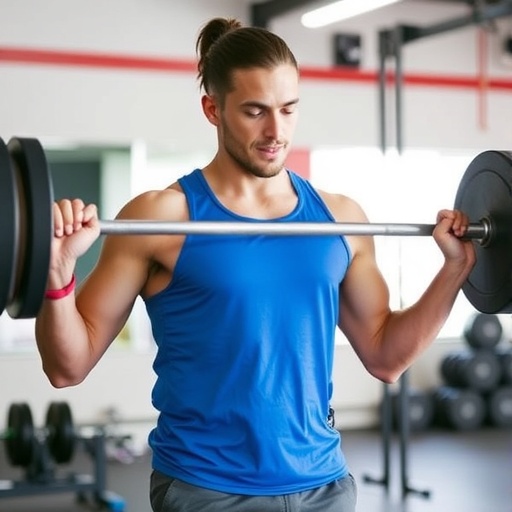
In a significant advancement that redefines our understanding of resistance training, the American College of Sports Medicine (ACSM) has issued its first comprehensive update in 17 years, emphasizing a transformative yet straightforward principle: any form of resistance training is beneficial for enhancing muscle strength, size, power, and overall physical function. This groundbreaking update synthesizes findings from an extensive meta-analysis of 137 systematic reviews, incorporating data from over 30,000 participants, marking it as the most exhaustive set of guidelines on resistance training to date.
Stuart Phillips, a distinguished professor in McMaster University’s Department of Kinesiology and a contributing author to the new ACSM Position Stand, highlights the simplicity and accessibility of the updated recommendations. According to Phillips, the effectiveness of resistance training largely depends on adherence, advocating for consistent engagement with training that targets all major muscle groups at least twice weekly. The modality—be it traditional barbells, resistance bands, or bodyweight exercises—plays a secondary role to the consistency and intensity of effort maintained over time. This perspective fundamentally challenges the traditional fixation on meticulously designed, idealized programs.
The revision addresses a critical gap left since the 2009 ACSM Position Stand, which did not fully account for the prolific surge in research exploring muscle biology, aging physiology, and the intricate role of muscular strength in long-term health outcomes. The new evidence-based framework not only integrates these developments but expands the recommendations to encompass a broader demographic spectrum and a wider variety of training modalities, reflecting the diverse realities of modern adults.
Central to these guidelines is the assertion that transitioning from a sedentary lifestyle to any form of resistance exercise yields the most profound physiological benefits. While traditional variables like training load, volume, and frequency retain their relevance for optimizing hypertrophy and strength gains, the paramount objective for most adults is to establish and maintain a sustainable routine. This shift encourages a focus on practical, achievable goals rather than complex regimens that can deter long-term commitment.
Importantly, the updated Position Stand disavows the previously held notion that specialized gyms and elaborate equipment are prerequisites for effective muscle conditioning. Instead, it validates the efficacy of accessible methods such as elastic resistance bands, calisthenics, and home-based training schemes. These modalities have been empirically shown to induce significant improvements in muscle function, size, and physical performance measures, democratizing resistance training and dispelling barriers to entry.
Phillips elaborates that rigid prescriptions and one-size-fits-all “perfect” programs lack empirical support, particularly for general adult populations. The new approach prioritizes alignment with individual preferences, personal interests, and long-term exercise adherence, which collectively predict sustained health benefits. Such personalization acknowledges the complexity of human behavior and motivation, thereby fostering a more inclusive, adaptable paradigm for fitness and wellness.
While elite athletes and individuals with specialized performance goals will understandably require tailored, sport-specific resistance programs to maximize competitive outcomes, the overarching message remains clear and impactful for the general population: prioritize enjoyment and consistency over complexity. The guidelines empower adults to harness the intrinsic value of resistance training as a sustainable strategy to preserve muscle function, enhance metabolic health, and maintain independence throughout aging.
The implications of these guidelines extend beyond individual health, suggesting broad public health benefits by reducing the prevalence of sarcopenia, frailty, and functional decline in aging populations. By framing resistance training as an accessible intervention with robust evidence, the Position Stand supports healthcare providers, fitness professionals, and policymakers in advocating for widespread adoption.
This monumental compilation of scientific evidence and expert consensus is meticulously detailed in the latest issue of Medicine & Science in Sports & Exercise. It represents a holistic, pragmatic, and science-backed blueprint that reconceptualizes resistance training from an intimidating, specialized activity into an attainable and essential component of lifelong health.
For those seeking to integrate resistance training into their lives, the guidance is unequivocal: choose a modality that fits your lifestyle, prioritize engaging all major muscle groups at least twice weekly, and commit to consistent practice. The nuanced science underscores the irrelevance of perfection in favor of adherence, underscoring that even minimal engagement with resistance activities can translate into meaningful health outcomes.
Ultimately, this updated Position Stand heralds a new era in exercise science, blending rigorous methodological review with pragmatic recommendations, and reshaping how society perceives and values muscle-strengthening activities. It serves as a clarion call to redefine physical health across the lifespan through attainable and sustainable movement patterns anchored in resistance training.
Subject of Research: Resistance Training Prescription for Muscle Function, Hypertrophy, and Physical Performance in Healthy Adults
Article Title: Resistance Training Prescription for Muscle Function, Hypertrophy, and Physical Performance in Healthy Adults: An Overview of Reviews
News Publication Date: 16-Mar-2026
Image Credits: McMaster University
Keywords: Physical exercise, resistance training, muscle strength, muscle hypertrophy, physical function, muscle health, aging, exercise adherence


