


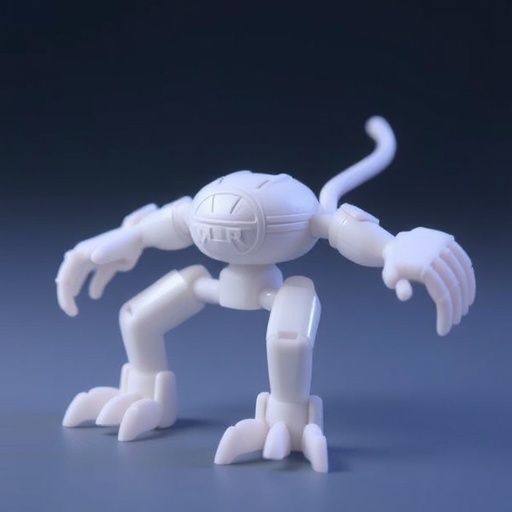
A groundbreaking advancement in the field of additive manufacturing has been achieved by a team of Korean researchers who have introduced a pioneering closed-loop 4D printing technology. This innovation integrates the principles of sustainability with cutting-edge materials science, utilizing sulfur waste—an abundant byproduct from petroleum refining—as a key resource in fabricating dynamic, self-actuating structures. The collaborative effort, spearheaded by Dr. Dong-Gyun Kim of the Korea Research Institute of Chemical Technology (KRICT), alongside Professor Jeong Jae Wie of Hanyang University and Professor Yong Seok Kim of Sejong University, marks the world’s first instance of 4D printing based on sulfur-rich polymers capable of responding intelligently to environmental stimuli such as heat, light, and magnetic fields.
Traditional 3D printing technologies have primarily focused on static structures with fixed geometries and functionalities. However, the emerging domain of 4D printing enhances this paradigm by introducing the dimension of time, whereby printed objects are designed to evolve, adapt, or transform their configurations autonomously upon exposure to external stimuli. The Korean team’s innovation transcends previous limitations by leveraging the unique properties of sulfur-rich polymers. These polymers are synthesized from sulfur waste, a voluminous and underutilized resource generated during petroleum processing, thereby turning an environmental liability into a promising feedstock for advanced manufacturing.
The sulfur-rich polymer matrix demonstrates remarkable self-actuation capabilities. This means that printed objects can deform, bend, or change shape autonomously in response to target stimuli without the need for embedded electronics or external mechanical systems. By harnessing the intrinsic physicochemical characteristics of sulfur atoms within the polymer network, the material exhibits reversible and repeatable morphological transformations triggered by temperature shifts, exposure to specific wavelengths of light, or modulation of magnetic fields. This multifunctionality significantly broadens the scope of potential applications in fields such as soft robotics, adaptive optics, wearable electronics, and environmentally responsive architectures.
At the core of this 4D printing technology lies a sophisticated chemical process that incorporates elemental sulfur into polymer backbones through inverse vulcanization, enhancing polymer rigidity and thermal sensitivity. The researchers optimized polymerization conditions to produce high molecular weight, sulfur-enriched networks that maintain mechanical strength while permitting dynamic configurational changes. This balance of robustness and flexibility is critical for achieving reliable actuation cycles over prolonged operational periods. Furthermore, the team engineered composite formulations integrating magnetic nanoparticles and photothermal agents that synergize with the sulfur-rich matrix, facilitating programmable responses tailored to specific environmental cues.
One of the most compelling aspects of this development is the closed-loop nature of the fabrication process. The recyclable framework ensures that materials can be reclaimed and repurposed repeatedly without significant degradation in performance. This circularity not only minimizes material waste but also aligns with global sustainability goals by reducing reliance on virgin plastics and mitigating ecological impacts associated with petroleum-derived polymer production. The team’s approach effectively closes the lifecycle loop for sulfur compounds, a traditionally stubborn industrial waste, transforming it into functional, high-value materials with extended usability.
The researchers demonstrated multiple proof-of-concept models showcasing intricate shape changes and motion patterns induced by precise stimulus control. For instance, flat printed films spontaneously curled into tubular or helical structures upon heating, while selective irradiation with near-infrared light caused localized shape morphing. Additionally, embedded magnetic nanoparticles enabled remote manipulation and positional control of the printed components within magnetic fields, adding an extra layer of programmability. These experimental achievements underscore the potential for real-time adaptivity in smart devices and responsive systems derived from sustainable resources.
This research advances the frontier of 4D printing by emphasizing material innovation that couples environmental consciousness with multifunctional performance. The integration of sulfur waste addresses critical challenges of resource efficiency and pollutant reduction, while the material’s responsiveness to multiple stimuli paves the way for new classes of intelligent materials. Such innovations are poised to revolutionize sectors ranging from biomedical engineering, where dynamic scaffolds can support tissue regeneration, to consumer electronics, which demand adaptable and recyclable components.
From a technical standpoint, the stability and reversibility of the sulfur-polymer network during repeated actuation cycles were meticulously characterized using a suite of analytical tools, including differential scanning calorimetry, dynamic mechanical analysis, and scanning electron microscopy. The data confirmed that the polymer retained its structural integrity without significant cracking or fatigue-induced failures. The incorporation of multifunctional fillers was calibrated to optimize the interplay between mechanical properties and stimulus responsiveness, thereby achieving a tunable actuation profile adaptable to diverse application requirements.
Beyond laboratory-scale demonstrations, the research team also addressed scalability and manufacturability challenges associated with sulfur-based 4D printing materials. By refining synthesis protocols and adjusting printing parameters compatible with commercially available additive manufacturing platforms, they laid the groundwork for large-scale production. Moreover, the recyclable design and use of waste-derived raw materials foresee economic advantages, particularly in industries aiming to reduce carbon footprints and embrace circular economy principles without compromising technological performance.
This innovative 4D printing technology holds transformative potential for future material applications, especially as industries strive toward sustainability-conscious design paradigms. The team’s work exemplifies a visionary approach to additive manufacturing, where intelligent materials derived from waste not only enhance functionality but also contribute to more sustainable industrial practices. The synergy between environmental stewardship and advanced manufacturing achieved by the Korean researchers establishes a compelling model for materials science innovation in the 21st century.
In conclusion, the development of closed-loop 4D printing employing sulfur waste-based polymers represents a significant leap forward in smart material systems. By enabling self-actuation and multifunctional responses to heat, light, and magnetic fields within recyclable and environmentally friendly structures, this technology redefines the boundaries of additive manufacturing and material sustainability. The collaborative effort by KRICT, Hanyang University, and Sejong University vividly illustrates the power of interdisciplinary research in addressing both technological and ecological challenges by transforming waste into sophisticated, adaptive material solutions.
The implications of this technology extend far beyond the immediate scientific community, signaling a paradigm shift toward eco-efficient, stimuli-responsive materials that could unleash a wide spectrum of innovative applications. As industries worldwide intensify their commitment to sustainability, such breakthroughs in 4D printing herald a future where high-performance materials coalesce with circular economy principles, offering new horizons in smart manufacturing, environmental conservation, and functional design.
News Publication Date: Not specified
Web References: Not provided
References: Not provided
Cite Scienmag News
Denise Maddox. (March 16, 2026). KRICT Unveils World’s First 4D Printing Technology Using Waste Sulfur to Create Self-Actuating Soft Robots. Scienmag. https://scienmag.com/krict-unveils-worlds-first-4d-printing-technology-using-waste-sulfur-to-create-self-actuating-soft-robots/
Denise Maddox. "KRICT Unveils World’s First 4D Printing Technology Using Waste Sulfur to Create Self-Actuating Soft Robots." Scienmag, 16 March 2026, https://scienmag.com/krict-unveils-worlds-first-4d-printing-technology-using-waste-sulfur-to-create-self-actuating-soft-robots/. Accessed 4 September 2026.
Denise Maddox. "KRICT Unveils World’s First 4D Printing Technology Using Waste Sulfur to Create Self-Actuating Soft Robots." Scienmag. March 16, 2026. https://scienmag.com/krict-unveils-worlds-first-4d-printing-technology-using-waste-sulfur-to-create-self-actuating-soft-robots/


