

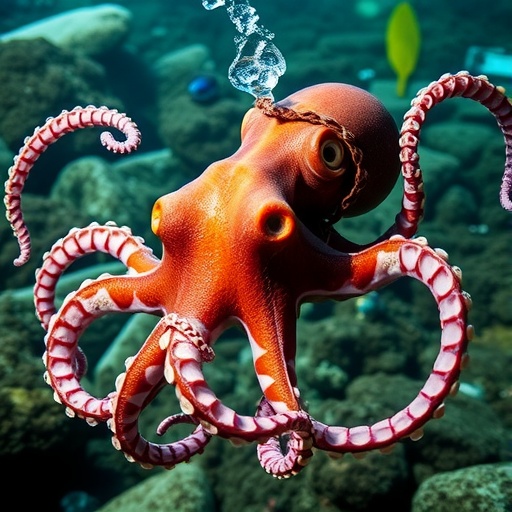
In our modern world, the staggering proliferation of synthetic chemicals, exceeding 350,000 unique compounds, has permeated even the most remote marine environments, altering the delicate balance of aquatic ecosystems. Among these chemicals, plastic pollution stands as a pervasive threat, continuously releasing bioactive additives into coastal waters. These additives interfere profoundly with the chemosensory abilities of marine organisms—mechanisms critical for survival functions such as locating food, avoiding predation, habitat selection, and intra-species communication. The subtle yet far-reaching implications of such chemical interferences are only beginning to be unraveled by marine ecologists.
A particularly insidious chemical additive, oleamide, widely used as an industrial lubricant in plastics such as polyethylene and polypropylene, has come under scrutiny for its ecological implications. As plastic debris deteriorates in marine environments, oleamide gradually leaches into seawater, exposing marine fauna to this compound. Fascinatingly, oleamide is not solely an anthropogenic agent; it is also endogenously produced by various organisms where it modulates physiological processes, such as sleep regulation in mammals and pheromonal signaling in certain marine species. Structurally akin to oleic acid—a molecule implicated as a death cue precipitating scavenging behavior in crustaceans—oleamide’s presence in the marine milieu raises questions about its capacity to mimic and thus disrupt natural chemical communication channels.
Florida Atlantic University researchers undertook a rigorous experimental study centered on the influence of plastic-derived oleamide on predator-prey dynamics within a controlled laboratory setting. Their focal species was the common South Florida octopus, Octopus vulgaris, a mesopredator pivotal in coastal food webs. The octopus’s interactions with four representative prey taxa—hermit crabs, free-living crabs, gastropod snails, and bivalve clams—were meticulously observed to elucidate behavioral alterations induced by oleamide exposure. These prey typologies encompass a spectrum of ecological niches, providing an informative cross-section of marine invertebrate fauna.
Experimental protocols involved offering individual octopuses access to the suite of prey in aquarium environments, with continuous recording of predation events over 24-hour intervals. Additionally, researchers undertook systematic video-based proximity assessments at 30-second intervals over 90-minute observation bouts, cataloging over 31,500 discrete predator-prey interaction instances. These interactions were categorized into successful predation, unsuccessful attacks, and brief physical grasps, with the latter two collectively considered non-consumptive encounters. This refined classification enabled a nuanced understanding of behavioral shifts both in predator strategy and prey responsiveness under chemical stress.
The study’s findings, published in the Journal of Experimental Marine Biology and Ecology, reveal that the introduction of oleamide precipitated immediate and sustained behavioral modifications. Notably, octopuses exhibited altered prey preferences, an increase in proximity to prey, and a substantial rise in non-consumptive interactions that persisted for days post-exposure. Normally, chemical cues elicit adaptive predator avoidance behaviors in crustaceans, but oleamide appeared to disrupt these mechanisms, possibly by masquerading as oleic acid and misleading prey into perceiving a false chemical environment. This biochemical camouflage likely diminishes predator avoidance, thereby intensifying proximity and elevating predation risk despite unchanged actual predation success.
Before exposure, octopuses predominantly favored crustaceans over mollusks, showing a pronounced preference for hermit crabs and free-living crabs. The onset of oleamide exposure shifted this balance, increasing predation attempts on free-living crabs while diminishing attention to hermit crabs, a pattern sustained beyond the chemical’s removal. Snails, in contrast, remained consistently avoided throughout the experiment. These shifts suggest that oleamide’s continuous presence in marine habitats could reshape foraging strategies and prey selection, with broader repercussions for energy flow and trophic dynamics in these ecosystems.
Senior author Dr. Michael W. McCoy emphasized the critical role of chemical communication in marine ecological interactions. The breakdown of such communication under oleamide influence underscores a vulnerability in marine behavioral ecology. Prey normally engage in threat-avoidance behaviors upon detecting predator chemical cues, yet oleamide modified this interaction interface, leading to an unexpected increase in physical interactions and exploratory activities by octopuses despite a lack of increased predation efficacy. Such an increase in non-consumptive contact suggests possible oleamide-induced impairments in predator motor control or motivational states, or perhaps confusion within the octopus’s chemosensory apparatus.
The study also implicates oleamide in interfering with the prey’s ability to detect predation risk reliably. The misinterpretation of oleamide as oleic acid—a chemical associated with mortality and scavenger attraction—may paradoxically encourage crustaceans to continue foraging in predator proximity rather than seeking refuge. This aberrant behavior disrupts evolved ecological equilibria and could amplify predator-prey interaction frequencies. The underlying molecular pathways of oleamide’s mimicry and its integration into chemosensory circuits of marine animals warrant deeper biochemical and neuroethological exploration to elucidate precise mechanisms.
Interestingly, despite increased interactions, successful predation rates remained static, suggesting complex multi-faceted behavioral changes. The rise in failed predation attempts and grasping behaviors may reflect either a decline in octopus hunting efficacy or elevated opportunities for encounters due to prey proximity. Octopuses rely on both contact and waterborne chemical cues to identify and capture prey; oleamide’s presence might obscure or distort these cues, eliciting increased tactile investigations by predators as a compensatory mechanism. This behavioral feedback loop highlights the intricate balance of sensory ecology and its susceptibility to anthropogenic chemical interference.
Graduate researcher Madelyn A. Hair, first author of the study, points to substantial ecological ramifications stemming from these behavioral perturbations. By impairing predator avoidance and escalating non-consumptive interaction frequencies, oleamide leaching from plastics may instigate cascading effects across trophic levels, influencing prey distribution, population dynamics, and feeding relationships. These nuanced behavioral alterations could reconfigure coastal marine food webs and ecosystem functions, posing ecological risks that transcend the immediate impacts observed in laboratory scenarios, extending into real-world marine conservation challenges.
Complementing this investigation, collaborators Chelsea O. Bennice and Krista A. McCoy contribute expertise spanning behavioral ecology, chemical communication, and marine conservation, underscoring the interdisciplinary approach necessary to disentangle the complexities of chemical pollution’s ecological effects. The research was bolstered by institutional funding from Florida Atlantic University and Harbor Branch Oceanographic Institute as well as grants from dedicated scientific organizations, emphasizing the importance of sustained support for marine environmental research.
Florida Atlantic University, a leading research institution distinguished by its Carnegie Foundation designations and commitment to ecological sustainability, continues to advance knowledge in environmental sciences through innovative studies like this. Its contributions to understanding anthropogenic impacts on marine ecosystems exemplify the critical alliance between academic research and global environmental stewardship. The revelations unearthed by the investigation of oleamide’s influence on predator-prey interactions highlight the hidden biochemical dimensions of plastic pollution—dimensions that warrant urgent attention and remedial action.
As global plastic pollution escalates, the study’s insights signal the need for reconsidering the chemical additives integral to plastic manufacture and disposal. By demonstrating how a single compound like oleamide can ripple through marine food webs, altering fundamental behavioral paradigms, these findings elucidate crucial pathways by which human activity reshapes natural systems. Continued interdisciplinary research in environmental chemical ecology stands at the forefront of developing effective strategies to mitigate these emerging ecological thresholds.
Subject of Research: Animals
Article Title: Plastic leachate oleamide alters predator-prey interactions amongst marine invertebrates
News Publication Date: 16-Feb-2026
Web References: https://www.sciencedirect.com/science/article/pii/S0022098126000134?via%3Dihub, http://dx.doi.org/10.1016/j.jembe.2026.152173
References: Journal of Experimental Marine Biology and Ecology
Image Credits: Florida Atlantic University
Keywords: Chemical pollution, Aquatic animals, Wildlife, Biological systematics, Behavior modification, Predators, Crustaceans, Mollusks, Ecological degradation, Hunting, Foraging, Sensory perception, Chemical signals, Pheromones, Food webs, Species interaction, Ecological risks, Behavioral ecology


