


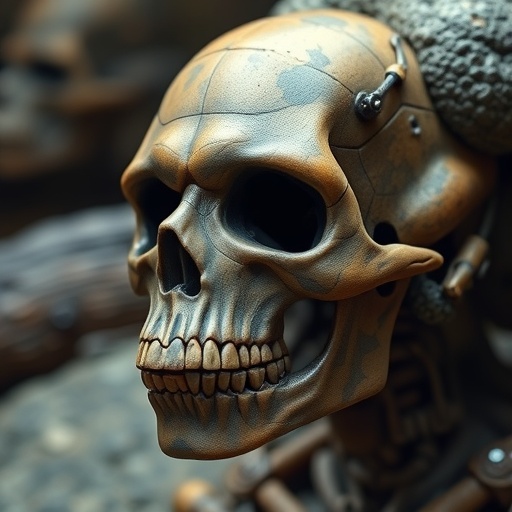
Technological innovations in recent decades have radically transformed how we interact with information, making portable devices and personal computers the largest repositories of knowledge and entertainment right at our fingertips. The digital landscape has evolved beyond our imagination, offering instantaneous access to whatever information one may seek, whether it pertains to entertainment, global news, or academic research. The latest advancements in generative artificial intelligence stand as a testament to this progress, elevating the abilities of our gadgets to an even higher level. By employing sophisticated algorithms, these technologies can deliver information with unprecedented speed. Yet, as the accuracy of the data they provide comes under scrutiny, questions loom large regarding the reliability of AI-generated output.
Generative AI holds the potential to redefine our understanding and visual representation of historical narratives. A cadre of researchers is examining this intriguing intersection, including Matthew Magnani, an assistant professor of anthropology at the University of Maine. Partnering with Jon Clindaniel, a computational anthropology expert from the University of Chicago, they embarked on a cutting-edge study focusing on how artificial intelligence can interpret ancient lives. Their collaborative effort aimed at generating visual and textual representations of Neanderthal daily life was meticulously reported in the journal “Advances in Archaeological Practice.”
What they uncovered was that the quality of AI-generated content hinges on its underlying source material. In their investigation, they directed two chatbots to create both images and narratives depicting Neanderthals based on specific prompts. Curiously, the outputs they received often relied on outdated research, bringing to light crucial questions about how biases and misconceptions percolate through the AI systems that increasingly dictate our informational landscape.
This study emerges as a crucial addition to understanding the impact of technology on our perceptions of history. To enhance their research, Magnani and Clindaniel executed a series of structured experiments. They tested four distinct prompts, each one repeated 100 times, utilizing the advanced image generation capabilities of DALL-E 3 and the narrative-generating prowess of ChatGPT API (specifically GPT-3.5). Among the four prompts used, two were designed without the necessity for scientific accuracy. The other two specified the need for precision while also providing additional context about the Neanderthal’s activities or attire.
The aim of their research was not just to assess the performance of generative AI but also to scrutinize the nuances of bias and misinformation embedded within everyday AI interactions. As Magnani aptly noted, understanding these embedded biases is essential because quick responses from AI may not align with current scientific understanding. The study raises significant concerns: Are users receiving outdated insights when they turn to chatbots for knowledge, particularly in specialized fields like anthropology?
Initiated in 2023, the study’s timeframe coincides with a pivotal moment in the evolution of generative AI, marking its transitional leap from a concept of the near future to a pressing contemporary reality. If this research were to be replicated just two short years later, Magnani is optimistic that advancements in AI would enable better incorporation of modern scientific data.
The duo’s research serves as an invaluable framework for academics eager to scrutinize the disparity between scholarly research and AI-generated content. The findings illustrated that generative AI can effectively sift through extensive datasets, revealing patterns none could easily identify. However, this capacity necessitates careful engagement, ensuring that the output remains firmly rooted in scientifically validated sources.
In evaluating what the generative AI got wrong, the researchers referenced the long-standing study of Neanderthal remains, first analyzed in the mid-19th century. Over the years, scientific perspectives on the Neanderthals have undergone significant changes, oscillating between conflicting theories about their lifestyles, cultural sophistication, and physical appearance. This inherent ambiguity makes Neanderthals an ideal case for examining AI’s accuracy and reliability.
The generated images in Magnani and Clindaniel’s study depicted Neanderthals in manners reminiscent of 19th-century interpretations, conjuring visuals of primitive beings with exaggerated features akin to chimpanzees. These representations were not only stylistically outdated but also fundamentally flawed, as they failed to include critical aspects of Neanderthal social structure, such as the presence of women and children.
Furthermore, the textual narratives produced by ChatGPT diluted the complexity and cultural richness of Neanderthal life, often lacking alignment with modern archaeological understanding. Their findings revealed that roughly half of the texts generated failed to correlate with established scholarly research, a troubling statistic that spiked to over 80% for one of the prompts.
Compounding these inaccuracies, both visual and textual content inaccurately attributed advanced technological concepts—like basket weaving or structured housing—far ahead of the timeframe in question. The researchers meticulously cross-referenced the output against the prevailing scientific literature, identifying that ChatGPT primarily drew from research stylistically aligned with the 1960s, while DALL-E 3 echoed research trends from the late ’80s to early ’90s.
To enhance the accuracy of AI outputs, both academics underscored the significance of improving the accessibility of anthropological datasets and scholarly literature. Copyright restrictions, which historically limited scholarly access until the emergence of open-access publishing over the last two decades, continue to shape the landscape of AI outputs. Policies that champion access to modern research will surely influence the caliber and authenticity of AI-generated historical reconstructions.
As educators, Magnani expressed a deep commitment to instilling a cautious approach toward generative AI among students. Emphasizing technological literacy and critical thinking skills, he argued that fostering these qualities in future generations enables a more discerning society. This enlightening study marks only the beginning for Magnani and Clindaniel, as they continue to explore the intricate utilization of AI in archaeological research and related fields. Their findings serve not only as a wake-up call for users but also as a roadmap for future studies examining the intersection of technology and the human past.
Navigating this uncharted territory requires a collaborative effort from researchers, educators, and policymakers, aiming to ensure that our representations of history are as accurate as possible and grounded in contemporary scientific discourse. The implications are profound, as how we construct our understanding of the past will inevitably shape our collective future, guided by the powerful tools of artificial intelligence.
Cite Scienmag News
Denise Maddox. (February 6, 2026). New Research Leverages Neanderthal Insights to Highlight Gaps in Generative AI and Scholarly Knowledge. Scienmag. https://scienmag.com/new-research-leverages-neanderthal-insights-to-highlight-gaps-in-generative-ai-and-scholarly-knowledge/
Denise Maddox. "New Research Leverages Neanderthal Insights to Highlight Gaps in Generative AI and Scholarly Knowledge." Scienmag, 6 February 2026, https://scienmag.com/new-research-leverages-neanderthal-insights-to-highlight-gaps-in-generative-ai-and-scholarly-knowledge/. Accessed 5 September 2026.
Denise Maddox. "New Research Leverages Neanderthal Insights to Highlight Gaps in Generative AI and Scholarly Knowledge." Scienmag. February 6, 2026. https://scienmag.com/new-research-leverages-neanderthal-insights-to-highlight-gaps-in-generative-ai-and-scholarly-knowledge/


