

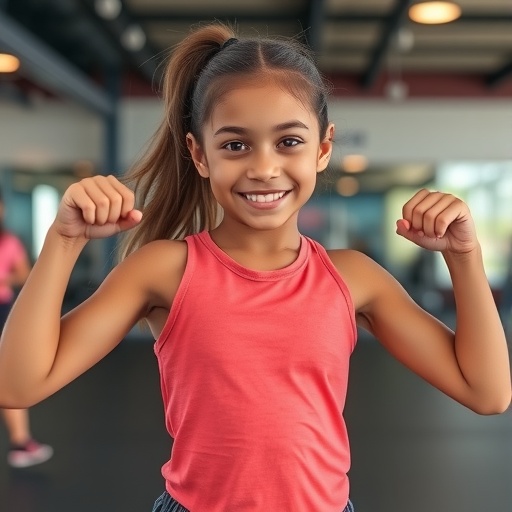
In the realm of adolescent development, physical fitness and psychological resilience emerge as interwoven facets that collectively sculpt the trajectory toward lifelong health. While the individual role of cardiorespiratory endurance, muscular strength, and agility in predicting cardiometabolic outcomes is well established, and self-efficacy is recognized for its profound impact on motivation and coping strategies, the intricate interplay between these factors remains underexplored. This connection gains critical importance in today’s context, where prolonged sedentary lifestyles, increased screen time, and escalating mental health challenges place young populations at considerable risk globally.
A groundbreaking observational study conducted by Dr. José Francisco López-Gil and colleagues from the Universidad Espíritu Santo in Samborondón, Ecuador, sheds new light on the reciprocal dynamics linking physical fitness and self-efficacy among adolescents. Utilizing a rich dataset comprising 618 boys and girls, aged between 12 and 17 years, recruited through the Eating Habits and Daily Living Activities (EHDLA) study in Spain’s Murcia region, the research rigorously examined whether superior physical fitness enhances self-efficacy and if elevated self-efficacy, conversely, predicts improved fitness performance. The findings, published in the February 2026 issue of Pediatric Investigation, reveal consistent bidirectional associations underscoring a synergistic developmental model.
The methodological robustness of this study stems from employing the ALPHA-FIT battery, a validated suite of objective fitness assessments that measure diverse physiological domains. Participants underwent the 20-meter shuttle run to assess cardiovascular endurance, standing long jump for lower-body muscle strength, handgrip dynamometry for upper-body strength, short shuttle sprints to capture speed and agility, and the sit-and-reach test to evaluate flexibility. Concurrently, the participants’ self-efficacy was quantified through the Spanish General Self-Efficacy Scale, which appraises belief in one’s ability to navigate and overcome life’s adversities. Analytical models were meticulously adjusted for critical covariates including age, sex, socioeconomic background, BMI, daily physical activity, sedentary duration, sleep patterns, and nutritional intake, ensuring the extraction of nuanced insights.
Analyses unveiled a compelling pattern: higher cardiorespiratory fitness, superior lower-body strength, and enhanced speed-agility were significantly associated with stronger self-efficacy in adolescents. Conversely, elevated self-efficacy scores predicted better performance in these same fitness parameters, indicating a reciprocal reinforcement mechanism. This bidirectional relationship delineates a developmental feedback loop where physical accomplishments bolster confidence, which then motivates further physical engagement and success. Interestingly, measures of flexibility and upper-body grip strength did not exhibit statistically meaningful associations with self-efficacy, suggesting domain-specific interactions rather than a generalized effect across all facets of physical fitness.
Dr. López-Gil explicates, “Our data suggest that physical competence and psychological self-belief are dynamically intertwined during adolescence, a critical developmental period. Success in physically demanding tasks not only enhances adolescents’ perceived capabilities but also inspires persistence in health-promoting behaviors.” This insight reframes how educators, health professionals, and policymakers might approach adolescent wellness—not as isolated physical or psychological domains but as interconnected systems requiring integrated interventions.
The practical implications extend far beyond conventional physical education settings. Embedding structured fitness regimens alongside psychological skill development techniques—such as goal setting, positive feedback loops, and incremental challenges—could unlock amplified benefits for youth. A multidisciplinary approach uniting physical educators, mental health professionals, and public health experts holds promise for designing comprehensive programs that simultaneously foster physical capacity and self-efficacy, thereby addressing both the somatic and cognitive-emotional dimensions of adolescent growth.
Foreseeing the long-term ramifications, fostering this dual development trajectory could yield profound impacts on public health. Adolescents cultivating both robust fitness profiles and resilient self-efficacy are more likely to adopt and maintain active lifestyles into adulthood, effectively mitigating risks of chronic diseases such as cardiovascular disorders, obesity, and type 2 diabetes. Beyond physical health, enhanced self-efficacy correlates with improved academic perseverance, emotional regulation, and overall mental well-being, cultivating a generation better equipped to navigate life’s multidimensional challenges.
While recognizing the inherent limitations of its cross-sectional design, which precludes definitive causal claims, the study’s robust and consistent findings elucidate critical pathways worthy of longitudinal inquiry. Future research could elucidate temporal sequences and explore potential variabilities across diverse populations and cultural contexts, thereby refining intervention strategies tailored to specific demographic needs and resource settings.
This research invites an interdisciplinary paradigm shift. Advancing adolescent health demands transcending siloed approaches to emphasize holistic frameworks that integrate physical conditioning and psychosocial empowerment. The confluence of physiological and cognitive-emotional development during this formative window offers a strategic lever for shaping resilient, health-literate future generations capable of thriving in increasingly complex environments.
In conclusion, Dr. López-Gil and the EHDLA team’s work underscores a vital, mutual reinforcement between key elements of physical fitness and general self-efficacy. Integrating confidence-building techniques within fitness curricula could represent a powerful, scalable approach to health promotion in adolescents worldwide. As public health landscapes evolve, these insights offer a foundational blueprint for fostering sustainable, positive youth development trajectories with far-reaching societal benefits.
Subject of Research: People
Article Title: Mutual associations between self-efficacy and physical fitness in Spanish adolescents: The EHDLA study
News Publication Date: 9-Feb-2026
Web References: https://doi.org/10.1002/ped4.70044
References: López-Gil JF, et al. Mutual associations between self-efficacy and physical fitness in Spanish adolescents: The EHDLA study. Pediatric Investigation. 2026; DOI: 10.1002/ped4.70044
Image Credits: Port of San Diego from Openverse
Keywords: Adolescents, Physical fitness, Self-efficacy, Cardiorespiratory endurance, Muscular strength, Psychological resilience, Health promotion, Lifestyle medicine, Youth development


