


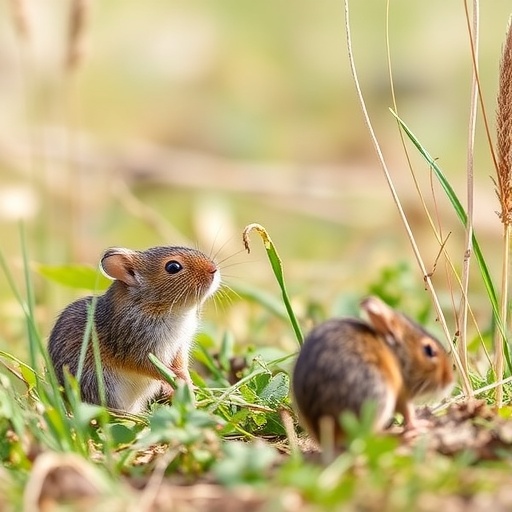
In a groundbreaking advancement within the field of virology, researchers have identified and extensively characterized a novel orthohantavirus, now termed the Sager Creek virus, isolated from prairie voles (Microtus ochrogaster). This discovery not only enriches our understanding of viral diversity among rodent species but also sheds light on the intricate ecological dynamics and zoonotic potential of hantaviruses, a genus known for its role in causing severe human diseases such as hemorrhagic fever with renal syndrome and hantavirus cardiopulmonary syndrome.
Prairie voles, small rodents native to North American grasslands, have traditionally not been the primary subjects of intensive viral surveillance compared to other rodent hosts, like deer mice or rats. However, this recent study leveraged advanced molecular and genomic techniques, enabling detection of viral genetic material that previous methods may have overlooked. The identification of Sager Creek virus represents a significant expansion of the host range known for orthohantaviruses and prompts deeper investigation into the evolutionary mechanisms driving viral diversification.
The team employed next-generation sequencing to elucidate the full genome sequence of Sager Creek virus, enabling comprehensive phylogenetic analyses that situate this virus within the broader hantavirus lineage. The genomic architecture exhibits canonical features consistent with orthohantaviruses, including three negative-sense RNA segments labeled Small (S), Medium (M), and Large (L), each encoding essential structural and functional viral proteins. Intriguingly, subtle genetic variations were noted that distinguish Sager Creek virus from closely related hantaviruses, suggesting unique host adaptation and evolutionary trajectories.
Delving into the molecular biology of this newly characterized virus, it encodes the nucleocapsid (N) protein within the S segment, glycoproteins Gn and Gc within the M segment, and the RNA-dependent RNA polymerase (RdRp) within the L segment. These proteins play pivotal roles in viral replication, assembly, and host immune evasion. The glycoproteins, embedded in the viral envelope, facilitate cell entry via receptor-mediated endocytosis, initiating infection cycles. Understanding the specific interactions between Sager Creek viral proteins and host cellular machinery remains a crucial ongoing research avenue.
From an ecological perspective, the discovery emphasizes the complex virus-host interplay in prairie vole populations across the Sager Creek region. Field sampling combined with serological testing revealed a moderate prevalence of viral RNA and antibodies among captured individuals, underscoring active viral circulation within natural reservoirs. These findings urge the incorporation of prairie voles into future hantavirus surveillance programs, particularly in habitats where human and vole interactions may occur, raising concerns about potential spillover events.
The zoonotic potential of Sager Creek virus remains to be fully elucidated. While no human cases linked to this virus have been reported to date, the genetic similarity to other pathogenic hantaviruses warrants caution. Laboratory assays assessing viral replication capacity in human cell lines demonstrated infection competency, suggesting possible barriers to cross-species transmission may be minimal. Concurrently, immune response profiling in infected voles highlighted persistent viral shedding, a factor that could facilitate environmental contamination and incidental human exposure.
Technological innovations underpinning this study included the utilization of transcriptomic approaches that unveiled active viral gene expression within host tissues. High-throughput methodologies facilitated the assembly of complete viral genomes directly from vole lung homogenates, bypassing traditional culture-based limitations. This approach also enabled identification of viral quasispecies, indicative of ongoing mutation and adaptation processes within wild host populations, further complicating the viral landscape.
Phylogenetic placement of Sager Creek virus within the broader phylogeny of orthohantaviruses revealed its closest relatives cluster predominantly within rodent-borne lineages, forming a discrete clade separate from other well-characterized hantaviruses like Sin Nombre and Hantaan viruses. These relationships provide insights into the evolutionary pressures shaping viral emergence and highlight prairie voles as a previously unrecognized reservoir with potential epidemiological significance.
Beyond genomic analyses, initial in vivo studies evaluated the pathogenicity of the virus in laboratory rodent models. Preliminary data indicated mild clinical symptoms without overt lethality, suggesting a commensal or low-virulence relationship with its natural host. However, extrapolation to other species, including humans, remains speculative. Efforts to isolate the virus in cell culture have been met with challenges, signaling a need for optimized culture conditions or development of novel in vitro systems mimicking vole cellular environments.
The discovery also prompts reconsideration of virus naming conventions and surveillance boundaries within Peromyscus and Microtus genera, recognizing the ecological overlap and potential for multi-host dynamics. Environmental factors such as habitat fragmentation, climate change, and altered predator-prey interactions might influence viral transmission patterns, necessitating long-term monitoring and integration of ecological data with virological findings.
Immunological characterization efforts revealed that Sager Creek virus elicits a distinct antibody response profile in infected voles, characterized by IgG subclasses and neutralizing antibodies that likely confer protective immunity, enabling coexistence without severe disease manifestation. These immune dynamics offer a platform to study hantavirus-host equilibrium states and guide vaccine design strategies aiming to prevent human infection.
The identification process included meticulous fieldwork at multiple prairie sites where voles were live-trapped, sampled, and released, complementing non-invasive environmental sampling that detected viral presence in rodent excreta. This multi-centric design ensures robust ecological context and a higher resolution of viral prevalence mapping. Moreover, the use of geographic information systems (GIS) integrated viral data with habitat characteristics to predict hotspots of viral circulation.
Researchers also explored potential viral receptor usage through in silico modeling based on glycoprotein structures. Comparative analysis with receptors exploited by related hantaviruses highlighted conserved domains that might mediate host cell attachment, offering a mechanistic basis for receptor tropism and host specificity. These findings facilitate targeted antiviral compound screening and aid diagnostic assay development tailored to Sager Creek virus detection.
The public health implications of this discovery cannot be overstated. As orthohantaviruses remain a persistent threat globally, unveiling new members of this viral genus primes the scientific and medical communities to proactively assess risk and develop countermeasures. Enhanced awareness and diagnostic readiness, especially in regions frequented by prairie voles, will be vital in preventing unnoticed transmission and mitigating potential outbreaks.
In closing, the discovery and in-depth characterization of Sager Creek virus as a novel orthohantavirus enrich the tapestry of viral biodiversity and open numerous investigative pathways encompassing molecular virology, ecology, immunology, and epidemiology. This multifaceted approach not only deepens our grasp of hantavirus biology but also reinforces the importance of wildlife surveillance in anticipating and countering emerging infectious diseases.
Cite Scienmag News
Kristina Jarvis. (September 18, 2025). New OrthoHantavirus Found in Prairie Voles. Scienmag. https://scienmag.com/new-orthohantavirus-found-in-prairie-voles/
Kristina Jarvis. "New OrthoHantavirus Found in Prairie Voles." Scienmag, 18 September 2025, https://scienmag.com/new-orthohantavirus-found-in-prairie-voles/. Accessed 4 September 2026.
Kristina Jarvis. "New OrthoHantavirus Found in Prairie Voles." Scienmag. September 18, 2025. https://scienmag.com/new-orthohantavirus-found-in-prairie-voles/


