

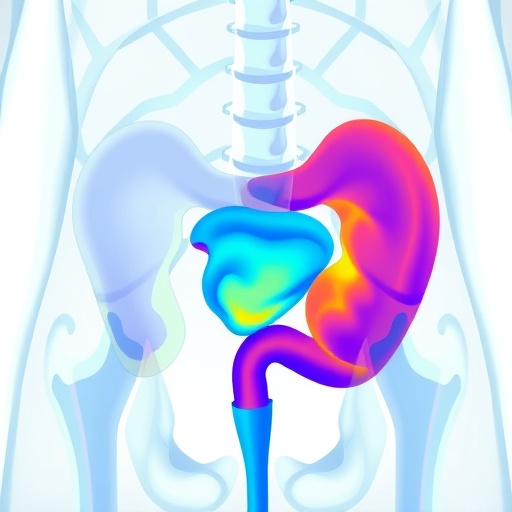
In a groundbreaking advance that promises to revolutionize the early detection and management of benign prostatic hyperplasia (BPH), researchers have developed and externally validated a novel predictive model grounded in extensive cohort data. BPH, a condition characterized by the nonmalignant enlargement of the prostate gland, affects a significant portion of the aging male population, often leading to troublesome lower urinary tract symptoms that detract from quality of life. Despite its high prevalence, existing diagnostic tools remain rudimentary and dependent largely on symptomatic assessments and invasive procedures. The newly crafted model, forged through the integration of complex clinical and demographic parameters, heralds a new era in precision medicine for this common urological disorder.
The research team, comprised of experts in urology, epidemiology, and biostatistics, embarked on a comprehensive analysis involving three distinct cohorts to ensure broad applicability and robustness. This multi-cohort strategy was pivotal, offering a layered validation framework that lends credence to the model’s predictive capacity across diverse populations. By harnessing vast datasets with longitudinal follow-up, the investigators transcended prior limitations of isolated or narrowly scoped studies, enabling a finely calibrated risk prediction tool. The cohorts encompass varied demographic and clinical settings, allowing the model to adapt seamlessly to real-world complexities.
At the technical core of the model lies an advanced algorithmic architecture that synthesizes multifactorial inputs—ranging from patient age and biochemical markers to lifestyle indicators and comorbidities—into a cohesive risk score. The developers employed rigorous machine learning methodologies to distill the most salient predictors, eschewing conventional linear assumptions in favor of more nuanced pattern recognition capabilities. This approach not only improves predictive accuracy but also enhances the interpretability of individual risk factors, empowering clinicians to tailor interventions more judiciously.
Crucially, external validation conducted on cohorts distinct from the training sets demonstrated the model’s impressive generalizability. Evaluation metrics including the area under the receiver operating characteristic curve (AUC-ROC) underscored consistent performance, reinforcing the model’s reliability in flagging at-risk individuals before the advent of clinically obvious symptoms. This anticipatory capability is poised to shift clinical paradigms, enabling preemptive therapeutic strategies and resource prioritization in increasingly strained healthcare systems.
The implications of this innovation extend beyond traditional diagnostic boundaries. Incorporating this model within routine care pathways could substantially mitigate the morbidity associated with BPH by facilitating earlier intervention, thereby curbing progression and the attendant complications such as urinary retention or recurrent infections. The non-invasive nature of the predictive process also promises enhanced patient compliance and reduced healthcare costs over time, presenting a compelling case for widespread adoption.
Beyond its clinical utility, the model offers intriguing research avenues. By elucidating the interplay between genetic, environmental, and lifestyle factors underpinning BPH risk, it may inspire targeted molecular studies that unravel disease mechanisms. This could ultimately catalyze the development of novel therapeutics optimized for patients flagged by the model, ushering personalized medicine into urology’s traditionally conservative landscape.
The team’s meticulous development protocol involved iterative refinement stages, during which overfitting concerns were systematically addressed via cross-validation techniques and penalization strategies. This methodological rigor ensures that the model maintains versatility without succumbing to spurious correlations prevalent in high-dimensional datasets. By transparently reporting these processes, the researchers set a benchmark for reproducibility and scientific integrity, encouraging peer adoption and continuous improvement.
In terms of data composition, demographic diversity was a priority, including participants across varying ages, ethnicities, and geographic locales. This inclusivity strengthens the model’s relevance in heterogeneous clinical environments, bridging gaps often encountered in monocentric studies. Moreover, integration of longitudinal health trajectory data allows the model to reflect temporal progression patterns, elevating its prognostic value.
From a technological standpoint, model implementation has been streamlined to facilitate integration with electronic health record (EHR) systems. This interoperability is vital for real-time risk assessment, fostering clinician engagement without imposing cumbersome procedural overheads. Future iterations may incorporate adaptive learning algorithms to further refine predictive precision as new data becomes available, embodying a dynamic tool responsive to evolving patient populations.
Public health ramifications also bear consideration. By enabling scalable screening frameworks informed by the model, healthcare systems can proactively identify and manage BPH on a population level, reducing disease burden and improving aging men’s health outcomes. This aligns with global initiatives advocating for precision public health, where data-driven insights inform targeted interventions maintaining wellness rather than merely treating illness.
The ethical implications, too, have been thoughtfully considered. Ensuring transparency in risk communication and guarding against potential stigmatization remain priorities. The researchers advocate for shared decision-making models wherein predictive insights serve as guides rather than determinative verdicts, preserving patient autonomy while optimizing clinical judgment.
This pioneering work exemplifies the synergy achievable through multidisciplinary collaboration, sophisticated analytic methods, and forward-looking validation strategies. As the healthcare landscape grapples with the dual challenges of rising chronic disease prevalence and constrained resources, such innovations underscore the transformative potential of predictive modeling. Ultimately, this model stands to refine the BPH care continuum, from early risk detection to personalized intervention, heralding a future where precision medicine tangibly enhances patient lives.
With these promising findings now published and accessible, the broader medical community is positioned to build upon and adapt this predictive framework within their unique clinical milieus. Ongoing research aimed at fine-tuning the model and expanding its predictive horizons will no doubt emerge, catalyzed by this seminal contribution. As machine learning continues to permeate healthcare, models like this deliver on the promise of actionable intelligence harnessed from complex clinical data, fundamentally reshaping how common but impactful conditions like BPH are managed.
The time is ripe for clinicians, data scientists, and healthcare policymakers alike to embrace these advancements, ensuring that the benefits of cutting-edge predictive tools reach patients worldwide. In doing so, we move closer to realizing a future where individualized risk profiles inform timely, effective interventions — ultimately enhancing healthspan and quality of life for millions.
Subject of Research: Predictive modeling for benign prostatic hyperplasia risk assessment.
Article Title: Predicting benign prostatic hyperplasia risks: model development and external validation based on three cohorts.
Article References:
Zi, H., Wang, YB., Huang, Q. et al. Predicting benign prostatic hyperplasia risks: model development and external validation based on three cohorts. Glob Health Res Policy 10, 67 (2025). https://doi.org/10.1186/s41256-025-00456-4
Image Credits: AI Generated
DOI: https://doi.org/10.1186/s41256-025-00456-4


