


New Lab Test to Detect Persistent HIV Strains in Africa May Aid Search for Cure

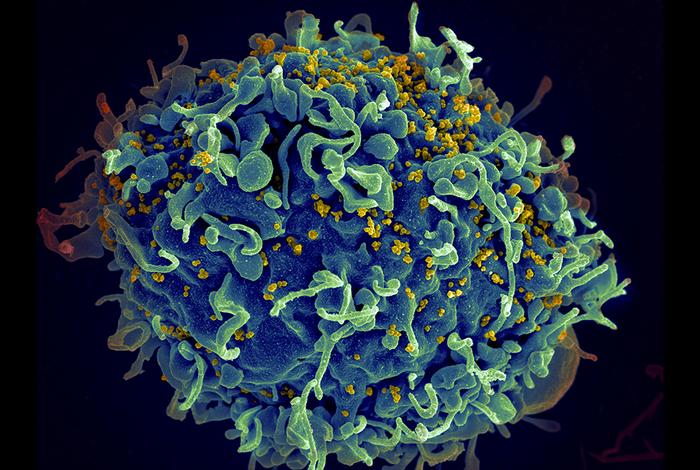
Credit: Seth Pincus, Elizabeth Fischer and Austin Athman, National Institute of Allergy and Infectious Diseases, National Institutes of Health
New Lab Test to Detect Persistent HIV Strains in Africa May Aid Search for Cure
A multinational team led by Weill Cornell Medicine investigators developed a test that will help measure the persistence of HIV in people affected by viral strains found predominantly in Africa—a vital tool in the search for an HIV cure that will benefit patients around the world.
The study, published in Nature Communications on July 2, helps fill a major gap in human immunodeficiency virus (HIV) research. Most HIV studies have focused on strains circulating in Western countries, predominantly in men who have sex with men affected by subtype B. Few studies have examined strains circulating in Africa, where women are disproportionately affected.
“HIV cure research tends to focus on viral strains circulating in developed countries, but to achieve a cure that is globally applicable, we must study viral strains that are affecting other regions of the world,” said lead author Dr. Guinevere Lee, assistant professor of virology in medicine in the Division of Infectious Diseases and assistant professor of microbiology and immunology at Weill Cornell Medicine.
The findings show—like other studies in developed countries—that HIV strains circulating in Africa establish viral reservoirs in the human body. Although antiretroviral therapy can reduce the level of HIV in the blood to an undetectable level, these dormant reservoirs continue to survive. They contain a large number of defective proviral DNA genomes which can’t produce new infectious viruses, but a small number of genomes remain genetically intact and ready to produce active viruses if antiretroviral treatment is interrupted.
The large proportion of defective viral genomes obscures researchers’ attempts to accurately quantify the copies of intact proviruses. “We are looking for a needle in a haystack: To achieve an HIV cure, we need to first find out whether any genome-intact proviruses remain in the body during antiretroviral treatment. Our new assay allows us to do this. Then we need to target and eliminate the intact proviral DNA capable of producing new viruses,” Dr. Lee explained.
Broadening the Lens of HIV Research with a New Assay
Dr. Lee and her colleagues analyzed DNA from immune cells called CD4+ T cells, where viral DNA hides, of 16 women and 7 men receiving antiretroviral HIV treatment in Uganda. Genetic sequencing of the virus revealed two predominant HIV-1 subtypes: A1 and D (a notoriously aggressive strain). The study also identified viral hybrids of A1 and D.
The team then modified existing laboratory tests that identify HIV subtype B proviruses to detect proviruses that are subtypes A1 and D. “The new assay we’ve developed will help researchers home in on the intact proviral genomes relevant to HIV cure research for patients affected by these under studied strains,” Dr. Lee said.
Dr. Lee and her multinational, multi-institution collaborators are already using the new assay to study long-term viral persistence in Uganda. Their findings show that the composition of the HIV proviral genomic landscape is broadly comparable between subtypes A1, D and B suggesting that approaches to target intact HIV reservoirs in Africa will face similar “needle-in-a-haystack” challenges as in North America and Europe. Future studies will also need to evaluate differences in non-B subtypes to understand whether subtype-specific factors impact persistence, reactivation or clearance in viral reservoirs.
Senior authors on the paper include Dr. Andrew Redd, National Institute of Allergy and Infectious Diseases at the National Institutes of Health, and Dr. Jessica Prodger, assistant professor, Departments of Microbiology & Immunology and Epidemiology & Biostatistics at Western University, Canada.
Researchers from Simon Fraser University, Canada; British Columbia Centre for Excellence in HIV/AIDS, Canada; Rakai Health Sciences Program, Uganda; University of Cape Town, South Africa; and Johns Hopkins University School of Medicine also contributed to this study.
The National Institutes of Health is funding this work through the Research Enterprise to Advance a Cure for HIV (REACH) Martin Delaney Collaboratory, which is co-led by Dr. Brad Jones, associate professor of immunology in medicine and also associate professor of microbiology and immunology at Weill Cornell Medicine, and Dr. Marina Caskey, professor of clinical investigation at Rockefeller University and an adjunct professor of medicine at Weill Cornell Medicine and attending infectious disease physician at NewYork-Presbyterian/Weill Cornell Medical Center. The REACH Collaboratory is one of 10 NIH-funded collaborative research groups worldwide focused on finding an HIV cure.
This work was supported in part by the Division of Intramural Research, National Institute of Allergy and Infectious Diseases and NIH grants R21AI150398, R01AI162221 and UM1AI164565.
Journal
Nature Communications
Cite Scienmag News
Ophelia Keating. (July 2, 2024). New lab test to detect persistent HIV strains in Africa may aid search for cure. Scienmag. https://scienmag.com/new-lab-test-to-detect-persistent-hiv-strains-in-africa-may-aid-search-for-cure/
Ophelia Keating. "New lab test to detect persistent HIV strains in Africa may aid search for cure." Scienmag, 2 July 2024, https://scienmag.com/new-lab-test-to-detect-persistent-hiv-strains-in-africa-may-aid-search-for-cure/. Accessed 5 September 2026.
Ophelia Keating. "New lab test to detect persistent HIV strains in Africa may aid search for cure." Scienmag. July 2, 2024. https://scienmag.com/new-lab-test-to-detect-persistent-hiv-strains-in-africa-may-aid-search-for-cure/

