


IgA nephropathy, the most common form of primary glomerulonephritis worldwide, has long been treated with blunt instruments: broad immunosuppression and supportive care that slow the disease without touching its underlying cause. Now a detailed review published in Frontiers in Nephrology by Kazuaki Mori, Yoshihito Nihei, and Yusuke Suzuki of Juntendo University Faculty of Medicine in Tokyo maps how that landscape is changing. Recent clinical trials of mechanism-based therapies have demonstrated marked reductions in circulating galactose-deficient IgA1, the molecule widely recognized as the central pathogenic driver of the disease, accompanied by significant improvements in proteinuria and preservation of kidney function. The transition from non-specific disease-modifying treatment toward therapies aimed directly at the cells that produce the culprit molecule marks one of the most consequential shifts in nephrology in decades.
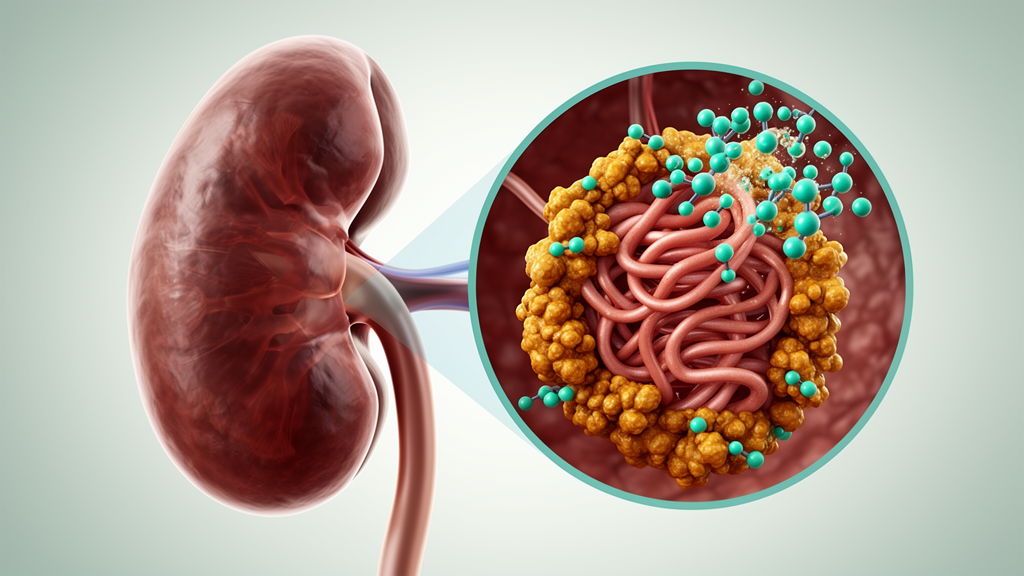
The stakes are high. Most patients with IgA nephropathy progress to kidney failure within ten to fifteen years of disease onset, making the condition one of the leading causes of end-stage kidney failure globally. The disease is a mesangioproliferative glomerulonephritis characterized by dominant deposition of IgA in the mesangial region of the glomeruli, the filtering units of the kidney. The current multi-hit model holds that patients first accumulate elevated circulating levels of galactose-deficient IgA1, an antibody subtype whose O-linked glycans in the hinge region lack terminal galactose. This aberrant antibody then forms high-molecular-weight immune complexes with IgG and IgA antibodies directed against it, and these complexes deposit in the mesangium, triggering inflammation and progressive scarring. Because production of the galactose-deficient antibody is considered the first and central hit, therapeutic strategies targeting its cellular sources are now under active development.
The pathogenic molecule was identified through elegant analytical chemistry. In 1997, Tomana and colleagues analyzed the O-glycan structures of serum IgA1 by gas chromatography and found IgA1 with galactose-deficient O-glycans in the hinge region, subsequently termed Gd-IgA1. The galactose deficiency exposes N-acetylgalactosamine, which can be detected with the GalNAc-specific lectin Helix aspersa agglutinin. Hiki and colleagues later used mass spectrometry to show that IgA1 deposited in the glomeruli of patients is also characterized by reduced galactosylation and sialylation. The review authors generated the monoclonal antibody KM55, which specifically recognizes the hinge region of human Gd-IgA1, and directly demonstrated that glomerular IgA deposits in IgA nephropathy consist predominantly of the galactose-deficient form. IgA deposition in the mesangium alone, however, is not specific to the disease and can also be observed in lupus nephritis, hepatitis B virus-associated nephropathy, and liver cirrhosis, which is why qualitative abnormalities of the antibody have become such an important research focus.
Evidence points to the mucosal immune system as the predominant site where pathogenic IgA-producing B cells are primed. Glomerular IgA deposits contain J chain, indicating a polymeric form, and secretory component has been detected in a subset of deposits, suggesting mucosal origin. Clinically, many patients experience episodic gross hematuria after upper respiratory or gastrointestinal infections, and interventions targeting mucosal immunity, including tonsillectomy and the targeted-release budesonide formulation Nefecon, improve renal outcomes. A genome-wide association study has identified susceptibility loci related to mucosal immunity, including CARD9 and HORMAD2, which are also associated with inflammatory bowel disease. Within mucosa-associated lymphoid tissue, the tonsils are considered important sites in the nasopharynx-associated compartment, while Peyer’s patches in the terminal ileum are key within the gut-associated compartment. The predominant compartment involved may vary across geographical regions.
Within mucosal lymphoid tissues, B-cell class switch recombination and differentiation into IgA-producing cells are regulated by germinal center-dependent responses and signaling pathways involving toll-like receptors, APRIL, and BAFF. In the germinal center pathway, exogenous antigens taken up by dendritic cells activate naive CD4-positive T cells through MHC class II-dependent presentation, and a subset of these T cells differentiates into follicular helper T cells. Tfh cell-derived CD40 ligand and transforming growth factor-beta play central roles in class switching to IgA, while interleukin-21 and interleukin-10 support the expansion, survival, and differentiation of IgA-switched B cells into antibody-secreting cells. In IgA nephropathy patients, increased frequencies of activated Tfh cells and elevated serum IL-21 levels are associated with higher serum Gd-IgA1 concentrations, and circulating Tfh cell-derived IL-21 correlates with disease activity including the degree of proteinuria. Definitive evidence that germinal center reactions represent the predominant source of pathogenic Gd-IgA1-producing cells is still lacking, but the circumstantial case is strong.
Toll-like receptor signaling provides a second route to aberrant antibody production. TLR9, which recognizes unmethylated CpG DNA from microorganisms, promotes Gd-IgA1 production through induction of interleukin-6 and APRIL and exacerbates glomerular IgA, IgG, and C3 deposition as well as kidney injury in gddY mice, a spontaneous murine model of the disease. TLR9 polymorphisms and aberrant expression have been associated with disease severity and therapeutic responsiveness, and tonsillar TLR9 expression has been linked to the efficacy of steroid therapy combined with tonsillectomy. TLR7, which recognizes microbial single-stranded RNA, similarly aggravates the disease by promoting Gd-IgA1 production, with expression associated with IL-6 production and correlated with APRIL expression in patient tonsils. Consistent with these findings, hydroxychloroquine has produced sustained reductions in proteinuria, and suppression of TLR7/9 signaling has been suggested as one mechanism underlying its therapeutic effects. TLR4, activated by lipopolysaccharide from Gram-negative bacteria, has been proposed to contribute through the TLR4/MyD88/NF-kappaB pathway in response to gut dysbiosis.
APRIL and BAFF, whose expression can be enhanced by toll-like receptor signaling, play pivotal roles in differentiating B cells into IgA-producing cells. Three receptors mediate their signaling: BAFF receptor, which specifically binds BAFF, and the two shared receptors TACI and BCMA. BAFF signaling through BAFFR is critical for the survival of immature and naive B cells, whereas APRIL signaling through TACI and particularly BCMA becomes increasingly important as B cells differentiate into plasmablasts and plasma cells. Consequently, BAFF is thought to predominate in the survival of immature and mature B cells, while APRIL is more closely involved in IgA class switching and the maintenance of antibody-secreting cells. Genome-wide association studies have identified APRIL- and TACI-related loci as susceptibility loci for IgA nephropathy, and recent clinical trials showing that APRIL/BAFF-targeted therapies markedly reduce serum Gd-IgA1 levels and proteinuria further support the role of this pathway in sustaining pathogenic production.
Where the Gd-IgA1-producing cells reside is essential to understanding the chronic course of the disease. Patients exhibit increased numbers of polymeric IgA1-positive plasma cells and IgA1-producing cells in the bone marrow, and experimental studies have shown amelioration of the disease following bone marrow transplantation in murine models, with clinical cases reporting remission after bone marrow or peripheral blood stem cell transplantation for hematologic disorders. Antigen-specific lymphocytes and antigen-presenting cells undergo continuous trafficking between mucosal tissues and bone marrow in humans, leading to the proposal that dysregulation of the mucosa-bone marrow axis promotes mis-homing of Gd-IgA1-producing cells aberrantly primed in mucosal lymphoid tissue to the bone marrow, where they differentiate into long-lived plasma cells that continuously produce the molecule. Recent studies have also identified infiltration of B cells and plasma cells within renal tissues, where intrarenal B cells express TLR7 and produce IL-6, raising the possibility of local Gd-IgA1 production. Circulating Gd-IgA1-expressing B cells in peripheral blood carry preferentially lambda light chains, consistent with mesangial IgA deposits, and express mucosal homing receptors.
Therapeutic strategies now target both the mucosal abnormalities that initiate pathogenic production and specific stages of B-cell differentiation that sustain it. Tonsillectomy alone reduced serum Gd-IgA1 levels and improved hematuria in 59 percent of patients, and steroid therapy combined with tonsillectomy demonstrated higher rates of proteinuria remission, 65.7 versus 35.0 percent, and hematuria remission, 77.1 versus 45.0 percent, compared with steroid therapy alone. Nefecon, a targeted-release formulation of budesonide delivering the drug to the distal ileum, reduced serum Gd-IgA1 by approximately 18 percent and IgA-IgG immune complexes by approximately 7 percent, decreased proteinuria by approximately 27 percent at 9 months, and attenuated the decline in estimated glomerular filtration rate, with sustained renoprotective effects over 2 years and a between-group difference in eGFR of 5.05 mL/min/1.73 m2. However, discontinuation results in re-elevation of serum Gd-IgA1 levels accompanied by recurrence of proteinuria, and long-term efficacy remains to be established. Following accelerated approval by the U.S. FDA in 2021, Nefecon received full approval in December 2023 and has subsequently been approved in Europe and several Asian countries.
The most striking results have come from therapies aimed at later stages of B-cell differentiation. Rituximab effectively depleted peripheral CD20-positive B cells but produced no significant improvements in serum Gd-IgA1 levels, proteinuria, or kidney function after 1 year, suggesting that CD20-negative differentiated plasma cells play a pivotal role. Atacicept, a TACI-Fc fusion protein inhibiting both APRIL and BAFF, reduced serum Gd-IgA1 levels by approximately 60 percent at week 24, sustained through week 72, with an approximately 50 percent reduction in proteinuria and preservation of kidney function. Povetacicept, another dual inhibitor, demonstrated a 77 percent reduction in serum Gd-IgA1 at week 48 with a 64 percent reduction in proteinuria and improvement or resolution of hematuria in approximately 90 percent of patients. Sibeprenlimab, an anti-APRIL monoclonal antibody, reduced serum Gd-IgA1 by approximately 65 percent at 3 months and achieved up to a 62.0 percent reduction in proteinuria at 12 months, while zigakibart produced a 74 percent reduction in serum Gd-IgA1 with a 60 percent reduction in proteinuria at 100 weeks. In contrast, belimumab, an anti-BAFF antibody, has not demonstrated clear clinical efficacy, indicating that APRIL rather than BAFF may play the central pathogenic role. Felzartamab, an anti-CD38 monoclonal antibody aiming to eliminate pathogenic antibody-secreting cells, reduced serum Gd-IgA1 levels and proteinuria by up to 44.8 percent at 9 months with the effect maintained at 24 months, and rilzabrutinib, a Bruton’s tyrosine kinase inhibitor, is currently being evaluated in clinical trials.
Yet the review also confronts an unresolved paradox: not all Gd-IgA1 is pathogenic. Some relatives of patients with familial IgA nephropathy have increased serum Gd-IgA1 levels without developing the disease, and in mice with B cell-specific c1galt1 deletion, markedly elevated serum Gd-IgA1 did not increase glomerular IgA deposition, whereas mucosa-derived IgA1 from patients showed greater mesangial deposition irrespective of its Gd-IgA1 content. An experimental study of anti-APRIL therapy revealed that proteinuria decreased in parallel with improvement in IgA glycosylation during treatment but was maintained even after abnormal glycosylation re-emerged following discontinuation. The CD89-CD71-TGase2 axis has been proposed to promote mesangial deposition, but because the transferrin receptor CD71 is expressed on many cell types, its expression alone cannot explain the selective mesangial deposition. The review authors recently discovered IgA-type anti-mesangial cell autoantibodies, IgA-MESCA, in gddY mice and patients, identifying beta2-spectrin and CBX3 as target autoantigens whose aberrant cell-surface expression appears restricted to mesangial cells. These autoantibodies are detected with high specificity in approximately half of patients, possess the characteristics of Gd-IgA1, and bind to autoantigens presented on the mesangial cell surface, potentially explaining why only a subset of circulating Gd-IgA1 selectively deposits in the mesangium. CBX3-recognizing IgA autoantibodies exhibit cross-reactivity with specific oral bacterial antigens, suggesting induction through molecular mimicry following mucosal infections. Identifying these pathogenic fractions may provide useful biomarkers and facilitate precision therapies, particularly given the challenges in developing standardized assays for anti-Gd-IgA1 autoantibodies due to the heterogeneity of O-glycosylation patterns.
Subject of Research: Immunology
Article Title: Gd-IgA1-targeting therapy in IgA nephropathy ~what is pathogenic Gd-IgA1?~
Article References: Mori, K., Nihei, Y., & Suzuki, Y. (2026). Gd-IgA1-targeting therapy in IgA nephropathy ~what is pathogenic Gd-IgA1?~. Frontiers in Nephrology, 6, Article 1977707. https://doi.org/10.3389/fneph.2026.1977707
Image Credits: AI Generated
DOI: 10.3389/fneph.2026.1977707
Keywords: IgA nephropathy, Gd-IgA1, kidney disease, APRIL, BAFF, B cells, mucosal immunity, Nefecon, autoantibodies, Gd-IgA1-targeting, therapy, nephropathy
Cite Scienmag News
Jerry Hayes. (October 17, 2026). New Kidney Disease Therapies Strike at the Root of IgA Nephropathy. Scienmag. https://scienmag.com/new-kidney-disease-therapies-strike-at-the-root-of-iga-nephropathy/
Jerry Hayes. "New Kidney Disease Therapies Strike at the Root of IgA Nephropathy." Scienmag, 17 October 2026, https://scienmag.com/new-kidney-disease-therapies-strike-at-the-root-of-iga-nephropathy/. Accessed 17 October 2026.
Jerry Hayes. "New Kidney Disease Therapies Strike at the Root of IgA Nephropathy." Scienmag. October 17, 2026. https://scienmag.com/new-kidney-disease-therapies-strike-at-the-root-of-iga-nephropathy/


