

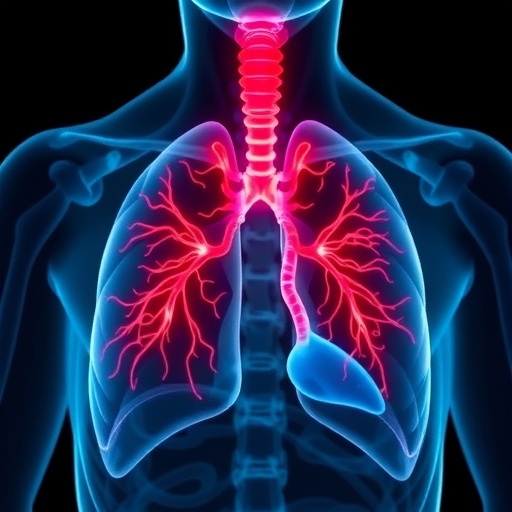
Patients with liver cirrhosis who require critical care represent an especially fragile cohort within intensive medicine. When acute respiratory distress syndrome (ARDS) complicates their clinical trajectory, the prognosis becomes dire. Despite the recognized vulnerability of this population, the intersection between cirrhosis and ARDS has been insufficiently characterized in the literature, often limited by retrospective designs, modest sample sizes, and reliance on administrative coding rather than clinico-radiological verification. A groundbreaking bicentric retrospective cohort study from France now offers a granular and expansive evaluation of ARDS in cirrhotic patients requiring mechanical ventilation, elucidating sobering mortality rates and identifying pivotal prognostic indicators that challenge current clinical paradigms.
Between 2007 and 2021, researchers systematically reviewed 816 intensive care unit (ICU) admissions involving patients diagnosed with liver cirrhosis across two tertiary centers. Of these, 621 individuals necessitated invasive mechanical ventilation during their ICU stay. Using rigorous, manual verification processes incorporating clinical notes, imaging, and oxygenation metrics, 165 patients (26.6%) were meticulously identified as developing ARDS, underscoring a notably high incidence relative to prior assumptions. Crucially, this approach confronts the known under-recognition of ARDS in cirrhosis, which frequently leads to missed opportunities for guideline-concordant management such as lung-protective ventilation.
The onset of ARDS commonly occurred within 48 hours of ICU admission, signaling an early complication in the disease course. Pneumonia emerged as the primary etiological driver, consistent with the immunocompromised state characteristic of cirrhosis. Nevertheless, diverse cirrhosis-related complications—such as septic shock following gastrointestinal hemorrhage—frequently precipitated ARDS, emphasizing the multifaceted pathophysiology linking hepatic failure to acute pulmonary decompensation. Notably, over half of the ARDS cases met criteria for severe hypoxemia, highlighting the critical severity frequently encountered.
The mortality landscape unveiled by the study is alarming. Short-term outcomes remain bleak, with a 28-day mortality rate exceeding 75%, and an even more staggering 90-day mortality surpassing 83%. This high lethality has shown no meaningful decrease over the 15-year study period, despite advancements in ICU care and ARDS management protocols. These findings pose a stark contrast to trends in the broader ARDS population, where incremental improvements in survival have been realized through enhanced ventilation strategies and adjunctive therapies. The data suggest that patients with cirrhosis and ARDS constitute a discrete, high-risk group refractory to existing intervention paradigms.
To decipher this complex prognostic scenario, multivariate analyses identified three independent predictors of 28-day mortality that aggregate hepatic, respiratory, and systemic dimensions of disease. The severity of liver dysfunction, quantified by the Model for End-Stage Liver Disease (MELD) score, was a robust correlate of outcome, reaffirming hepatic reserve as a fundamental determinant. Meanwhile, the severity of hypoxemia at ARDS onset, expressed through the PaO₂/FiO₂ ratio, reflected the extent of pulmonary injury and oxygenation failure. Lastly, the clinical context of ICU admission proved pivotal: patients admitted primarily for acute respiratory failure, often linked to infectious etiologies, demonstrated comparatively better survival than those whose ICU course was complicated by downstream development of ARDS from non-respiratory causes.
This tripartite stratification allows identification of two clinically meaningful phenotypes within the cirrhosis-ARDS nexus. The first group, characterized by primary respiratory compromise, showed a mortality rate around 67%, suggesting potential responsiveness to targeted pulmonary interventions. By contrast, patients experiencing secondary ARDS amid other organ failures exhibited mortality rates near 84%, potentially reflecting the compounded burden of systemic multi-organ dysfunction and underlying hepatic insufficiency. While causality cannot be definitively established, these phenotypic distinctions bear critical implications for prognostication and therapeutic decision-making in the ICU.
The ongoing under-recognition of ARDS in cirrhotic patients represents a major clinical challenge, impeding timely initiation of evidence-based lung-protective ventilation strategies that are well validated in broader ARDS cohorts. Enhanced screening protocols embedded in cirrhosis-specific ICU workflows could improve diagnostic accuracy and ensure that this vulnerable population receives optimal respiratory support. Such measures could also sharpen clinical vigilance, aiding early identification of ARDS and preventing further pulmonary deterioration.
The extraordinarily high mortality rates emphasize the necessity for early, multidisciplinary goals-of-care discussions. Patients with advanced liver disease developing ARDS often exhibit complex clinical trajectories complicated by multiple organ failures. This underscores the ethical imperative to carefully balance aggressive life-sustaining interventions against the potential for disproportionate therapeutic escalation with limited benefit. Timely identification of patients with a realistic prospect of recovery, including those considered for liver transplantation, remains critical to inform end-of-life care planning and resource allocation.
This landmark study represents the largest cohort analyzed to date in this niche and elucidates previously unrecognized prognostic parameters, providing clinicians with a refined framework to stratify risk and tailor management. By integrating hepatic severity indices with respiratory parameters and ICU admission context, the research reconciles prior heterogeneous findings and underlines the unique and formidable challenges posed by ARDS in cirrhosis.
The research also raises key questions for future inquiry. Delineation of molecular and clinical phenotypes within the cirrhosis-associated ARDS subgroup may unveil novel therapeutic targets and inform personalized medicine approaches. Moreover, rigorous evaluation of ARDS management modifications sensitive to cirrhotic pathophysiology should be prioritized, potentially optimizing ventilation strategies and adjunctive therapies that account for altered drug metabolism, coagulopathy, and hemodynamic instability.
Finally, these findings advocate for prospective assessments of early liver transplantation timing in high-risk cirrhotic patients before the onset of irreversible pulmonary decompensation. Evaluating the impact of transplant candidacy and timing on ARDS outcomes could transform the current management paradigm and improve survival.
In sum, this comprehensive study highlights an urgent unmet need in critical care hepatology. Patients with cirrhosis who develop ARDS confront exceptional mortality risks and unique pathophysiologic challenges that current intensive care advances have yet to surmount. Concerted efforts integrating early diagnosis, tailored respiratory management, palliative ethics, and transplant evaluation are paramount to alter this grim prognosis. As a new frontier in ICU medicine, cirrhosis-associated ARDS warrants dedicated research and clinical innovation to elevate outcomes in this vulnerable population.
Subject of Research: People
Article Title: Characteristics and prognosis of patients with cirrhosis presenting with acute respiratory distress syndrome: A bicentric retrospective study
News Publication Date: 20-Feb-2026
Web References: DOI 10.1016/j.jointm.2025.12.008
References: DOI: 10.1016/j.jointm.2025.12.008, Journal of Intensive Medicine, 2026
Image Credits: Alexandre Demoule, Groupe Hospitalier Universitaire APHP-Sorbonne Université, France
Keywords: Liver, Cirrhosis, Acute Respiratory Distress Syndrome, ARDS, ICU, Mechanical Ventilation, MELD score, PaO₂/FiO₂ ratio, Prognosis, Critical Care, Hepatology


