


When a long drought finally breaks and rain returns to a parched landscape, the crisis is often far from over. Streams may swell within hours and soils may re saturate within weeks, but groundwater, the vast reservoir that supplies drinking water and irrigation for billions of people, operates on a much slower clock. A few days of rainfall does little to reverse the depleted aquifer levels left behind by years of drought. Understanding how quickly and how reliably these hidden reserves bounce back has long been one of hydrology’s most stubborn blind spots, largely because groundwater is invisible and its behavior varies enormously from one geological setting to the next.
That blind spot has now been addressed in a study led by hydrologist Sandra Hauswirth of Utrecht University, published in the journal Environmental Research Water. The research presents the first global analysis of groundwater drought recovery based on high resolution simulations from a global groundwater model developed at Utrecht University. Rather than treating aquifers as a uniform resource, the study classifies groundwater systems around the world according to their capacity to recover from prolonged drought, offering a framework that policymakers can use to anticipate and prevent severe groundwater problems before they become irreversible.
The technical foundation of the work is a global groundwater model running at an extraordinarily fine resolution of one kilometer. Most global hydrological models operate at scales of tens of kilometers, which smooths out the local heterogeneity that actually governs how water moves through the subsurface. At one kilometer resolution, the model can capture the influence of individual geological formations, topographic gradients and climatic gradients on groundwater dynamics. This allowed Hauswirth to identify a large population of groundwater drought events across the globe and to trace, event by event, how each system responded during the drought and how quickly it rebounded once conditions eased.
From this global catalogue of drought episodes, the study examined the factors that determine whether groundwater recovers or remains depressed. Climate emerged as a dominant driver, as might be expected: the timing, intensity and persistence of precipitation ultimately control how much water is available to recharge an aquifer. But the analysis showed that climate alone cannot explain the observed patterns. At the local level, geology and landscape play equally decisive roles. The permeability of subsurface materials, the thickness of the unsaturated zone through which recharge must percolate, and the configuration of the terrain all modulate how precipitation is translated into rising water tables. By combining these climatic and geophysical drivers, Hauswirth developed a classification scheme that sorts groundwater systems into distinct recovery regimes.
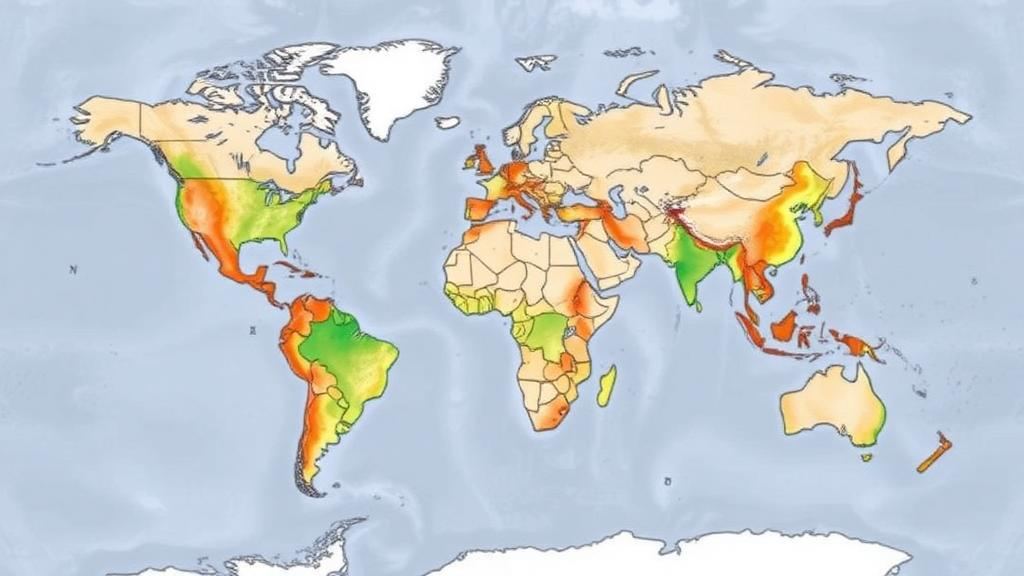
The resulting global picture is both reassuring and sobering. The majority of locations, some 57 percent, host resilient groundwater systems that exhibit rapid and robust recovery following droughts. In these regions, aquifers appear able to buffer prolonged dry spells and return to their pre drought states within a manageable timeframe. A further 15 percent of locations were classified as vulnerable, shaped by geophysical constraints and heightened climate variability that leave them exposed even when droughts are not exceptionally severe. The remaining 26 percent fall into an unstable category, characterized by frequent, successive drought events that progressively erode the system’s recovery capacity and produce strong, lasting impacts on groundwater reserves.
The distinction between these categories carries profound implications for water management. A resilient system can absorb a multi year drought and recover without permanent damage, whereas a vulnerable or unstable system may cross critical thresholds from which recovery becomes slow, expensive or impossible on human timescales. Because the classification is grounded in the physical behavior of each system rather than in administrative boundaries, it allows comparisons across countries and continents on a common footing. Regions and countries already known for excessive groundwater use, such as California, Spain, India and the Northern China Plain, more often display a complex mix of recovery regimes, with many vulnerable and unstable groundwater systems attributable to groundwater abstraction, in contrast to less affected regions.
This connection between abstraction and recovery capacity is one of the study’s most consequential findings. Where irrigation demands draw down aquifers faster than natural recharge can replenish them, the baseline from which any drought begins is already lowered, and the margin for recovery shrinks accordingly. The interplay of climatic, geophysical and anthropogenic factors means that sustainable groundwater management cannot rely on climate projections alone; it must account for the local geological context and the intensity of human extraction. The study’s regional climatic, geophysical and anthropogenic framing therefore provides a template for identifying the places where targeted interventions, from managed aquifer recharge to abstraction limits, are most likely to succeed.
For policymakers, the practical value lies in anticipation. By mapping where groundwater systems are resilient, vulnerable or unstable, the classification supports the identification of regions at risk of crossing critical thresholds and the development of targeted strategies to enhance global groundwater resilience. Water authorities in unstable regions, for example, may need to plan for successive droughts as the norm rather than the exception, building storage, diversifying supply and enforcing demand management well before reservoirs run dry. In vulnerable regions, the emphasis may fall on protecting recharge zones and monitoring water tables closely, since geophysical constraints leave little room for error. In resilient regions, the findings offer a measure of reassurance, but also a warning that resilience is not immunity if extraction continues to grow.
The methodology itself represents a step forward in how drought is studied. Drought research has traditionally focused on surface water indicators such as streamflow, soil moisture and precipitation deficits, in part because these are directly observable by satellites and monitoring networks. Groundwater drought, by contrast, unfolds underground and over longer timescales, making it easy to underestimate. By simulating groundwater dynamics explicitly at high resolution and analyzing recovery trajectories after drought events, the study brings the subsurface dimension of drought into the same analytical frame as its surface counterparts, revealing dynamics that surface indicators alone would miss.
The current analysis concentrates mainly on spatial patterns, mapping where recovery is fast and where it falters. Hauswirth and her colleagues are now extending the work in time, investigating how these recovery processes change over the historical record and how they may evolve in the future under a changing climate. As droughts become more frequent and more intense in many parts of the world, the question is no longer simply whether an aquifer can recover from one drought, but whether it can recover between increasingly short intervals of relief. The answers will shape how societies manage the water beneath their feet, and the new global classification provides an evidence based starting point for that task.
Subject of Research: Global patterns and drivers of groundwater drought recovery
Article Title: Global groundwater drought recovery patterns
Article References: Global groundwater drought recovery patterns. (n.d.). Original publication
Image Credits: AI Generated
DOI: Not provided
Keywords: groundwater, drought recovery, hydrology, global groundwater model, aquifer resilience, Utrecht University, water management, climate variability, groundwater abstraction, Environmental Research Water, recharge, water policy
Cite Scienmag News
Violet Maxwell. (October 1, 2026). New Global Map Reveals Which Groundwater Reserves Can Survive Drought. Scienmag. https://scienmag.com/new-global-map-reveals-which-groundwater-reserves-can-survive-drought/
Violet Maxwell. "New Global Map Reveals Which Groundwater Reserves Can Survive Drought." Scienmag, 1 October 2026, https://scienmag.com/new-global-map-reveals-which-groundwater-reserves-can-survive-drought/. Accessed 4 October 2026.
Violet Maxwell. "New Global Map Reveals Which Groundwater Reserves Can Survive Drought." Scienmag. October 1, 2026. https://scienmag.com/new-global-map-reveals-which-groundwater-reserves-can-survive-drought/


