

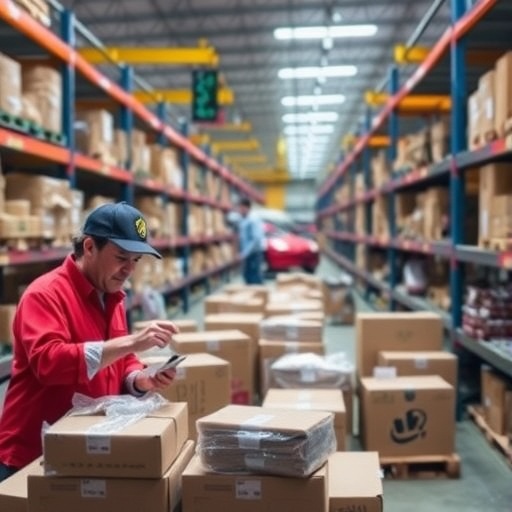
Small and medium-sized enterprises (SMEs) serve as the economic backbone within developing nations, often representing the majority of businesses and employment opportunities. However, these enterprises face disproportionate vulnerabilities when disruptions shake global and local supply chains. The COVID-19 pandemic showcased this fragility acutely, with many small manufacturers in India enduring severe operational breakdowns and prolonged recovery periods. The delicate balance maintained by SMEs, reliant on lean inventories and limited supplier networks, left them exposed to cascading failures triggered by logistic interruptions, raw material shortages, and fluctuating consumer demands. This exposed a critical gap in the existing methodologies designed to bolster supply chain resilience, most of which are tailored toward larger firms equipped with robust data infrastructures and specialized risk management resources.
In a groundbreaking study recently featured in the peer-reviewed journal Risk Sciences, a multidisciplinary research team from India introduced a novel quantitative framework tailored specifically for SMEs. This approach systematically quantifies supply chain risks and equips small businesses with actionable intelligence to anticipate, mitigate, and recover from disruptions. The study stands out due to its innovative fusion of established risk assessment methods, delivering a practical tool that operates effectively under the real-world constraints faced by resource-limited enterprises. By blending expert knowledge with rigorous computational techniques, this framework circumvents the need for extensive historical data or costly proprietary software, democratizing risk management capabilities traditionally reserved for larger corporations.
The research hinges on integrating two well-established analytical techniques: the Analytic Hierarchy Process (AHP) and Hazard Identification and Risk Assessment (HIRA). AHP facilitates the prioritization of hazards by capturing and organizing expert judgments, allowing decision-makers to weigh risks based on perceived importance and potential impact. Meanwhile, HIRA provides a structured methodology to evaluate each identified hazard’s likelihood and severity systematically. Together, these methods enable SME managers to navigate an otherwise complex and uncertain risk landscape with transparency and confidence. The framework’s reliability and applicability were validated through an intensive case study involving an Indian manufacturing SME that experienced complete supply chain failure during the pandemic’s peak.
Throughout the detailed investigation, investigators carried out exhaustive literature reviews and consulted a diverse panel of 30 experts drawn from academia and industry. This collaborative process identified eleven critical hazards specific to SME supply chains, spanning internal operational bottlenecks to external environmental uncertainties. Among the internal risks, procurement inefficiencies and production stoppages surfaced as the most threatening, underscoring the importance of internal process robustness. Externally, the scarcity of essential raw materials, frequency of inventory stockouts, and disruptions within the distribution network emerged prominently. Of particular note was the finding that internal operational risks eclipsed external factors in severity, challenging prevalent assumptions within supply chain theory that emphasize vulnerability to external shocks.
Such insights carry deep strategic implications. Co-author Deeya Bandyopadhyay highlights that SMEs’ vulnerability is often self-induced due to underdeveloped procurement frameworks and suboptimal inventory management practices. These deficiencies amplify the impact of external market pressures and logistic interruptions. Strengthening internal operations, therefore, can yield disproportionate returns in resilience. The study provides SME managers with a roadmap for prioritization: focusing improvement efforts on procurement processes and production reliability may dramatically enhance their capacity to weather future disruptions.
To demonstrate the practical utility of the framework, the research team proposed targeted control measures tailored for each identified high-risk hazard. For example, supplier diversification emerged as an indispensable strategy to mitigate raw material scarcity, spreading dependency risks across multiple sources. Implementing buffer stock strategies allows SMEs to absorb supply shocks without immediate operational halts. Additionally, synchronizing multi-channel distribution networks enhances flexibility and responsiveness to fluctuating demand patterns and logistic bottlenecks. Application of these control measures resulted in a significant reduction of residual risk metrics, bringing potential disruption impacts within acceptable tolerances. This empirical evidence confirms that proactive, intelligence-driven management can transform SME supply chain resilience from a theoretical ideal to achievable reality.
Crucially, the framework’s design emphasizes accessibility and simplicity. SMEs often lack access to expensive enterprise resource planning systems, data scientists, or dedicated risk analysts. Understanding these constraints, the researchers engineered a solution that leverages expert intuition and structured methodologies to produce actionable risk insights without necessitating large-scale digital infrastructures or advanced statistical expertise. This democratization of risk management marks a significant advancement in the global effort to support SME sustainability, particularly in emerging economies where such enterprises constitute economic lifelines but suffer from systemic vulnerabilities.
The integration of AHP and HIRA into a cohesive framework is not without challenges. Capturing and codifying expert judgment demands meticulous attention to consistency and bias mitigation. Moreover, contextualizing risk prioritization within fluctuating economic landscapes requires iterative updates and localized calibration. The study addresses these by advocating continuous expert engagement, scenario analysis, and feedback loops, enabling SMEs to refine their risk profiles dynamically as supply chain environments evolve. This adaptive mechanism elevates the framework beyond static risk inventories toward a living model of enterprise resilience.
Researchers argue that the broader implications extend beyond the Indian SME context. Globally, small enterprises face similar challenges amplified by geopolitical tensions, climate change effects, and digital transformation upheavals in supply chain networks. The proposed framework establishes a blueprint adaptable to diverse sectors and geographies, empowering SMEs worldwide to transition from reactive crisis management to anticipatory risk governance. Such transformations align with increasing policy emphasis on SME development as engines of inclusive growth and economic diversification.
Looking ahead, the study’s authors envision enhancements featuring integration with emerging digital tools such as IoT sensor networks, blockchain-based supplier audits, and AI-driven predictive analytics. While these technologies remain largely inaccessible to many SMEs today, the foundational framework developed here provides a methodological backbone upon which these innovations can be layered in the future. Bridging the gap between data scarcity and advanced risk modeling, this work paves the way for incremental modernization of SME supply chains, reducing fragility while fostering agility.
In conclusion, the research marks a pivotal step in reimagining supply chain risk management through the SME lens. By harmonizing expert knowledge with structured, quantitative techniques and delivering interventions grounded in real-world application, it furnishes SMEs with the tools needed to not only survive but thrive amid uncertainty. As global markets grow ever more interconnected yet unpredictable, empowering the most vulnerable yet vital businesses to build robust, adaptable supply chains will be essential for economic resilience and inclusive prosperity.
Contact information for further details is available through the corresponding author, Sudipta Ghosh of the Indian Institute of Packaging, Kolkata, India, who remains active in advancing SME resilience research.
Subject of Research: Not applicable
Article Title: Reinforcing small- and medium-sized enterprises’ resilience to future disruptions: A novel decision-making framework for supply chain risk quantification
Web References: http://dx.doi.org/10.1016/j.risk.2026.100052
Image Credits: Ghosh, S., Bandyopadhyay, D., Bhowmik, C., Sinha, S., & Ray, A. / Risk Sciences
Keywords: Business, Socioeconomics, Decision making


