

Friday, July 17, 2026
Science
No Result
View All Result
  • Login
  • HOME
  • SCIENCE NEWS
  • CONTACT US
  • HOME
  • SCIENCE NEWS
  • CONTACT US
No Result
View All Result
Scienmag
No Result
View All Result
Home Science News Cancer

New drug candidate offers hope for patients with NRAS-driven melanoma

July 17, 2026
in Cancer
Reading Time: 2 mins read
0
New drug candidate offers hope for patients with NRAS-driven melanoma

New drug candidate offers hope for patients with NRAS-driven melanoma

65
SHARES
587
VIEWS
Share on FacebookShare on Twitter
ADVERTISEMENT

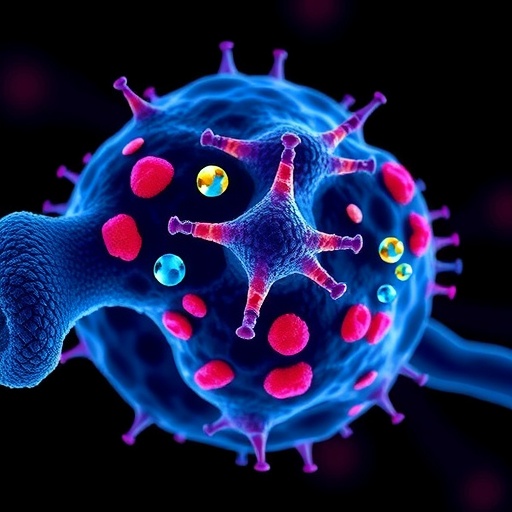
A Huntsman Cancer Institute team at the University of Utah reports that daraxonrasib, a targeted RAS inhibitor, could offer a new treatment route for a subset of melanoma patients whose tumors are driven by NRAS mutations. The work addresses an ongoing clinical gap: effective targeted options for NRAS-mutant metastatic melanoma have been limited, leaving many patients with fewer durable choices after immunotherapy.

NRAS-driven melanoma is fueled by altered NRAS signaling, a pathway that turns cancer-promoting cellular programs on. Daraxonrasib was developed by Revolution Medicines to interfere with RAS proteins, aiming to suppress the upstream signaling that supports tumor growth and survival.

The findings build on daraxonrasib’s earlier performance in metastatic pancreatic cancer, where a Phase 3 trial reported a substantial survival benefit. That clinical momentum, coupled with preclinical melanoma results, helped motivate deeper investigation into whether the same pathway disruption could translate to NRAS-driven skin cancer.

Researchers tested daraxonrasib across multiple preclinical models, including melanoma samples derived from patients. In these settings, the drug showed strong responsiveness, with tumor shrinkage observed—an outcome that is described as uncommon in NRAS-driven systems.

Senior author Martin McMahon, PhD, emphasizes that these data support the potential future clinical utility of daraxonrasib for NRAS-mutant melanoma. First author Mona Foth, PhD, adds that the observed responses suggest the approach could ultimately become a patient therapy capable of altering disease trajectories.

The study also explored how tumors may escape pathway inhibition. As is typical for targeted treatments, some models developed resistance to daraxonrasib. Resistance was linked to changes downstream of RAS involving MEK1, as well as reduced cyclophilin A expression, which is implicated in enabling daraxonrasib’s inhibitory action on RAS proteins.

These resistance mechanisms point to a practical next step: combination strategies. McMahon indicates that future work will test drug pairings built on a daraxonrasib backbone, with the goal of increasing both the depth and durability of responses.

The team is now aiming to move toward clinical evaluation, targeting patients who cannot receive immunotherapy or whose disease does not respond. If successful, daraxonrasib-based regimens could extend the therapeutic landscape for patients with NRAS-mutant metastatic melanoma.

Subject of Research: Daraxonrasib as a targeted therapy for NRAS-driven melanoma
Article Title: Not provided in the provided text
News Publication Date: Not provided in the provided text
Web References: Not provided explicitly (URLs were present but no standalone reference titles were given)
References: Cancer Research (publication mentioned)
Image Credits: Huntsman Cancer Institute

Keywords: daraxonrasib, RAS inhibitor, NRAS-driven melanoma, targeted therapy, immunotherapy resistance, MEK1, cyclophilin A, translational research

Tags: clinical research on melanoma drugsdaraxonrasib for NRAS-driven skin cancerimmunotherapy limitations in melanomamelanoma treatment resistancenovel melanoma drug developmentNRAS-mutant melanoma targeted therapypersonalized medicine for melanoma patientspreclinical melanoma modelsRAS inhibitor in melanoma treatmentRAS pathway inhibition in cancerRevolution Medicines RAS inhibitortargeted treatment for metastatic melanoma
Share26Tweet16
Previous Post

Timing Regenerative Signals Determines Healing Outcomes After Injury

Next Post

University Professor Uses Artificial Intelligence to Improve Road Safety

Related Posts

ZBP1 Links Genomic Stress to Tumor Immunity, New Study Finds
Cancer

ZBP1 Links Genomic Stress to Tumor Immunity, New Study Finds

July 17, 2026
Association for Molecular Pathology Names 2026 Award Winners
Cancer

Association for Molecular Pathology Names 2026 Award Winners

July 17, 2026
Experimental KRAS Vaccine Stimulates Immune Response in High-Risk Pancreatic Cancer Patients
Cancer

Experimental KRAS Vaccine Stimulates Immune Response in High-Risk Pancreatic Cancer Patients

July 17, 2026
Safe vaccine triggers durable immune responses to prevent pancreatic cancer in high-risk people
Cancer

Safe vaccine triggers durable immune responses to prevent pancreatic cancer in high-risk people

July 16, 2026
Early inflammation signal fuels oral cancer, suggests immunoprevention strategy
Cancer

Early inflammation signal fuels oral cancer, suggests immunoprevention strategy

July 16, 2026
Scientists Discover Immune Cells Form Cancer-Fighting Hubs Within Tumors
Cancer

Scientists Discover Immune Cells Form Cancer-Fighting Hubs Within Tumors

July 16, 2026
Next Post
University Professor Uses Artificial Intelligence to Improve Road Safety

University Professor Uses Artificial Intelligence to Improve Road Safety

  • Mothers who receive childcare support from maternal grandparents show more

    Mothers who receive childcare support from maternal grandparents show more parental warmth, finds NTU Singapore study

    27656 shares
    Share 11059 Tweet 6912
  • University of Seville Breaks 120-Year-Old Mystery, Revises a Key Einstein Concept

    1061 shares
    Share 424 Tweet 265
  • Bee body mass, pathogens and local climate influence heat tolerance

    682 shares
    Share 273 Tweet 171
  • Researchers record first-ever images and data of a shark experiencing a boat strike

    546 shares
    Share 218 Tweet 137
  • Groundbreaking Clinical Trial Reveals Lubiprostone Enhances Kidney Function

    531 shares
    Share 212 Tweet 133
Science

Embark on a thrilling journey of discovery with Scienmag.com—your ultimate source for cutting-edge breakthroughs. Immerse yourself in a world where curiosity knows no limits and tomorrow’s possibilities become today’s reality!

RECENT NEWS

  • AI Review Shows How Tools Help Nurses Manage Chronic Disease More Proactively
  • Body Detects Temperature Shifts: How Warm and Cool Signals Are Sensed
  • ORNL Grid Researchers Achieve IEEE Senior Membership Recognition
  • ZBP1 Links Genomic Stress to Tumor Immunity, New Study Finds

Categories

  • Agriculture
  • Anthropology
  • Archaeology
  • Athmospheric
  • Biology
  • Biotechnology
  • Blog
  • Bussines
  • Cancer
  • Chemistry
  • Climate
  • Earth Science
  • Editorial Policy
  • Marine
  • Mathematics
  • Medicine
  • Pediatry
  • Policy
  • Psychology & Psychiatry
  • Science Education
  • Social Science
  • Space
  • Technology and Engineering

Subscribe to Blog via Email

Enter your email address to subscribe to this blog and receive notifications of new posts by email.

Join 5,146 other subscribers

© 2025 Scienmag - Science Magazine

Welcome Back!

Login to your account below

Forgotten Password?

Retrieve your password

Please enter your username or email address to reset your password.

Log In
No Result
View All Result
  • HOME
  • SCIENCE NEWS
  • CONTACT US

© 2025 Scienmag - Science Magazine

Discover more from Science

Subscribe now to keep reading and get access to the full archive.

Continue reading
