


In an era of increasing commodification of everyday life, Russian researchers have illuminated the underlying neurological processes that govern our perceptions of product prices. Utilizing advanced neuroimaging techniques, namely electroencephalography (EEG) and magnetoencephalography (MEG), a collaborative study by scientists from HSE University and the neuromarketing firm Neurotrend revealed compelling findings about how the brain reacts to price discrepancies. The study’s conclusions suggest that the evaluation of prices is not merely a conscious deliberation but is also entangled with automatic cognitive mechanisms that operate on an almost instinctual level.
In a carefully designed experimental setup, participants were presented with various mobile phone brands, including iPhone, Nokia, and Xiaomi. Following the visual stimuli, the subjects were shown hypothetical prices that varied—some exceeded, some fell below, and some matched the expected market value. After the price display, participants encountered a prompt with the words "expensive" or "cheap". Their task was to assess whether the displayed target word correctly aligned with the corresponding price. Throughout this process, the researchers meticulously recorded the participants’ brain activity, analyzing how their neural responses varied in relation to the price expectations. With a sample size of 65 individuals, the data acquired provided significant insight into the brain’s processing of price information.
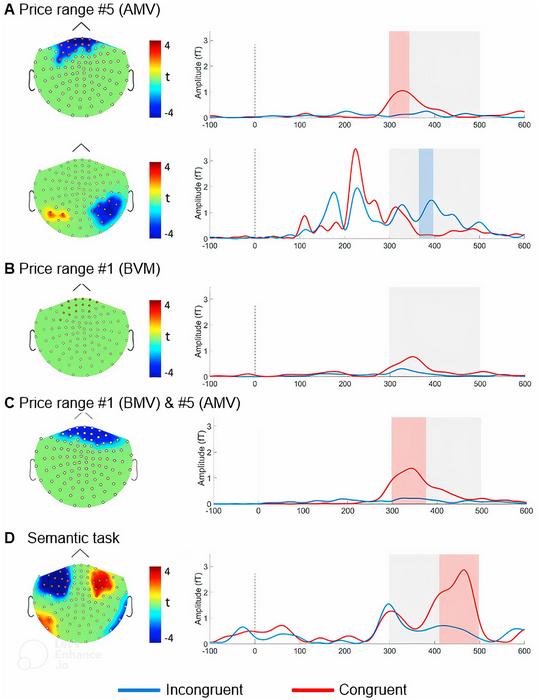
Crucially, the study identified a distinct neural response known as the N400 signal, an acute electrical impulse observable in the brain when it confronts unexpected stimuli. This phenomenon is traditionally associated with the processing of semantic inconsistencies but in this context, it highlights a deeper cognitive engagement with monetary values. Interestingly, the results indicated a greater N400 response when participants evaluated excessively high prices compared to those perceived as deceptively low. This disparity could reflect a natural skepticism toward prices that appear inflated, suggesting an inherent questioning of value against past experiences and contextual pricing norms.
Follow-up analysis also revealed that the degree of price deviation that triggered the N400 response was variable, depending notably on the brand presented to participants. Specifically, purchases linked to the Xiaomi brand incited a less defined threshold for price acceptance, hinting at a pronounced ambiguity in consumer understanding of its market value. This could point to a marketing opportunity; establishing clearer brand identity in consumers’ minds may help mitigate confusion and elevate perceived product value.
Andrew Kislov, a doctoral candidate at HSE University, expressed his excitement about the study’s implications for understanding price perception. Here, he gains insight not only into consumer behavior but also rekindles questions regarding the ethical boundaries of neuromarketing. “In our research endeavors, we sought to identify the maximum price that consumers subconsciously consider acceptable,” he stated. Kislov’s reflections underline an intriguing tension between scientific inquiry and the ethical implications of potentially invasive consumer assessment methods.
In a parallel discussion, Vasily Klucharev—the chief researcher and head of the International Laboratory of Social Neurobiology—emphasized how quickly the brain reacts to incongruent pricing information. “When price expectations are violated, the brain engages immediately with its decision-making and reward-assessing regions,” he noted. This rapid engagement marks a departure from traditional perspectives on pricing strategies; it implies that the pricing framework may need to evolve alongside our neurological understanding of consumer behavior.
Now more than ever, marketers are likely to find themselves at a crossroads between qualitative consumer insights and neurocognitive analytics. Conventional surveys may fall short in illuminating the complexities of individual pricing perceptions, often prompting participants to provide socially desirable responses rather than pure reflections of their thought processes. The results of this study aim to provide marketers with a more refined lens through which they can understand consumer pricing concerns and expectations.
Anna Shestakova, the director of the HSE Institute for Cognitive Neuroscience, reiterated the transformative potential of employing neurological assessments in marketing research. “We ascertain from our findings that physiological responses bear significant weight; understanding the brain’s processing of price can inform how we introduce new products into the marketplace,” she explained. The ability to predict a consumer’s emotional and cognitive reactions to various pricing strategies even before a product launch could reshape marketing dynamics significantly.
Going forward, the integration of neuroscience into market research holds promise, but it beckons a solid ethical framework. Understanding consumers’ subconscious can yield powerful insights, yet the intervention raises questions about privacy and individual autonomy. As scientists and marketers navigate this new frontier, a dialogue regarding consent, transparency, and ethical considerations will be paramount.
The fulcrum of this research presents an opportunity to bridge scientific methodology with practical applications in the consumer marketplace. By utilizing neural metrics, researchers and marketers alike can craft strategic pricing models that align more harmoniously with consumer psychology. However, as the landscape of marketing evolves, it will remain critical to balance insights gleaned from neural responses with the integrity of the buyer-seller relationship.
As we plunge deeper into a world shaped by technology and consumer dynamics, understanding the neuroscience behind pricing perception becomes increasingly relevant. The implications of this research extend beyond mere academic curiosity; they speak to a fundamental human experience that connects our lives through everyday transactions in the marketplace.
Understanding these neural correlates will undoubtedly evolve our approach not only to marketing strategies but also to the very nature of commerce. Price, a pivotal aspect of decision-making, will be seen not merely as a number but as a cognitive and emotional anchor that can shape consumer behavior and market trends. The future of pricing may very well lie in our ability to decode the complex dance of signals exchanged between our brains and the economic realities we navigate daily.
In conclusion, the intersection of neuroscience and marketing presents an incredibly fertile ground for future investigation. As researchers continue delving into how the brain interprets price—and by extension, value—it will be fascinating to see how these insights are operationalized in practice. This study marks just the beginning, and the waves it creates will likely resonate across a multitude of sectors as we advance into an era where the subconscious influences consumer decisions in ways previously uncharted.
Cite Scienmag News
Cassandra Pierce. (March 24, 2025). New Discoveries Unveil Brain’s Neural Markers Linked to Price Perception. Scienmag. https://scienmag.com/new-discoveries-unveil-brains-neural-markers-linked-to-price-perception/
Cassandra Pierce. "New Discoveries Unveil Brain’s Neural Markers Linked to Price Perception." Scienmag, 24 March 2025, https://scienmag.com/new-discoveries-unveil-brains-neural-markers-linked-to-price-perception/. Accessed 4 September 2026.
Cassandra Pierce. "New Discoveries Unveil Brain’s Neural Markers Linked to Price Perception." Scienmag. March 24, 2025. https://scienmag.com/new-discoveries-unveil-brains-neural-markers-linked-to-price-perception/


