


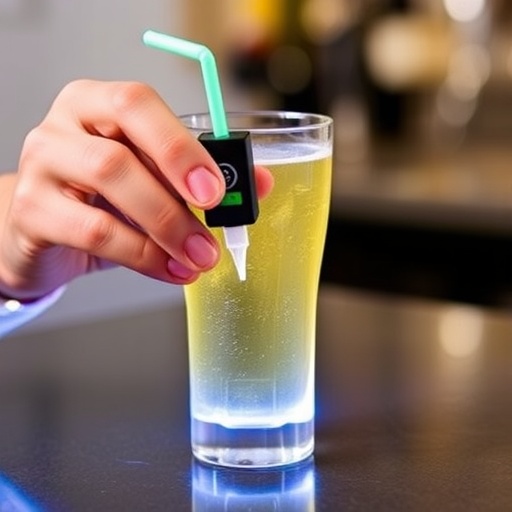
A groundbreaking development in food safety and environmental monitoring has emerged from the laboratories of the Federal University of São Carlos (UFSCar) in Brazil. A dedicated team of researchers has engineered a novel electrochemical sensor designed specifically to detect sodium nitrite (NaNO2) in a variety of beverage matrices, including mineral water, orange juice, and wine. Sodium nitrite, a widely used preservative and coloring fixative in processed meats such as ham, bacon, and sausages, poses potential health risks due to its capacity to produce carcinogenic nitrosamines under certain conditions. This dual nature of sodium nitrite – as both a beneficial food additive and a potential health hazard – inspired the creation of a rapid, cost-effective, and environmentally friendly detection method integral to consumer safety.
The sensor development was spearheaded by Bruno Campos Janegitz, leader of UFSCar’s Laboratory of Sensors, Nanomedicine, and Nanostructured Materials (LSNano). Janegitz highlights the urgent need for a detection tool that is not only sensitive but also accessible to regulatory bodies and consumers alike. In many countries, including Brazil, the presence of sodium nitrite in beverages, particularly wine, is prohibited, making rigorous quality control essential. Their research team successfully merged innovative material science with green chemistry principles to craft this sensor, achieving a perfect balance between functionality and environmental responsibility.
At the heart of this sensor lies an ingenious use of cork, a lightweight, naturally abundant, and cost-effective material praised for its sustainability. Employing laser technology, the research team converted the surface layer of cork into graphene – a form of carbon known for its exceptional electrical conductivity. This laser-induced graphene provides a highly conductive platform crucial for the electrochemical oxidation process necessary to detect nitrites. The laser treatment creates microscopic conductive pathways on the cork surface without employing noxious chemicals, underscoring the eco-conscious approach sculpted into the project’s ethos.
After graphene formation, a meticulous waterproofing treatment was applied to the cork to prevent interference from the liquid samples during testing. This was followed by a protective nail polish layer that delineates and preserves the laser-treated region. The prepared sensor undergoes thermal treatment at 40°C for thirty minutes, optimizing the sensor’s electrochemical properties—this careful conditioning ensures consistent and reliable readings, enhancing the sensor’s overall performance.
Functionally, when beverage samples diluted with an electrolyte solution are applied to the sensor, the sodium nitrite present undergoes an electrochemical oxidation process detectable by the graphene surface. The sensor’s high conductivity dramatically improves the accuracy and sensitivity of nitrite detection, capable of identifying concentrations within ranges critical for food and environmental safety standards. This precision opens the door for widespread practical application in food quality control, regulatory monitoring, and potentially even consumer-facing safety tools.
Preliminary trials conducted in laboratory conditions have yielded promising results, where the sensor demonstrated high sensitivity, reliability, and stability across multiple beverage types. This versatility enhances the sensor’s potential as a universal solution for nitrite detection in liquid foods, bridging gaps in current analytical methodologies that may be expensive, complex, or time-consuming. The team’s next phases of research will focus heavily on refining the sensor design to enhance usability in real-world contexts, paving the way for portable, user-friendly devices suitable for routine inspection.
An extraordinary aspect of this project is its commitment to sustainable development and democratization of technology. The selection of cork as a substrate, the use of laser-induced graphene, and the avoidance of toxic chemicals reflect a forward-thinking philosophy towards environmental respect in scientific innovation. This project not only addresses pressing food safety challenges but also produces a sensor system that embodies principles of green technology—aligning with global trends towards sustainable materials in sensor fabrication.
The project underscores a collective academic endeavor, driven by the efforts of a vibrant research community supported extensively by the São Paulo Research Foundation (FAPESP). Dedicated students such as Beatriz Germinare, the study’s first author, have played pivotal roles in advancing this work under FAPESP’s scholarships and scientific initiation programs. Their contributions echo the vital importance of fostering young talent within scientific research, combining education with impactful innovation that reverberates beyond the laboratory.
As the research advances, the team aims to tackle remaining obstacles to field deployment, such as sensor durability under diverse environmental conditions, response time optimization, and integration into scalable manufacturing processes. The researchers anticipate that the final product will revolutionize how nitrite contamination is monitored in beverages, enhancing public health protections and bolstering consumer confidence in food products worldwide.
Importantly, this new sensor technology offers a glimpse into the broader future of analytical chemistry, where sustainability and performance coexist symbiotically. The ability to harness low-cost, naturally sourced materials to create cutting-edge sensors exemplifies a paradigm shift in how detection technologies are developed and applied, offering scalable, environmentally benign alternatives to conventional devices.
In summary, the cork-based electrochemical sensor designed by UFSCar researchers represents a significant stride forward in food safety technology. By leveraging laser-induced graphene’s remarkable conductive properties on an ecofriendly substrate, the sensor promises rapid, affordable, and sensitive detection of sodium nitrite in beverages. This innovation stands as a testament to interdisciplinary collaboration, sustainable scientific practice, and the urgent need for novel tools in quality control that safeguard consumer health against carcinogenic contaminants.
Cite Scienmag News
Nathaniel Bowman. (October 17, 2025). New Device Accurately Detects Sodium Nitrite in Beverages. Scienmag. https://scienmag.com/new-device-accurately-detects-sodium-nitrite-in-beverages/
Nathaniel Bowman. "New Device Accurately Detects Sodium Nitrite in Beverages." Scienmag, 17 October 2025, https://scienmag.com/new-device-accurately-detects-sodium-nitrite-in-beverages/. Accessed 4 September 2026.
Nathaniel Bowman. "New Device Accurately Detects Sodium Nitrite in Beverages." Scienmag. October 17, 2025. https://scienmag.com/new-device-accurately-detects-sodium-nitrite-in-beverages/


