

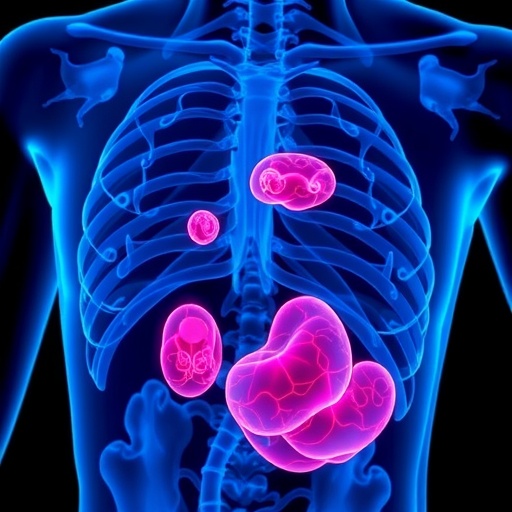
A groundbreaking new study led by Dr. Cristian Tomasetti, director of City of Hope’s Center for Cancer Prevention, Early Detection and Monitoring, uncovers a pivotal biological mechanism explaining the strong link between obesity and increased cancer risk across multiple organs. Published in the prestigious journal Cancer Research, this investigation challenges traditional views and brings transformative insight to our understanding of obesity’s impact on cancer development.
While it has long been recognized that obesity elevates the risk of various cancers, explanations have largely centered on factors like altered metabolism, hormone disruptions, and chronic inflammation. However, the novel findings from the City of Hope and TGen collaboration reveal a more direct effect: obesity physically enlarges vital organs such as the liver, kidneys, and pancreas by increasing their cellular content. This organ enlargement inherently raises the probability of malignant transformations by increasing the number of susceptible cells prone to DNA replication errors and oncogenic mutations.
The study’s foundation rests on a comprehensive analysis of 747 adult patients exhibiting a full-body mass index (BMI) spectrum from underweight to severely obese. Utilizing advanced CT imaging, researchers precisely measured the sizes of individuals’ livers, kidneys, and pancreases. Notably, the organs exhibited consistent growth proportional to weight gain: for every five-point increase in BMI, the liver increased by 12%, the kidneys by 9%, and the pancreas by 7%. Such organ hypertrophy signifies a more extensive pool of cells at risk, challenging the previous assumption that increased organ size in obesity was due predominantly to fat accumulation.
Delving deeper into cellular mechanisms, the team conducted histological examinations of kidney tissue samples sourced from autopsies and biopsy specimens from living patients. These microscopic analyses demonstrated that over 60% of kidney growth was attributable to hyperplasia—an increase in cell number—rather than merely hypertrophy or fat cell deposition. This distinction is crucial because hyperplasia implies more cells undergoing replication, each susceptible to acquiring DNA mutations that could initiate tumorigenesis.
Dr. Tomasetti eloquently explains the biological danger posed by this increased cellular mass: “When an organ doubles in size, it roughly doubles its risk of developing cancer.” The analogy of buying more lottery tickets illustrates how the mere abundance of cells indirectly escalates the statistical likelihood of cancerous mutations. This sheds light on a major mechanism underlying obesity-linked tumorigenesis, previously underappreciated in cancer biology and epidemiology.
Moreover, the findings underscore the limitations of BMI as a predictive tool for cancer risk associated with obesity. Because BMI cannot differentiate between lean tissue, fat mass, or organ size, it provides an imprecise estimation of the true biological change contributing to oncogenic risk. The study authors suggest that direct measurements of organ dimensions or perhaps novel biomarkers reflecting organ hypertrophy could more accurately assess an individual’s cancer risk profile.
The research also brings a vital public health message to light: early prevention of obesity, especially during childhood, could significantly reduce lifetime cancer risk. Organs do not enlarge overnight; rather, their growth occurs gradually in response to sustained excess caloric load. Consequently, childhood obesity sets a longer biological timeline for the accumulation of mutations, enhancing the cumulative probability that malignant cells will develop in middle or later age.
Another intriguing dimension of this work concerns emerging weight loss therapies, particularly GLP-1 receptor agonists, which have gained attention for their ability to induce significant and sustained reductions in body weight. Future studies are planned to determine whether these drugs can reverse organ enlargement and, by extension, lower the probability of cancer development in high-risk obese populations. This represents a promising intersection between metabolic intervention and cancer prevention strategies.
The discovery of hyperplasia-driven organ enlargement as a dominant factor linking obesity to cancer represents a paradigm shift. It complements established mechanisms involving inflammation, insulin resistance, and hormone dysregulation but highlights an underexplored cellular growth pathway. Such insights are invaluable for oncologists, endocrinologists, and public health practitioners looking to devise multi-faceted strategies that encompass prevention, early detection, and treatment.
Beyond cancer, the implications of this organ growth phenomenon extend to other obesity-related diseases, including diabetes, where increased organ cellularity may influence disease progression or therapeutic response. As Dr. Debbie Thurmond, director of the Arthur Riggs Diabetes & Metabolism Research Institute at City of Hope, remarks, understanding how organ hypertrophy intersects with metabolic diseases adds a crucial dimension to clinical research in these interconnected fields.
In sum, this pivotal research pioneered by City of Hope and TGen illuminates a fundamental biological process by which obesity acts as a formidable driver of cancer risk. It launches a new avenue of enquiry that challenges convention and calls for refined diagnostic tools, preventative measures focused on early life, and integrated therapeutic approaches. As obesity rates continue to rise globally, such discoveries offer hope for more effective interventions to reduce the burden of cancer associated with excess body weight.
Subject of Research: People
Article Title: Hyperplasia Functions as a Link Between Obesity and Cancer
News Publication Date: 24-Mar-2026
Web References: Not provided
References: Not provided
Image Credits: TGen


