


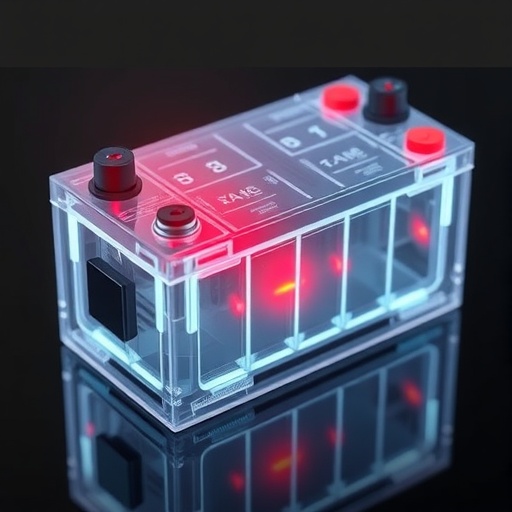
Electric-vehicle batteries are often described as the heart of the car, but researchers are increasingly focusing on another question: how easily can that heart be opened, diagnosed, repaired and eventually recycled? A new study from Graz University of Technology and the University of Graz suggests that the physical design of a battery pack may determine not only how safely it performs on the road, but also whether damaged cells can be rescued instead of sending an entire battery to the scrapyard. The findings come from the E-Track research project, which examined how battery architecture influences safety, environmental impact, repairability and circular use of materials.
The issue is becoming urgent as electric vehicles become more common and their battery systems grow larger and more technically complex. A modern traction battery must manage electrical output, heat, mechanical forces and crash loads at the same time. These demands are frequently addressed through highly integrated designs in which cells, cooling systems, adhesives, structural components and electronic controls are combined into a single package. While such integration can reduce manufacturing complexity and improve performance, it can also make the battery extremely difficult to disassemble. For emergency responders, inconsistent pack designs create an additional hazard because the location of high-voltage components, damaged cells and cooling circuits can differ substantially from one vehicle to another.
“Without uniform design standards, emergency services often face major challenges in an emergency because the structure and behaviour of battery systems are difficult to assess,” says Markus Fasching of the Vehicle Safety Institute at Graz University of Technology, the project’s manager. A battery that has been involved in a collision may appear inactive while still containing dangerous electrical energy. Internal damage can also trigger chemical and thermal reactions hours after the original impact. If responders cannot quickly determine how the pack is constructed or whether individual cells are compromised, extinguishing, transporting and storing the vehicle becomes more difficult. The same lack of transparency affects recycling companies, which must handle battery packs with widely differing structures and disassembly procedures.
The researchers used a commonly deployed battery construction as a reference design: a bonded housing combined with thermally conductive pastes used to transfer heat away from the cells. This approach can be effective during production and operation, helping maintain a stable temperature across the pack. However, adhesives and thermally conductive compounds can make it difficult to separate components without damaging them. In many cases, a defect in a limited number of cells may therefore result in the replacement of the entire battery pack. Such a system can be reliable during normal use, yet economically and environmentally inefficient after an accident or localized failure.
The E-Track team compared this baseline with alternative designs intended to make disassembly more practical. One concept used replaceable housing covers and heat-dissipation pads rather than permanently bonded structures. Another employed liquid cooling, with an electrically insulating oil transferring heat away from the cells. In that design, the housing could be opened by removing screws, while a seal helped prevent leakage. The purpose was not simply to make the pack easier to open, but to create a pathway for technicians to identify and replace individual damaged cells. A modular approach of this kind could reduce the amount of material discarded after a crash and allow healthy components to remain in service.
The environmental calculations point to a surprisingly low threshold for repairability. Battery cells account for approximately 75 percent of the total mass of the systems examined, making them the dominant factor in the pack’s material footprint. Life-cycle analyses conducted by the researchers indicate that repair-friendly construction becomes worthwhile when just eight percent of the cells can be reused. In other words, a battery does not need to be almost entirely recoverable to gain an environmental advantage. Saving a relatively small fraction of its cells can already offset some of the impacts associated with manufacturing replacement cells and processing a complete pack for recycling.
This finding is important because battery cells embody much of the energy, raw material extraction and industrial processing associated with an electric vehicle. Reusing a functioning cell can preserve the value of materials such as lithium, nickel, cobalt, manganese, copper and aluminium, depending on the chemistry and design of the battery. Recycling remains essential for cells that cannot safely be reused, but direct reuse can retain more of the original product’s value. It may also reduce demand for new cell production, which is one of the most energy-intensive stages in the battery life cycle. The researchers therefore argue that repairability should be treated as a central design objective rather than an afterthought.
Opening a battery safely is only part of the challenge. Technicians must also determine whether a cell has suffered hidden damage that could later produce a short circuit, overheating or thermal runaway. The E-Track researchers developed diagnostic approaches based on electrochemical impedance spectroscopy, a technique that measures how a battery responds to electrical signals across different frequencies. Changes in the measured impedance can reveal alterations in internal resistance, charge-transfer processes and other electrochemical properties. These signals may help distinguish healthy cells from those affected by mechanical impact or internal defects that are not visible from the outside.
The diagnostic measurements were combined with virtual multiphysical models that simulate interactions between electrical, thermal and mechanical behaviour. Such models can help researchers understand how a small internal defect might evolve under different conditions, including charging, discharging, vibration or elevated temperature. Of particular concern are micro-shorts, in which damaged internal layers create a tiny electrical connection inside a cell. A micro-short may initially generate little heat and remain undetected, but it can become a delayed source of thermal instability. Identifying these risks before a battery is returned to service could prevent fires and improve confidence in second-life applications.
Although the project focused primarily on electric two-wheelers, the researchers say that its methods can be transferred to larger battery systems used in passenger cars, commercial vehicles and lorries. The work provides a potential foundation for future industrial standards covering pack architecture, emergency access, diagnostic testing and end-of-life treatment. Standardization could give firefighters and recovery teams more predictable information while helping manufacturers design batteries that can be opened, repaired and recycled with less specialized effort. Industry partners have already expressed interest in follow-up research focused on safety diagnostics and multiphysical simulation. Funded by the Austrian Research Promotion Agency, the E-Track project delivers a message that could reshape battery engineering: the most sustainable battery may not be the one that lasts forever, but the one designed to be understood, repaired and used again.
News Publication Date: 1-Jun-2026
Web References: https://doi.org/10.1016/j.spc.2026.04.003
References: Sustainable Production and Consumption, “Design matters: The influence of EV battery pack design for disassembly on environmental and circularity impact,” DOI: 10.1016/j.spc.2026.04.003
Keywords
electric vehicles, EV batteries, battery recycling, battery repair, circular economy, battery safety, thermal runaway, electrochemical impedance spectroscopy, sustainable design, disassembly, electric mobility, lithium-ion batteries
Cite Scienmag News
Faith Mcneil. (August 13, 2026). New Battery Design Promises Safer, Repairable, More Sustainable Electric Vehicles. Scienmag. https://scienmag.com/new-battery-design-promises-safer-repairable-more-sustainable-electric-vehicles/
Faith Mcneil. "New Battery Design Promises Safer, Repairable, More Sustainable Electric Vehicles." Scienmag, 13 August 2026, https://scienmag.com/new-battery-design-promises-safer-repairable-more-sustainable-electric-vehicles/. Accessed 4 September 2026.
Faith Mcneil. "New Battery Design Promises Safer, Repairable, More Sustainable Electric Vehicles." Scienmag. August 13, 2026. https://scienmag.com/new-battery-design-promises-safer-repairable-more-sustainable-electric-vehicles/


