


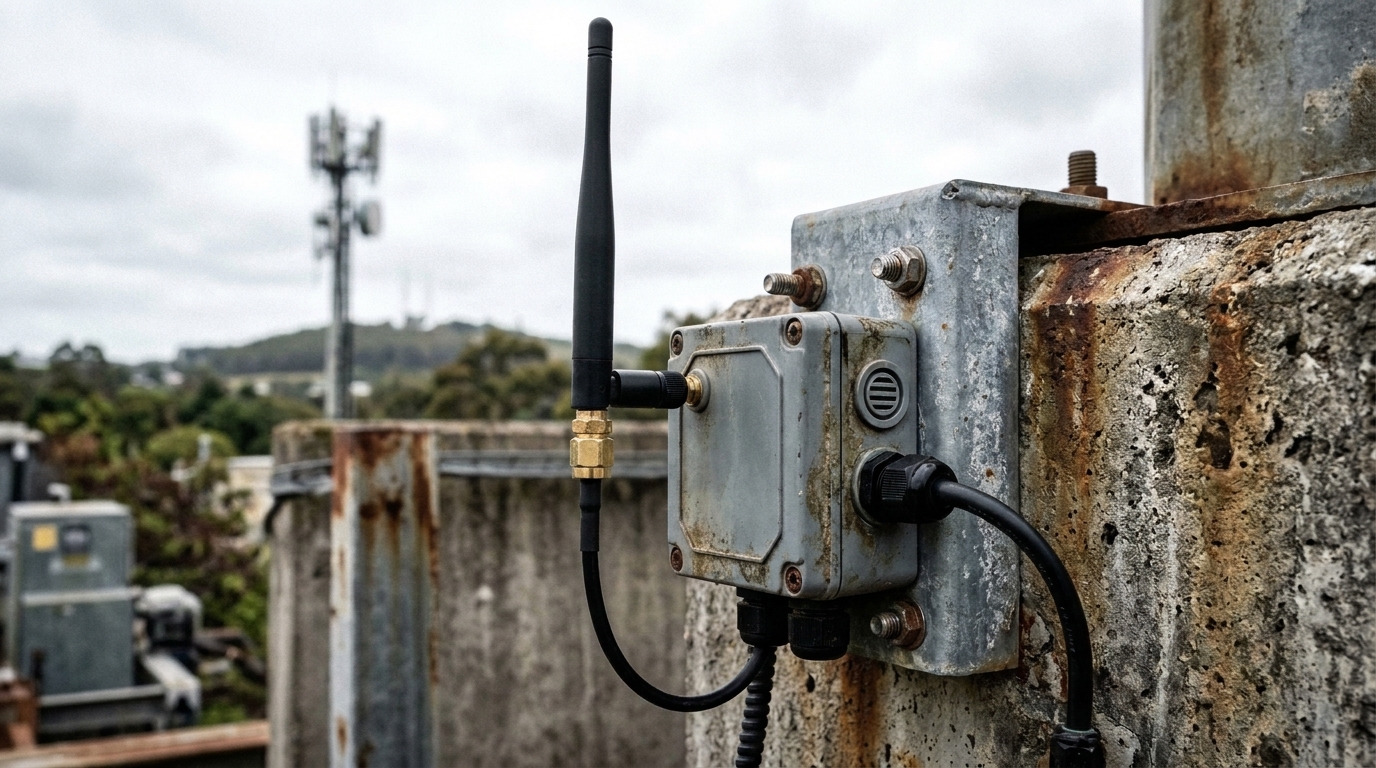
Researchers have proposed a new algorithmic approach to improve blind channel estimation in Narrowband Internet of Things (NB-IoT) links, addressing specific challenges posed by weak coverage and complex signal propagation. The study, published in the journal Discover Internet of Things, introduces a method named KANN-DBSCAN, which combines K-Nearest Adaptive Neighborhood statistics with Density-Based Spatial Clustering of Applications with Noise. This hybrid approach aims to overcome the limitations of traditional density clustering and global-bandwidth kernel density estimation, which can produce unstable cluster structures and oversmooth weak propagation modes in complex-domain observations.
The primary motivation for this research stems from the difficulties inherent in NB-IoT environments, where multipath superposition and locally non-uniform observations make accurate channel recovery difficult without additional pilot resources or fixed parametric channel distributions. The KANN-DBSCAN method utilizes K-nearest adaptive neighborhood statistics and expected neighborhood counts to generate paired Eps and MinPts candidates. A cluster-count stability and noise-ratio rule then determines the optimal clustering parameters, allowing the algorithm to adapt to the specific characteristics of the received signal without relying on true channel knowledge.
Following parameter selection, the algorithm assigns robust cluster-specific bandwidths for local kernel density estimation. The equivalent channel responses are subsequently recovered through posterior weighting and block-energy rescaling. This multi-step process is designed to accommodate non-uniform complex-domain observations while maintaining estimation accuracy in scenarios where conventional sparse and fixed-bandwidth estimators may struggle. The method is particularly tailored for base-station or edge-assisted NB-IoT channel recovery, where computational resources may be more abundant than on the terminal devices themselves.
Experimental evaluations demonstrate that the proposed method outperforms the strongest external baseline in both Normalized Mean Square Error (NMSE) and Bit Error Rate (BER). At a Signal-to-Noise Ratio (SNR) of 0 dB, the KANN-DBSCAN method achieves an NMSE of −13.14 dB and a BER of 9.71%. This represents an improvement of 1.10 dB in NMSE and 0.91 percentage points in BER compared to the strongest external baseline. At a higher SNR of 12 dB, the method’s performance further improves, with NMSE and BER reaching −23.11 dB and 0.31%, respectively.
The robustness of the algorithm was further tested in a Software-Defined Radio (SDR) playback test under the ETU-300 Hz channel model. In this scenario, the proposed method retained an NMSE of −13.14 dB and a BER of 7.03%. In comparison, the GM-LAMP baseline achieved an NMSE of −12.02 dB and a BER of 8.76% under the same conditions. These results suggest that the adaptive parameter selection and cluster-specific bandwidth estimation provide complementary contributions to the overall performance of the channel estimator.
Ablation, sensitivity, and density-model comparisons were conducted to isolate the specific contributions of different components within the KANN-DBSCAN framework. The parameter-sensitivity analysis indicated that the blind selection rule identified a configuration close to the minimum-error region without using the true channel. The ablation studies confirmed that both KANN parameter selection and local bandwidth estimation contributed distinct improvements to the estimation accuracy. The method consistently outperformed conventional sparse and fixed-bandwidth estimators, as well as evaluated compressive-recovery and learning-based baselines, across various challenging conditions.
The performance advantage of the KANN-DBSCAN method remained consistent under channel mobility, deep fading, co-channel interference, and impulsive noise. These tests highlight the algorithm’s ability to handle dynamic and noisy environments typical of real-world NB-IoT deployments. However, the study also identifies a clear trade-off regarding computational cost. Sample-scaling results reveal that increasing the available observations improves estimation accuracy but leads to substantial growth in runtime and memory consumption due to quadratic distance computation.
Consequently, the current implementation is deemed more appropriate for base-station or edge-side processing rather than direct execution on constrained NB-IoT terminals. The authors note that further work should evaluate the method using commercial-network field measurements and rapidly time-varying channels. Future developments aim to reduce distance-matrix storage and repeated clustering through approximate neighbor search, sliding-window updating, and online parameter adaptation, potentially making the method more suitable for resource-constrained environments in the future.
Subject of Research: Blind channel estimation in NB-IoT using KANN-DBSCAN
Article Title: KANN-DBSCAN algorithm for blind channel estimation in NB-IoT
Article References: Qin, X., & Zhang, X. (2026). KANN-DBSCAN algorithm for blind channel estimation in NB-IoT. Discover Internet of Things, 6(1), 259. https://doi.org/10.1007/s43926-026-00542-0
Image Credits: AI Generated
DOI: 10.1007/s43926-026-00542-0
Keywords: NB-IoT, Channel Estimation, KANN-DBSCAN, Clustering, Kernel Density Estimation, Signal Processing, Wireless Communications, SNR, BER, SDR, algorithm, blind
Cite Scienmag News
Denise Maddox. (November 7, 2026). New Algorithm Improves Channel Estimation in NB-IoT Links. Scienmag. https://scienmag.com/new-algorithm-improves-channel-estimation-in-nb-iot-links/
Denise Maddox. "New Algorithm Improves Channel Estimation in NB-IoT Links." Scienmag, 7 November 2026, https://scienmag.com/new-algorithm-improves-channel-estimation-in-nb-iot-links/. Accessed 7 November 2026.
Denise Maddox. "New Algorithm Improves Channel Estimation in NB-IoT Links." Scienmag. November 7, 2026. https://scienmag.com/new-algorithm-improves-channel-estimation-in-nb-iot-links/




