


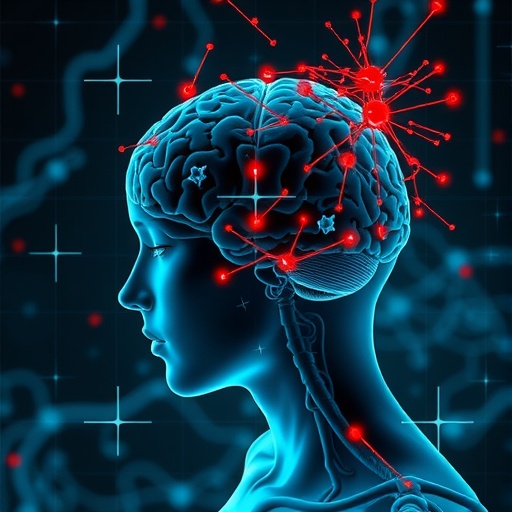
Neurons, the primary communication units of the brain and spinal cord, play a pivotal role in our cognitive and physical functionalities. These cells transmit messages through complex electrical signals, forming an intricate network that allows us to think, feel, and move. However, when neurons are subjected to conditions such as chronic compression—often caused by factors like brain tumors—their ability to communicate effectively is severely impacted. This disruption is not just a local phenomenon; it has far-reaching consequences that manifest as sensory loss, motor impairment, and cognitive decline. A recent study by a multidisciplinary team from the University of Notre Dame aims to unveil the mechanisms underlying neuron death due to chronic compression, thereby opening new avenues for therapeutic interventions.
The study, published in the esteemed journal Proceedings of the National Academy of Sciences, investigates how chronic compression leads to neuronal apoptosis through various direct and indirect pathways. Researchers focused on the impacts of pressure exerted by brain tumors, which result in irreversible neuron loss. This critical examination of neuron death under compression contributed significantly to understanding the disease mechanisms and offered potential pathways for therapeutic exploration. The findings underscore the need for more research in this area, particularly regarding how to minimize or prevent the damage attributed to pressure-induced neuron death.
At the helm of this groundbreaking research was Meenal Datta, a professor of Aerospace and Mechanical Engineering at Notre Dame, and Christopher Patzke, an assistant professor in the Department of Biological Sciences. Datta has previously observed that brain tumors exert detrimental effects on surrounding neuronal tissue. However, her desire to decipher the specific mechanisms responsible for neuron loss due to compression necessitated collaboration with a neuroscientist. Patzke’s expertise in induced pluripotent stem cells (iPSCs) and neuronal development became invaluable in this context.
iPSCs are a remarkable breakthrough in stem cell research, as they can be derived from adult somatic cells like blood or skin, thus avoiding ethical quandaries associated with embryonic stem cells. In this study, the researchers innovatively generated neural cells from iPSCs, creating a model that mimics the behavior of a neuronal network similar to that found in the human brain. By applying artificial pressure to these cultured neural cells, the team was able to simulate the conditions that neurons would face when compressed by a glioblastoma tumor.
The graduate researchers involved in this project, Maksym Zarodniuk and Anna Wenninger, embarked on the task of assessing the effects of chronic compression on the viability of both neurons and glial cells. Their findings revealed a worrying trend: many surviving neurons exhibited signs of cell death signaling, indicating that the cells were under distress. This prompted further investigations into which molecular pathways were involved in this process. Understanding these mechanisms is vital, as it may provide insight into how to prevent neuronal cells from undergoing programmed cell death, a critical aspect of advancing neuroprotection strategies.
On analyzing the messenger RNA from the responding neuronal and glial populations, an increase in hypoxia-inducible factor 1 (HIF-1) molecules was identified. This suggests that the cells activated stress-adaptive genes to enhance their survival under unfavorable conditions. However, this reactive mechanism also led to neuroinflammation, further complicating the neuronal landscape. The researchers documented a pronounced expression of AP-1 gene activity in response to compression—a marker of neuroinflammatory stress that suggests impending neuron damage and death.
Corroborating their laboratory findings, the research team turned to clinical data from the Ivy Glioblastoma Atlas Project. They observed that patients with glioblastoma exhibited similar patterns of compressive stress reflected in gene expression profiles. These alignments lend a clinical dimension to the laboratory observations, bridging the gap between experimental and real-world findings. Particularly significant was the correlation between the gene expression changes observed in the preclinical models and the clinical manifestations reported by glioblastoma patients, such as cognitive impairments and motor deficits.
The insights garnered from this study extend beyond glioblastoma to encompass a wider range of brain pathologies influenced by mechanical forces. The approach taken by Datta and Patzke was not solely focused on a single disease but rather embraced a broader perspective on how mechanical influences affect the nervous system. Addressing the mechanical aspects of neurobiology may unveil new therapeutic targets across various neurological disorders, including traumatic brain injuries and other conditions where mechanical stress plays a critical role.
Understanding the vulnerabilities of neurons under compressive forces is paramount for developing effective strategies to mitigate sensory loss and prevent subsequent cognitive decline. The researchers emphasize that increasing awareness of mechanical stress in neurological contexts could reshape how the medical community approaches these diseases. Recognition of mechanical forces as a contributing factor could inform more holistic treatment methodologies that target not only the disease but also the mechanical environment that neurons inhabit.
In summary, this pivotal research highlights the delicate balance neurons maintain even in the face of detrimental mechanical pressures. By dissecting the pathways of neuronal death and injury caused by chronic compression, the study provides a foundation for future exploration of therapeutic modalities. As we gain a deeper understanding of these mechanisms, the potential to aid patients suffering from glioblastomas and other neurodegenerative conditions becomes ever more tangible. Ultimately, this investigation pushes the boundaries of our knowledge in neuroscience while advocating for the integration of mechanical insights into clinical practice.
In light of these illuminating findings, it is essential for continued funding and support for research endeavors that aim to protect neuronal integrity in the face of chronic stressors. Recognizing the multifaceted nature of neuronal response mechanisms will empower researchers and clinicians alike to devise informed, innovative strategies for combating the debilitating consequences of brain tumors and other neurological disorders.
Keywords
Cite Scienmag News
Cassandra Pierce. (February 9, 2026). Neural Self-Destruction: How Physical Pressure on the Brain Activates Cell Death Mechanisms. Scienmag. https://scienmag.com/neural-self-destruction-how-physical-pressure-on-the-brain-activates-cell-death-mechanisms/
Cassandra Pierce. "Neural Self-Destruction: How Physical Pressure on the Brain Activates Cell Death Mechanisms." Scienmag, 9 February 2026, https://scienmag.com/neural-self-destruction-how-physical-pressure-on-the-brain-activates-cell-death-mechanisms/. Accessed 4 September 2026.
Cassandra Pierce. "Neural Self-Destruction: How Physical Pressure on the Brain Activates Cell Death Mechanisms." Scienmag. February 9, 2026. https://scienmag.com/neural-self-destruction-how-physical-pressure-on-the-brain-activates-cell-death-mechanisms/


