


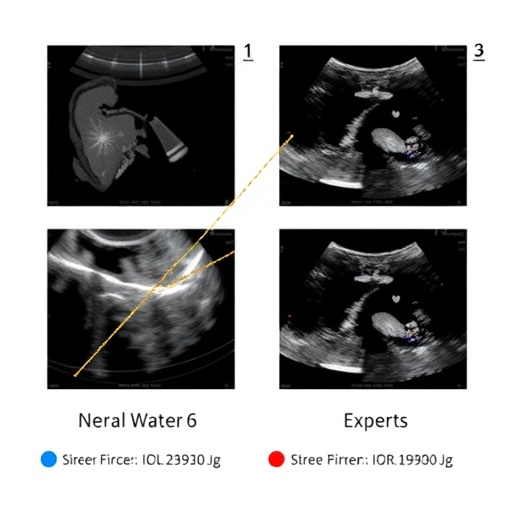
In a groundbreaking study, researchers have embarked on a novel journey to explore the capabilities of neural networks in the realm of medical imaging, specifically focusing on the classification of urinary tract dilation as observed through renal ultrasounds. The work presents a significant advancement in the intersection of artificial intelligence and pediatric radiology, highlighting the potential for automated systems to assist healthcare professionals in diagnostic accuracy and efficiency. This research is not just a technical endeavor; it aims to enhance patient care by providing more reliable diagnostic tools.
At the core of the study lies the comparison of various neural network architectures, an area ripe for exploration as the capabilities of deep learning continue to evolve. The researchers have meticulously designed a series of experiments to gauge the performance of these models in accurately categorizing urinary tract dilation. The results offer keen insights into the effectiveness of different algorithms and lend weight to the argument for incorporating artificial intelligence in routine medical assessments.
Ultrasound is a widely used imaging technique in pediatric medicine due to its non-invasive nature and safety profile. However, interpreting the results can often be subjective, reliant on the expertise of the clinician conducting the assessment. This subjectivity can lead to discrepancies in diagnosis, emphasizing the need for standardized tools. The application of neural networks, which can process vast amounts of imaging data with high accuracy, aims to address this challenge head-on.
The paper discusses the methodology employed, detailing how the neural networks were trained on a comprehensive dataset of renal ultrasounds. Each image was processed and classified, allowing the models to learn patterns associated with different degrees of urinary tract dilation. This training phase is crucial, as the performance of the neural networks hinges on the quality and breadth of the input data. A diverse dataset ensures that the models can generalize well, reducing the likelihood of errors when presented with new cases.
In practice, the neural networks were pit against expert categorization to evaluate their agreement with seasoned radiologists’ assessments. This comparison is significant; it highlights not only the potential of machine learning to match human diagnostic capabilities but also raises questions about the future role of AI in clinical settings. The implications of achieving high agreement levels between AI classifications and expert reviews could shape how clinicians approach diagnostics in the years to come.
The findings from the study are particularly promising. The neural networks demonstrated a remarkable ability to classify urinary tract dilation, approaching the accuracy of human experts. This capability could lead to faster diagnostic processes, thereby accelerating treatment initiation and improving patient outcomes. In pediatric care, where timely interventions are often critical, the implications cannot be overstated.
Moreover, the research sheds light on the different types of neural networks tested, including convolutional neural networks (CNNs) and other variants designed to enhance image classification tasks. Each model exhibited unique strengths, contributing to the overall understanding of how various architectures perform under specific medical imaging scenarios. The adaptability of these models suggests that they can be fine-tuned for other diagnostic tasks beyond renal ultrasounds.
What sets this study apart is not just its technical depth but also its broader implications for the healthcare industry. As the field of radiology grapples with increasing demands and staffing challenges, AI systems offer a pathway to alleviate some pressures faced by practitioners. By leveraging advanced algorithms, healthcare facilities can expect more precise readings and potentially reduce the rate of misdiagnosis. This evolution in practices could transform patient experiences and outcomes, making healthcare more efficient and accessible.
The ethical considerations surrounding the integration of AI into healthcare also garner attention in the study. Researchers emphasize the necessity of maintaining human oversight despite the advanced capabilities of neural networks. Ensuring that medical professionals remain central to the diagnostic process safeguards against over-reliance on technology and promotes collaborative decision-making in patient care.
In conclusion, the exploration of neural networks for the classification of urinary tract dilation from renal ultrasounds marks a substantial advancement in medical imaging and AI. As this research paves the way for further developments, it raises hope for enhanced accuracy in diagnostics and potentially sets a precedent for future applications of AI in various medical fields. The combination of rigorous scientific investigation and innovative technological application exemplifies the progress being made in the quest for precision medicine.
As this field evolves, staying informed about the latest research and advancements will be crucial for healthcare professionals. The integration of AI-driven solutions promises not only to improve efficiency but also to empower clinicians with better tools for making informed decisions in patient care. Ultimately, the journey towards a more automated, yet still human-centric, healthcare system continues, driven by innovative studies such as these.
Cite Scienmag News
Cassandra Pierce. (August 8, 2025). Neural Networks vs. Experts: Classifying Renal Ultrasounds. Scienmag. https://scienmag.com/neural-networks-vs-experts-classifying-renal-ultrasounds/
Cassandra Pierce. "Neural Networks vs. Experts: Classifying Renal Ultrasounds." Scienmag, 8 August 2025, https://scienmag.com/neural-networks-vs-experts-classifying-renal-ultrasounds/. Accessed 8 September 2026.
Cassandra Pierce. "Neural Networks vs. Experts: Classifying Renal Ultrasounds." Scienmag. August 8, 2025. https://scienmag.com/neural-networks-vs-experts-classifying-renal-ultrasounds/


