

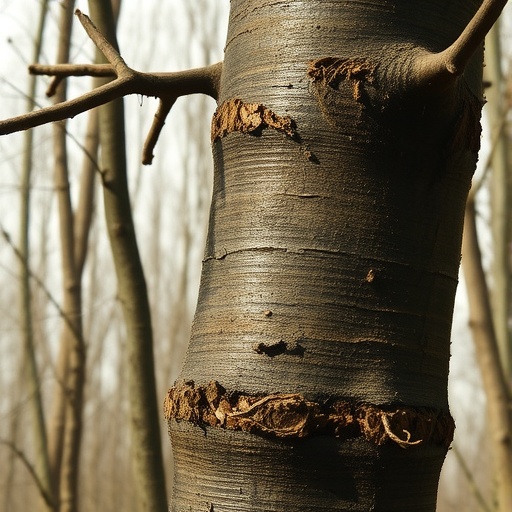
For over 150,000 years, the bark of birch trees has served a remarkable purpose beyond mere timber or firewood. Birch tar, a substance derived from the controlled heating of birch bark, has been unearthed at numerous Neanderthal archaeological sites, primarily known for its adhesive properties used in tool-making. However, cutting-edge research led by Tjaark Siemssen, a scholar affiliated with the University of Cologne and the University of Oxford, now sheds transformative light on birch tar’s multifaceted roles, most notably its antibacterial capabilities that hint at primitive medicinal applications during the Pleistocene epoch.
Published on March 18, 2026, in the open-access journal PLOS One, this pioneering study bridges the gap between archaeological evidence and indigenous knowledge systems, demonstrating that Neanderthals likely harnessed birch tar not only to glue stone tools but also as a therapeutic agent for wound care. The implications of these findings reverberate across paleopharmacology and our understanding of early human healthcare practices during the Ice Age, augmenting the narrative that Neanderthals possessed complex behavioral repertoires inclusive of natural medicine.
To decipher the antibacterial potency of birch tar, Siemssen and his research team meticulously extracted the substance from modern birch tree bark species identifiable in Neanderthal contexts. Employing a suite of experimental archaeology techniques, they replicated ancient production methods accessible to early humans: one involving distillation within clay pit structures and another condensing tar against stone surfaces adjacent to controlled hearth fires. These reconstructions were critical for recreating tar samples comparable to those utilized in prehistoric times, providing a realistic substrate for antimicrobial assays.
Subsequent laboratory analyses revealed compelling bioactivity: all experimental birch tar samples inhibited the proliferation of Staphylococcus bacterial strains. This genus encompasses species notorious for causing wound infections which, if untreated, could precipitate severe health complications or death. The tar’s effective suppression of bacterial growth substantiates ethnobotanical claims held by northern European and Indigenous Canadian communities, who have historically employed birch tar in folk medicine as a natural antiseptic and healing agent.
The study’s experimental findings amplify the growing scholarly consensus that Neanderthals engaged in multifactorial health-related behaviors. Beyond using natural resins for adhesive purposes, the dual utility of birch tar as both a glue and an antibacterial compound suggests intentionality in chemical knowledge and application. These dual roles illuminate broader cognitive and cultural capacities in Neanderthals, illuminating how they might have negotiated their survival in harsh Ice Age environments through innovative exploitation of natural resources.
Intriguingly, the research also opens avenues for exploring other potential uses of birch tar, such as insect repellent properties, alongside the medicinal potentials presented by other flora in the Neanderthal ecological niche. This broader scope of palaeopharmacological inquiry challenges traditional views that restrict early human use of natural substances to a narrow range of functions and underscores the sophisticated interaction between environment and prehistoric health strategies.
Reflecting on the sensory and practical challenges encountered during this experimental archaeology research, the researchers describe the birch tar production process as “messy” and labor-intensive, highlighting the tenacious hands-on engagement necessary for extraction. The tactile and olfactory experiences embedded in this ancient craft provide nuanced insights into prehistoric daily life, hinting at ritualistic or cultural dimensions attached to producing and utilizing medicinal substances.
These revelations are not merely academic; they offer timely relevance given the contemporary global challenge posed by antimicrobial resistance. The team suggests that a deepened understanding of palaeopharmacology and traditional medicines can inform modern efforts to rediscover and develop novel antibiotic compounds rooted in ancient natural remedies, thereby enriching current biomedical arsenals.
The study thereby acts as a powerful convergence point between archaeology, ethnopharmacology, and microbiology, illustrating the promise of interdisciplinary research to illuminate humanity’s shared heritage in health and healing. By anchoring their experimental methodology in realistic prehistoric contexts, Siemssen and colleagues demonstrate a rigorous approach for inferring behavior from material culture remains, challenging the tendency to underestimate Neanderthal intellectual and cultural complexity.
Ultimately, this research invites a paradigm shift in how early human health behavior is conceptualized—moving beyond simplistic stereotypes of Neanderthals as solely pragmatic tool-users to portraying them as astute experimenters and healers. The antibacterial properties of birch tar signify a sophisticated grasp on medicinal ingredients and underscore an evolutionary continuum of healthcare knowledge stretching back hundreds of millennia.
Through their collaborative effort spanning Germany, the United Kingdom, Canada, and Belgium, the authors contribute substantially to the discourse on Neanderthal biology and cultural adaptation. The validation of birch tar’s antibacterial efficacy accords with and extends indigenous medicinal traditions, encouraging a respectful appreciation for ancestral wisdom and its scientific worth.
In conclusion, the investigation into birch tar as both an adhesive and antimicrobial agent enriches our appreciation of Neanderthal ingenuity, revealing an intricate interplay between ecology, technology, and health in deep prehistory. As this research continues to resonate, it promises to inspire future studies unraveling the medicinal applications of natural substances employed by ancient humans, thus improving our holistic understanding of early human lifeways and resilience.
Subject of Research: People
Article Title: Antibacterial properties of experimentally produced birch tar and its medicinal affordances in the Pleistocene
News Publication Date: 18-Mar-2026
Web References: http://dx.doi.org/10.1371/journal.pone.0343618
References: Siemssen T, Oludare A, Schemmel M, Puschmann J, Bierenstiel M (2026) Antibacterial properties of experimentally produced birch tar and its medicinal affordances in the Pleistocene. PLoS One 21(3): e0343618.
Image Credits: Tjaark Siemssen, CC-BY 4.0
Keywords: Neanderthals, birch tar, antibacterial, Pleistocene, paleopharmacology, prehistoric medicine, adhesive, Staphylococcus, experimental archaeology, indigenous medicine, Ice Age, natural remedies


